


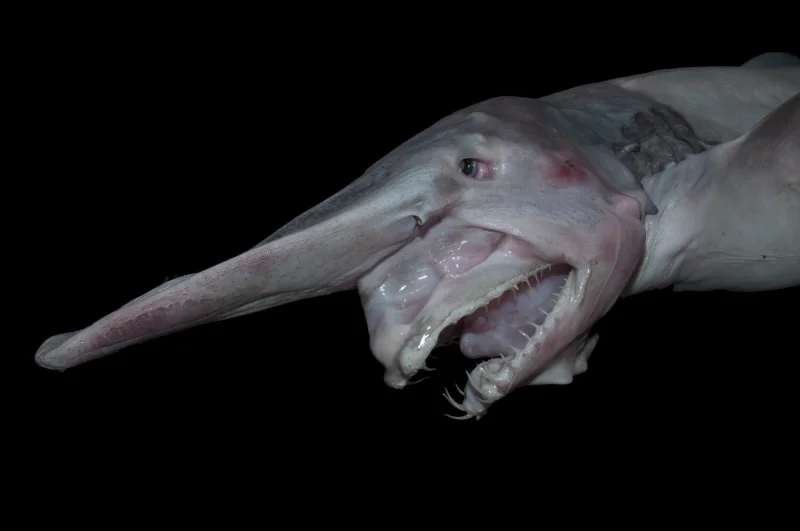
Scientists have filmed goblin sharks alive in their deep-sea habitat for the first time, after two rare sightings that were separated by nearly five years and thousands of miles. The footage, described in a study published on May 19 in the Journal of Fish Biology, shows one shark in July 2019 near Jarvis Island and another in August 2024 in the Tonga Trench.
For Aaron Judah, the moment carried the kind of weight that only a handful of researchers ever get to feel. He described seeing the most iconic of the deep-sea sharks alive and looking healthy in its natural habitat as a unique honor. That reaction fits the species itself: goblin sharks are so elusive that most live observations used to come from animals accidentally hauled in on fishing lines, not from their own world.
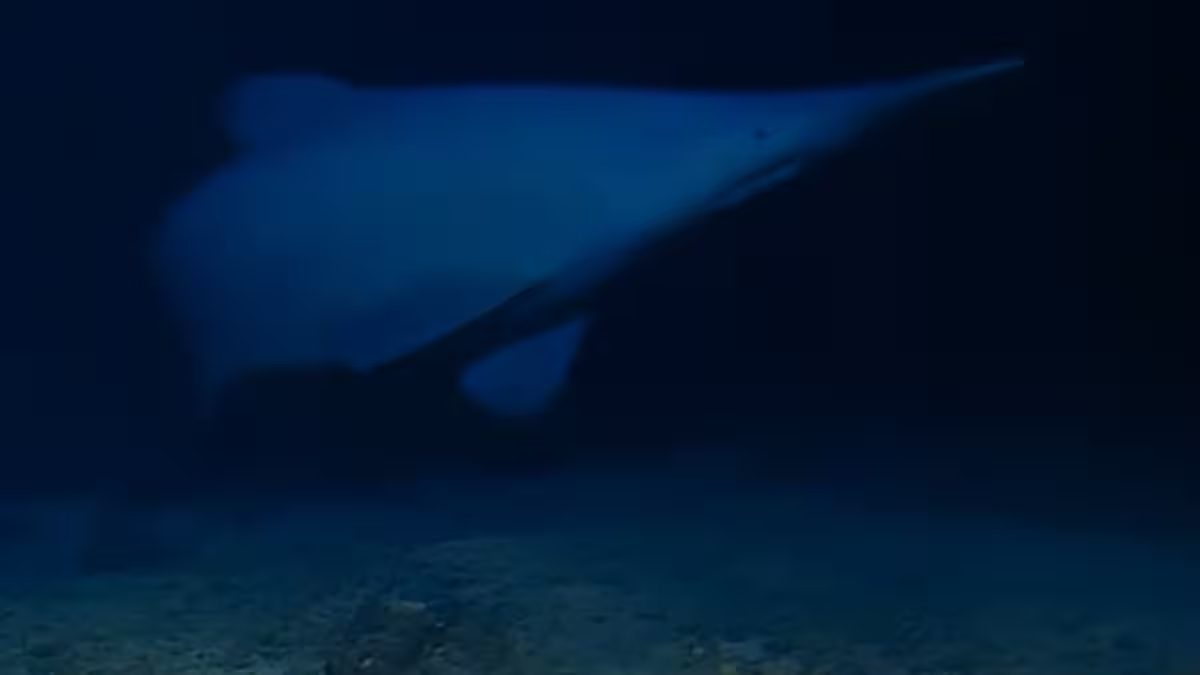
The July 2019 sighting came from a remotely operated underwater vehicle near Jarvis Island, where scientists recorded an 11-foot-long male at roughly 4,000 feet below the surface. Based on its size, it was estimated to be more than 50 years old. In August 2024, researchers using baited cameras in the Tonga Trench recorded another goblin shark around 6,550 feet down. It did not come in for the bait. Instead, it swam in front of the camera long enough to be observed, giving scientists a second live look at a fish they have spent decades trying to understand.
Those two sightings do more than add footage. They extend the species’ known depth range by nearly 2,300 feet and push its geographic range by thousands of miles. Until now, scientists had documented goblin sharks only along the western coast of the United States, in the Gulf of Mexico, along the southwest coast of Australia, near Japan and near New Zealand. The new observations suggest a much broader footprint, but they do not settle the bigger question of whether the sharks seen in 2019 and 2024 belong to the same global population or just different pockets of a species that has been hiding in plain sight.
That uncertainty is what makes the footage so valuable. Scientists suspect goblin sharks may share a single global population because of limited genetic diversity, yet they still know virtually nothing about how the animals move, how often they appear in one region or how many are out there at all. The new recordings give researchers their first live glimpse of behavior in the wild, but they also underline how little direct evidence exists for a shark that can grow up to 20 feet long, move at a sluggish pace and hunt with jaws that shoot forward to seize fish, squid and crustaceans. The next step is not a dramatic new expedition so much as more of the same: more eyes in the deep, and more chances to catch a goblin shark before it disappears back into the dark.
