


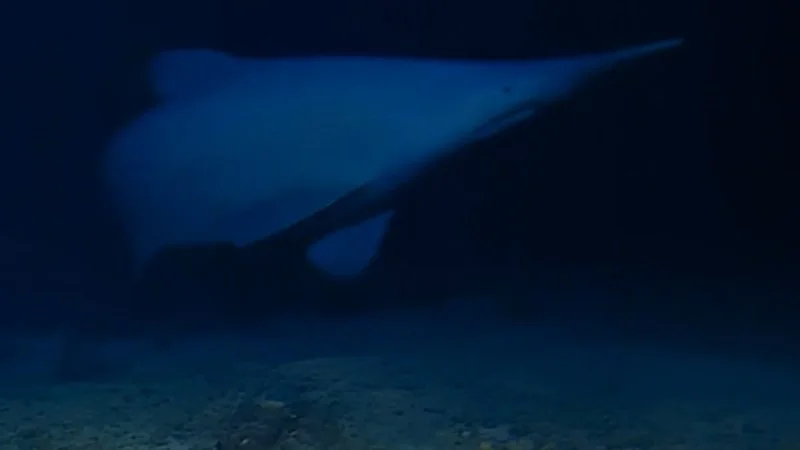
Scientists have captured the first live footage of a goblin shark in its natural deep-ocean habitat, a rare glimpse of a fish long known more from dead specimens than from the sea itself. The new research documents two separate live observations of Mitsukurina owstoni in the Central Pacific, one near Jarvis Island and another in the Tonga Trench.
That is why the finding is drawing attention now. Published in the Journal of Fish Biology, the study shows that a species once almost entirely beyond human observation has finally been seen alive in the wild, and it happened twice. The first sighting came in 2019 at 1,237 metres depth at an unnamed seamount north-west of Jarvis Island. The second came in 2024, when a baited camera on a bottom lander filmed a goblin shark at 1,997 metres on the slope of the Tonga Trench.
Professor Alan Jamieson, who was aboard the 2024 expedition, said he never expected to see the shark alive. He described the animal as a deep-sea charismatic species and said the Tonga Trench sighting mattered not just because it was alive, but because it was found 700 metres deeper than the species had previously been recorded. The footage from the Inkfish Open Ocean Expedition aboard the R/V Dagon lasted a little over 20 seconds, yet it marked the first confirmed live wild footage of a goblin shark.
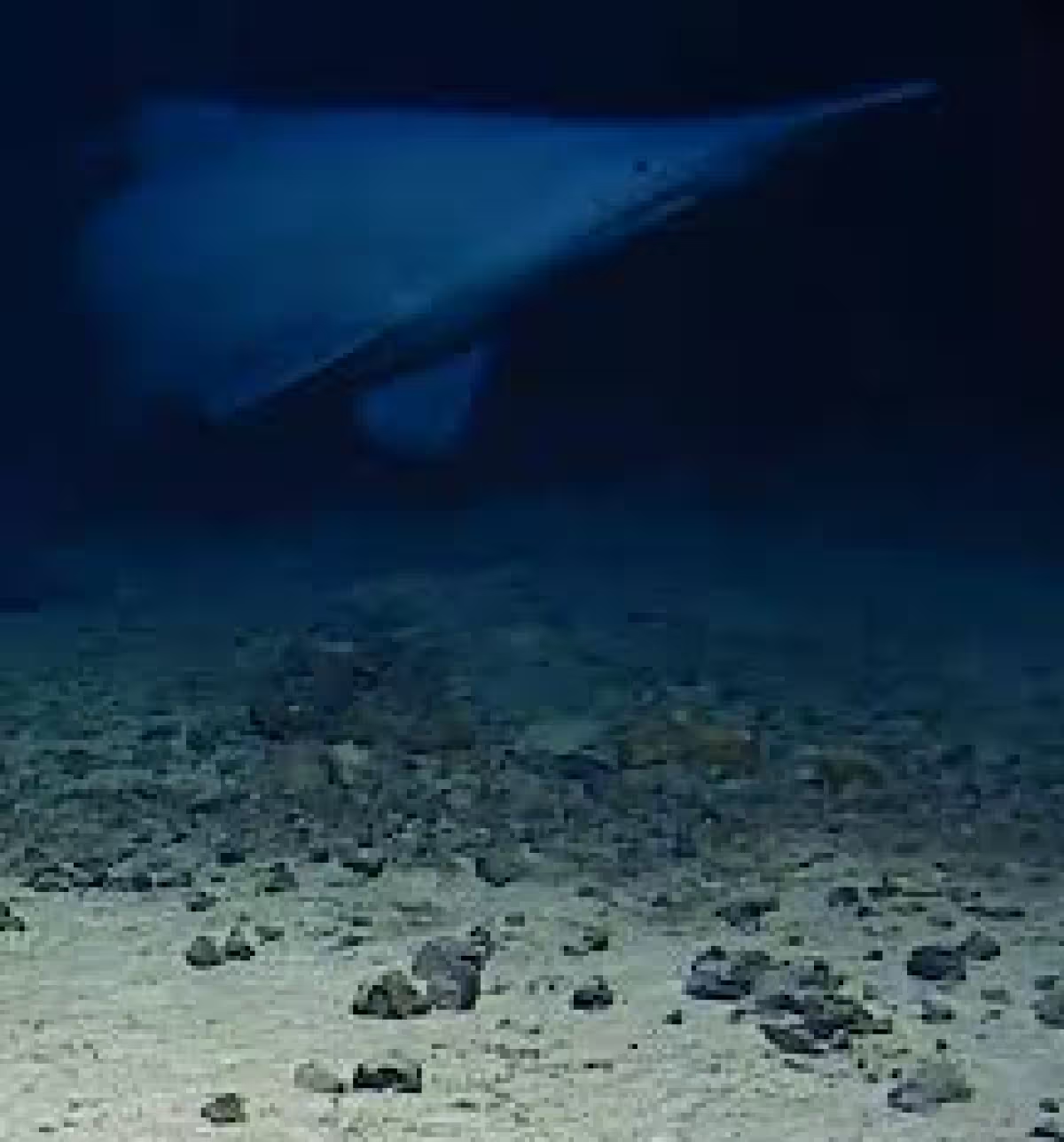
That short sequence carries unusual weight because the species had only ever been seen alive after being hauled to the surface on fishing lines, where it died quickly. Known sometimes as a living fossil, the goblin shark is the sole surviving member of a family whose lineage stretches back nearly 125 million years. Before these sightings, it was thought to be limited to narrow coastal regions off western America, Australia and Japan in the Pacific, along with isolated populations in the Atlantic and Indian Oceans.
The new Central Pacific records stretch that map farther than scientists had previously documented, but they also leave the main question open: how many goblin sharks are actually living in these waters? The expedition recorded more than 50 days of continuous footage between depths of 800 and 10,800 metres, and even with that sweep, the shark remains a rare visitor to the record rather than a familiar inhabitant. As Jamieson put it, the sight of one alive was remarkable because it showed a creature that has been hiding in plain sight for most of its history.
The study, led by the Minderoo-UWA Deep-Sea Research Centre and the University of Hawaii at Manoa, gives researchers a verified foothold in a part of the ocean where the animal has long been elusive. What comes next is not whether the goblin shark exists there — it clearly does — but whether future expeditions can turn two brief encounters into a clearer picture of where this ancient species lives and how far its range really runs.
