


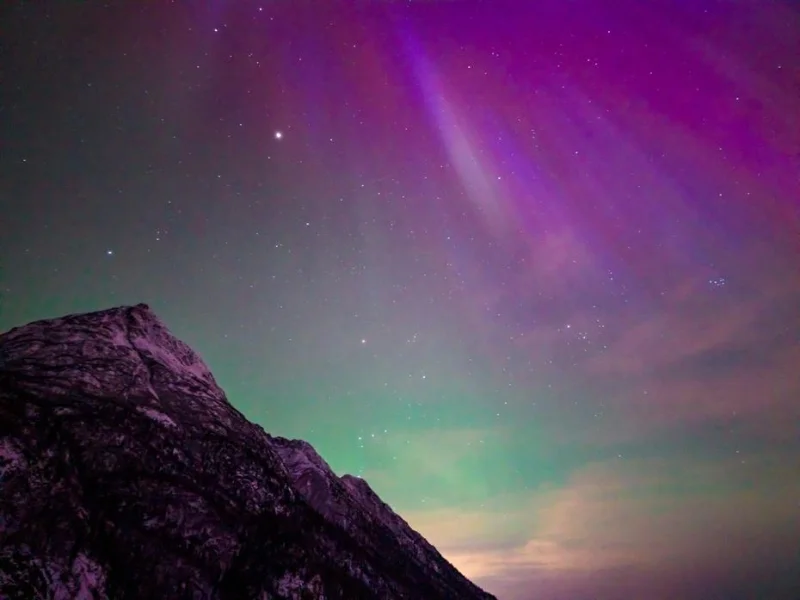
NOAA said Sunday night could bring a brightening of the northern lights across several states along the U.S.-Canadian border as a coronal mass ejection headed toward Earth and geomagnetic activity picked up. The agency put the forecast at a Kp index of five out of nine, a level that can push auroras farther south than usual.
That is why the noaa june 8 cme aurora forecast is drawing attention now: it gives skywatchers a specific window, a specific solar event and a specific set of states where the lights may appear. Alaska has the best odds, with NOAA describing a “high” chance of seeing the aurora borealis Sunday night, but the display was also expected to be visible in North Dakota, much of the Michigan Upper Peninsula, northern Minnesota, northern Montana and the northernmost stretches of Washington, Idaho, Wisconsin and South Dakota.
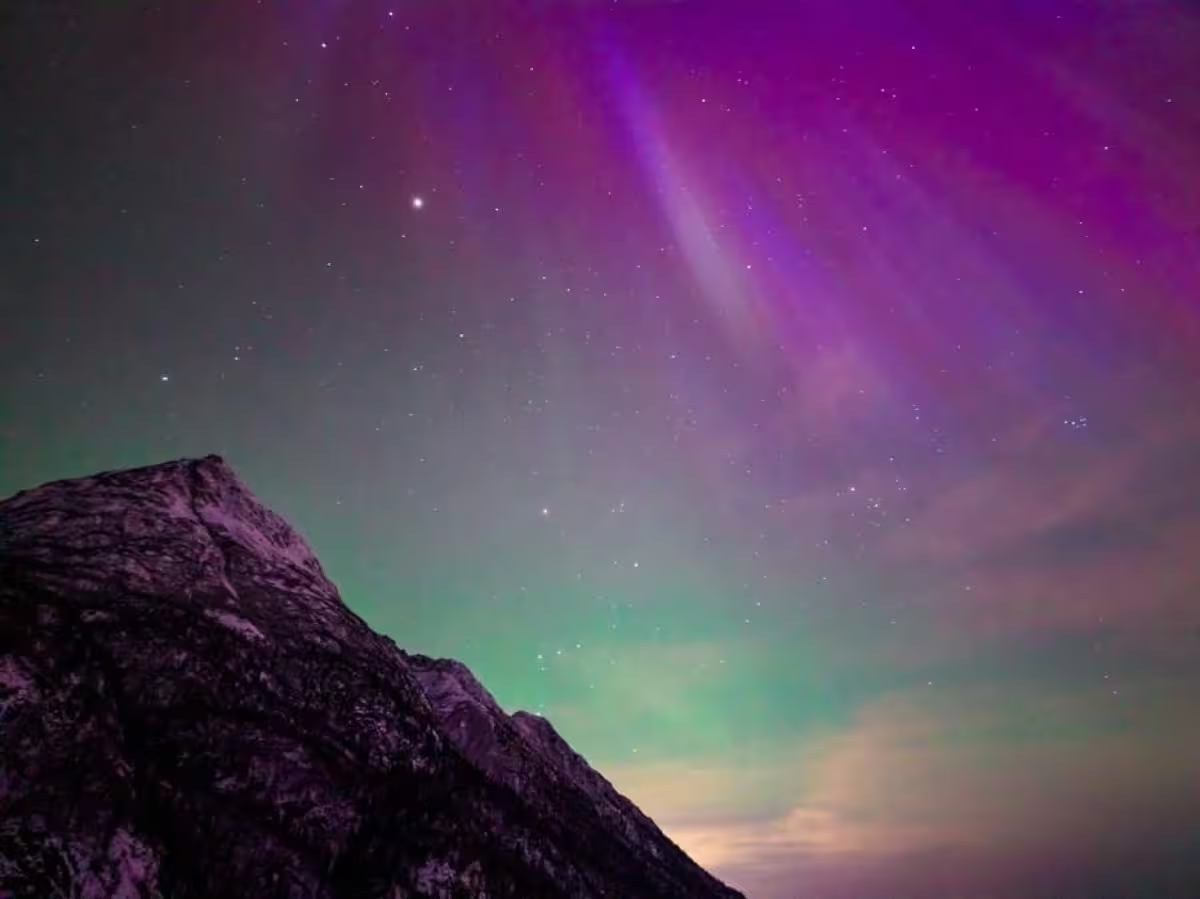
The timing matters because the coronal mass ejection escaped from the sun on Saturday and forecasters expected it to arrive by Monday. A coronal mass ejection is an expulsion of solar material from the sun’s corona, and when it reaches Earth it can interact with the planet’s magnetosphere and trigger geomagnetic storms. NOAA said minor to strong storms could begin Monday and continue through Tuesday, with activity on its G1 through G3 scale.
That leaves a split picture for viewers in the Lower 48. The lights had a chance of visibility in many border states, but NOAA said the odds there were relatively low compared with Alaska, and strong geomagnetic storms are the kind that can also interfere with satellites and radio communications. NOAA said those stronger storms can even make the aurora visible as far south as Illinois, though that does not mean every forecasted event reaches that far.
For anyone trying to catch the display, the best advice was simple: head north, find a hill with a clear view of the northern sky and get away from city lights. NOAA said the aurora is typically most active from 10 p.m. to 2 a.m., which gives observers a short overnight window before the incoming solar disturbance shifts from forecast to reality. The real test will be how much of that predicted Kp 5 activity shows up once the CME arrives Monday.
