


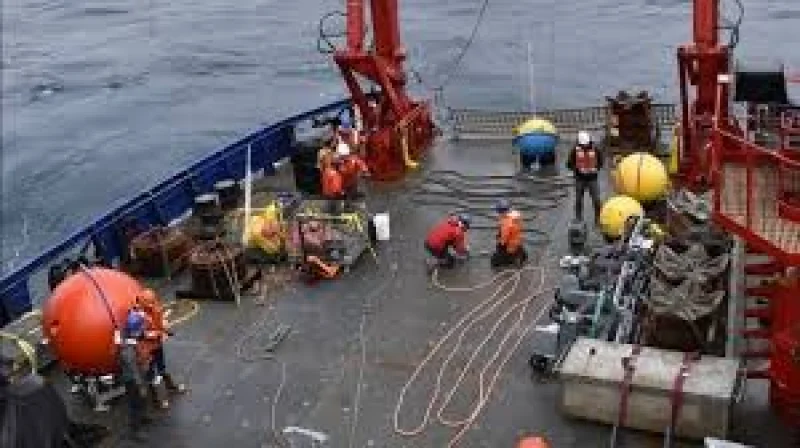
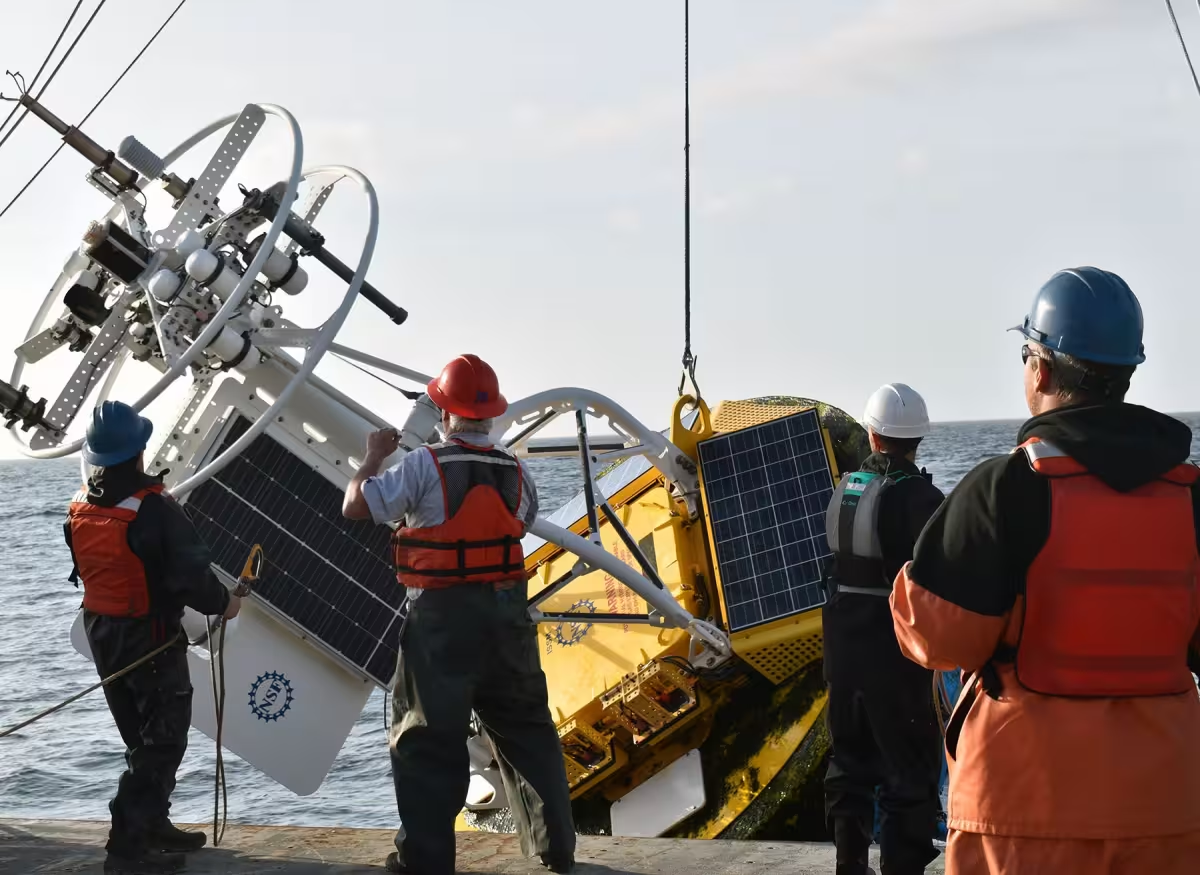
The National Science Foundation has started pulling up 900 ocean data-collecting buoys and related Ocean Observatories Initiative equipment, beginning with the Coastal Endurance Array off the Pacific Northwest. Removal work is already under way at the first site, and the shutdown will end a network that had been expected to keep gathering climate-related ocean data for another 15 years.
The scale is hard to miss. The equipment cost more than $370 million to install, and NSF says taking it out will save taxpayers nearly $50 million a year. The agency is using ship-days to physically remove the gear from locations around the globe, including the North Pacific, Greenland and the Southern Ocean, making this much more than a local teardown.
Jim Edson said the Ocean Observatories Initiative has spent more than a decade delivering “the world’s most advanced continuously operating ocean observing systems,” work he said has supported science, engineering, education and workforce development across the ocean sciences community. He also thanked the scientists, engineers, operators, educators, students and partners who built the facility and continue to use its data. His praise lands against a different reality: NSF is not preserving the network for later recovery, but dismantling it now and ending future climate-related data collection.
That choice sits inside a broader political shift. The move to stop collecting climate-related ocean data aligns with the priorities laid out in Project 2025’s “Mandate for Leadership,” and in 2024 its authors called NOAA’s Office of Oceanic and Atmospheric Research “the source of much of NOAA’s climate alarmism” and said “the preponderance of its climate-change research should be disbanded.” NOAA has already shed about 20 percent of its workforce through layoffs in the first 12 months of the administration, and the administration’s first budget would have eliminated OAR as a line office and ended 16 scientific cooperation agreements with 80 research universities before Congress rejected that plan and funded OAR at $630 million for FY2026.
What NSF does next matters because the gap is now practical, not theoretical. After Coastal Endurance, the remaining sites in the North Pacific, Greenland and the Southern Ocean are scheduled to come out with ship-days, but the agency has not laid out a full public timetable for each instrument. For researchers who depended on a global, always-on observing system, the question is no longer whether the data will stop. It already has.
