


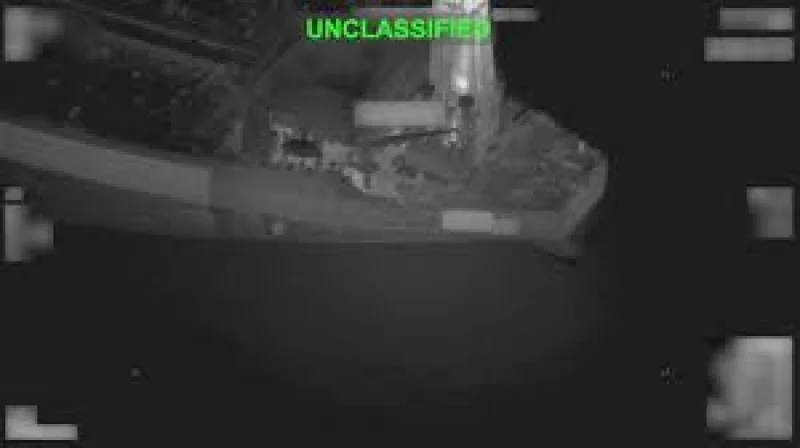
The United States says it disabled an unladen Botswana-flagged oil tanker on Tuesday with a Hellfire missile to the engine room as the ship sailed toward Iran. US Central Command said the vessel, the M/T Lexie, was hit after its crew ignored repeated warnings from American forces.
The strike is the latest enforcement step in the Centcom Strait Of Hormuz Blockade that began on 13 April, when the U.S. military started stopping vessels entering and exiting Iranian ports. Centcom released footage it said showed the tanker being struck, and described the ship as transiting international waters toward Kharg Island when the missile hit.

For readers watching the blockade, the numbers now matter as much as the single attack. Centcom says six commercial vessels have been disabled since the measures went into force, and another 122 have been redirected. That puts Tuesday’s strike inside a wider campaign that has already altered traffic through one of the world’s most sensitive shipping lanes.
The U.S. military said the crew of the M/T Lexie failed to comply with directions from its forces multiple times over a 24-hour period before the strike. Iran had not publicly commented on the issue when Centcom released its account, leaving the American version of events unchallenged for now. The gap is important because the Pentagon says the tanker was hit only after repeated warnings, while the unanswered questions center on the ship’s condition and whether anyone aboard was hurt.
What comes next is narrower than the wider politics around the blockade. Centcom says the enforcement remains in place, and its message to commercial shipping is now plain: vessels heading in or out of Iranian ports face the risk of being turned back, disabled or hit if they do not respond to U.S. directions. The unresolved part is the tanker itself — how badly it was damaged, and what happened to the crew after the missile entered the engine room.
