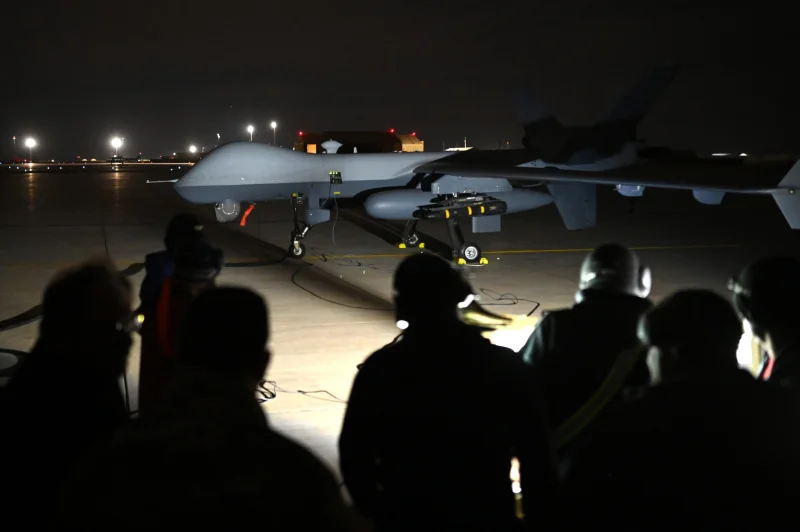
The U.S. Air Force’s MQ-9 Reaper drones emerged as the standout platform in Operation Epic Fury against Iran, with Gen. Kenneth S. Wilsbach telling lawmakers on May 20 that the unmanned aircraft was perhaps the campaign’s most valuable player. He said the Air Force had made many strikes with Reapers and that no other platform came close to them in the number of attacks.
“For Epic Fury, perhaps the most valuable player was unmanned: the MQ-9,” Wilsbach told the House Armed Services Committee. He added, “We’ve made many, many strikes,” and said, “No other platform is even close to the MQ-9.”
The Reaper’s role mattered because the U.S. military said it hit more than 13,000 targets in Iran during six weeks of heavy fighting from late February to early April before a ceasefire took hold in early April. Nearly every type of fighter and bomber in the Air Force inventory joined the strikes, including F-15Es, F-16s, F-22s, F-35s, A-10s, B-52s, B-1s and B-2s. But Wilsbach said the MQ-9 accounted for a large share of the work without putting pilots in danger.
“It’s an unmanned platform, so we get a lot of utility out of them, and don’t put our folks at risk,” he said.

The scale of the campaign helps explain why the drone stood out. In the heat of the air war, Reapers flew around a dozen orbits over Iran at a time, focusing on striking or providing intelligence to other platforms so they could hit dynamic targets. Those targets included missile and drone launchers, aircraft and mobile systems, and more than 4,000 dynamic targets appeared on the battlefield and were immediately addressed.
But the platform came at a cost. Nearly 30 MQ-9 Reapers were lost in operations against Iran, many to air defenses and some while based in the region were struck on the ground. Iran also targeted U.S. bases throughout the region. Even so, the drones kept flying. Reapers continue to be used around the Strait of Hormuz to enforce the ongoing U.S. military blockade against Iranian ports.
The Air Force has been looking to retire the MQ-9 Reaper in the coming years, yet the campaign showed just how much the military still depends on it when targets are moving fast and pilots are better kept out of the fight. Central Command has declined to detail the drone’s specific role, and the military has also declined to break down sorties flown during Operation Epic Fury. Still, the record from the six-week air war is hard to miss: the Reaper was not a side player. It was central to the fight.
That reality was underscored again last month, when MQ-9s protected the weapons system officer of a downed F-15E Strike Eagle by striking Iranian military-aged males believed to be a threat. For now, the Reaper remains in the air over one of the region’s most dangerous choke points, doing the work officials say it does best — watching, striking and keeping Americans farther from harm.