
Pete Hegseth told Asian defence ministers and military chiefs in Singapore on Saturday that the United States is not turning its back on Asia, even as Washington juggles global obligations from the Iran war to a suspended arms package for Taiwan. He paired that reassurance with a fresh demand that allies spend more on defence, telling the region it needs more hard power, not more speeches.
The timing mattered because the remarks came weeks after Donald Trump held positive talks with Xi Jinping in Beijing, and because questions about U.S. commitment to the Indo-Pacific have only sharpened since then. Hegseth used the Shangri-La Dialogue to insist the U.S. can keep working with partners in the Pacific while handling other crises, and he said Washington wanted to avoid needless confrontation.
Japan's defence minister, Shinjiro Koizumi, opened the pressure point before Hegseth spoke, asking him to address concerns that some countries might underestimate how far the U.S. will go to stay engaged. Koizumi warned that some governments may try to drive a wedge between Washington and its allies, a concern that hung over the forum as regional leaders watched for any hint that U.S. priorities were shifting.
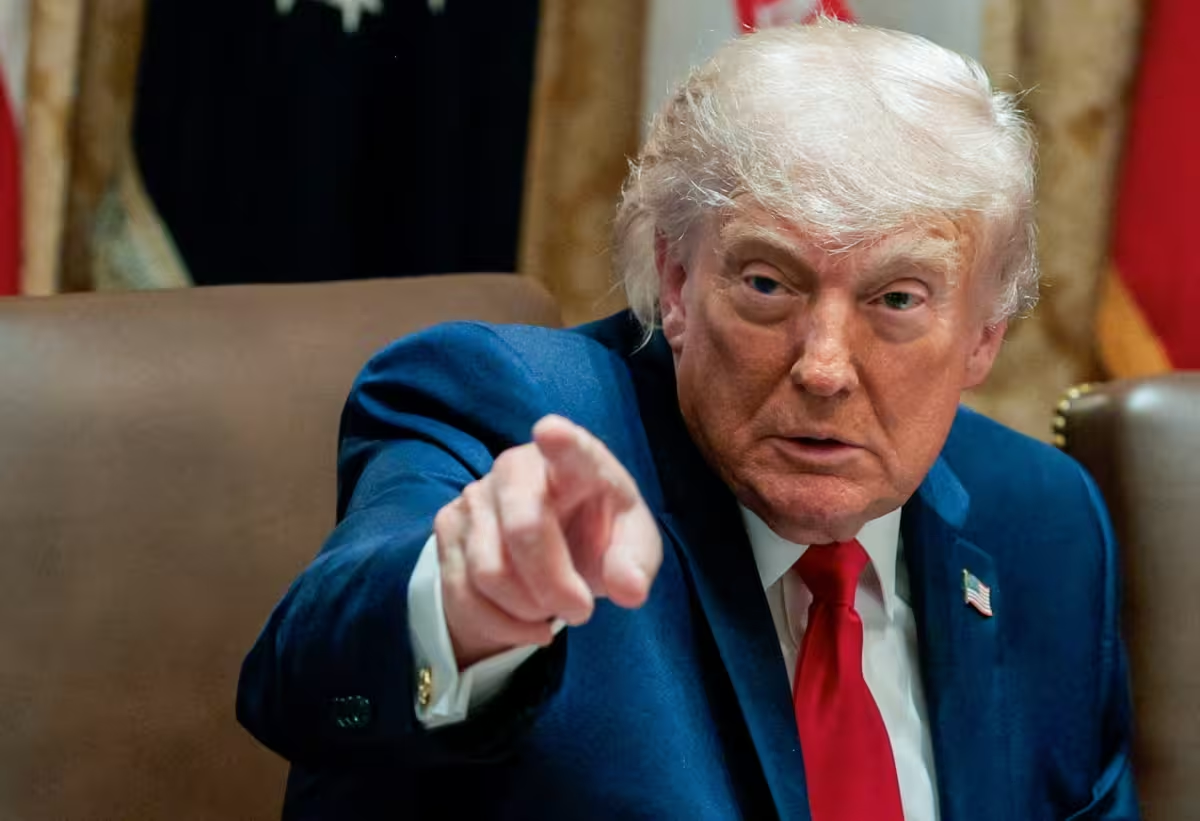
Hegseth tried to answer that directly. He said part of the U.S. national defence strategy is aimed at power projection in the Pacific and working with allies, and he described U.S. efforts there as “quietly but very strongly” under way. In his speech, he cast the American approach as “strong, quiet and clear,” and said, “We can do two things at one time,” a line aimed at calming allies worried that the Middle East is pulling attention away from Asia.
But the reassurance sat alongside a harder message. A participant raised concerns about Washington's ability to deliver on arms deals after it suspended a $14bn package to Taiwan to conserve munitions for the war in Iran, and Hegseth said he would “very much decouple” the Taiwan package from the Iran issue. He also said the U.S. was in a very good place with its munitions stockpile and could produce more if needed, an effort to blunt the argument that American support is being stretched thin.
Hegseth repeated a demand he made last year, calling on Asian allies to spend 3.5% of GDP on defence. He praised South Korea, Japan, Australia and the Philippines for increasing military spending and cooperation with the U.S. in recent months, but also dismissed what he called empty rhetoric about the rules-based international order. “We don't need more conferences, we need more combat power… less Shangri-La Dialogue, more ships and more subs,” he said.
The Shangri-La Dialogue is one of Asia's most closely watched defence gatherings, and this year's version turned into a test of whether Washington can reassure allies while still asking them to carry more of the burden. Hegseth gave no immediate sign of a new policy shift, but his remarks made the message clear: the U.S. wants Asian partners to spend more and worry less, even as it keeps dividing attention between the Pacific, the Iran war and the Taiwan weapons dispute.