


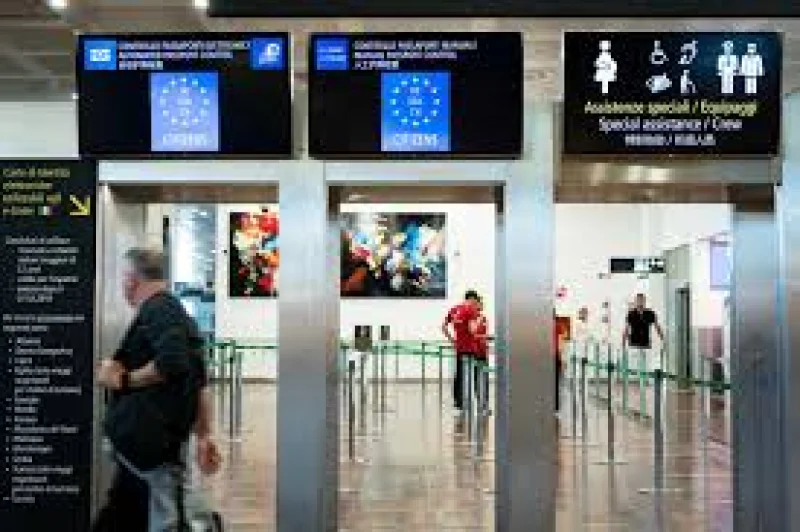
British passengers returning home via European airports are being told to allow three hours before departure as the EU entry-exit system slows border checks and pushes queues at some airports well beyond normal airport timing. Yvonne Moynihan said Wizz Air is advising the longer window because people have been waiting longer than expected once they reach the passport checkpoint.
The warning lands now because the system is no longer a future change. It was gradually introduced across Europe from October 2025 and became fully operational last month, meaning more non-EU travellers are now going through biometric checks on entry and exit instead of the old passport stamp routine. For holidaymakers heading back to Britain, the practical question is no longer whether the system exists, but how much extra time it is already adding to a journey.
Moynihan said the usual advice would be to reach the airport two hours before a flight, but that is no longer enough in these cases. “In these circumstances, we are advising three hours,” she said, adding that the problem is uneven across Europe. Some passengers are still moving through with no major disruption, she said, while others are facing long queues at familiar hotspots in Spain, Portugal and France.
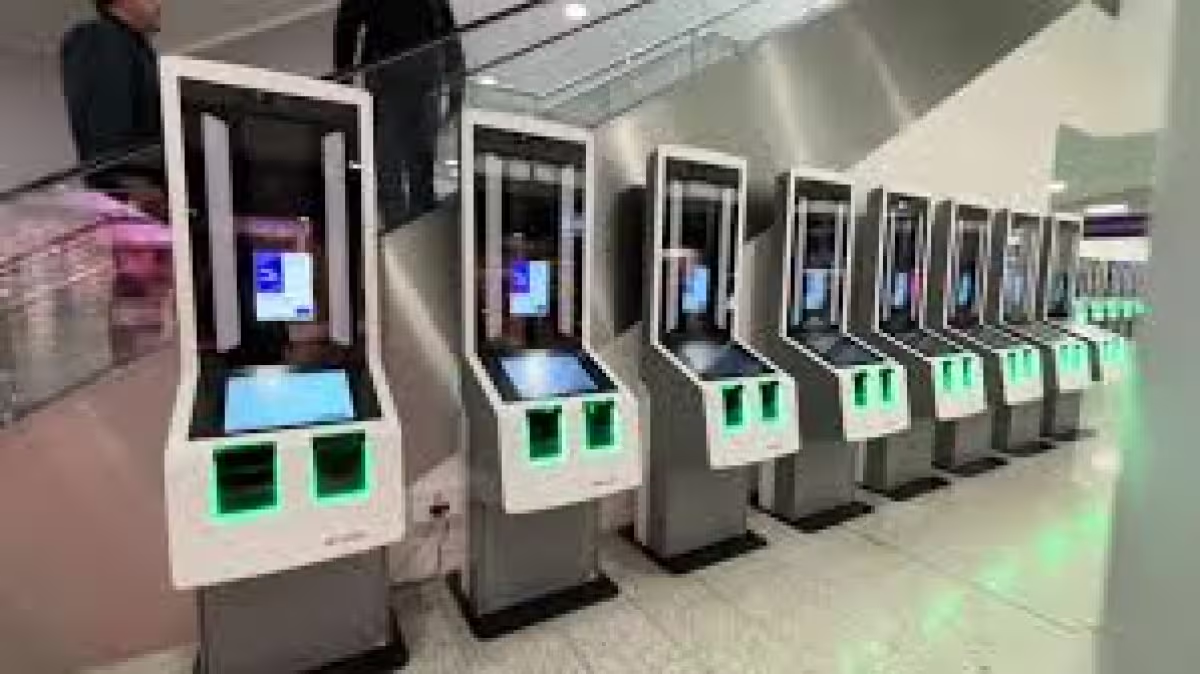
On her own trip to Mallorca for half-term, Moynihan said there were no queues, extra staff were on hand and there was a significant number of EES kiosks. That contrast matters because it shows how patchy the rollout has been: one airport can feel almost routine while another is leaving passengers stuck in line. She said travellers should expect long waits when they land in their destination airport and should leave several hours between connecting flights.
The scale of the disruption is now showing up in airport data. ACI Europe said the situation is deteriorating and reported queues of up to 3.5 hours at peak traffic times in a survey of 45 airports across 20 EU states on 26 May. It said airports that had not previously reported excessive waiting times are now doing so, suggesting the delays are spreading as traffic builds through the summer.
There is also a sharper edge to the friction than the official explanation suggests. The European Commission said registering information usually takes about a minute, and that the EU entry-exit system is not the only thing that can cause delays. Yet passengers are describing waits that last hours, not minutes, which is why the advice from airlines has moved faster than the system’s public assurances.
The pressure has already forced exceptions at another border point. French police temporarily suspended checks at the port of Dover last week after thousands of holidaymakers faced long delays in the hot weather, and a port spokesperson called the situation “challenging”. Police Aux Frontières used article 9 of the EES regulations, which allows checks to be relaxed temporarily, underscoring how quickly the new process can buckle when traffic spikes. For British travellers flying home through Europe, the safest assumption for now is that the extra time is not a buffer but part of the trip.
