


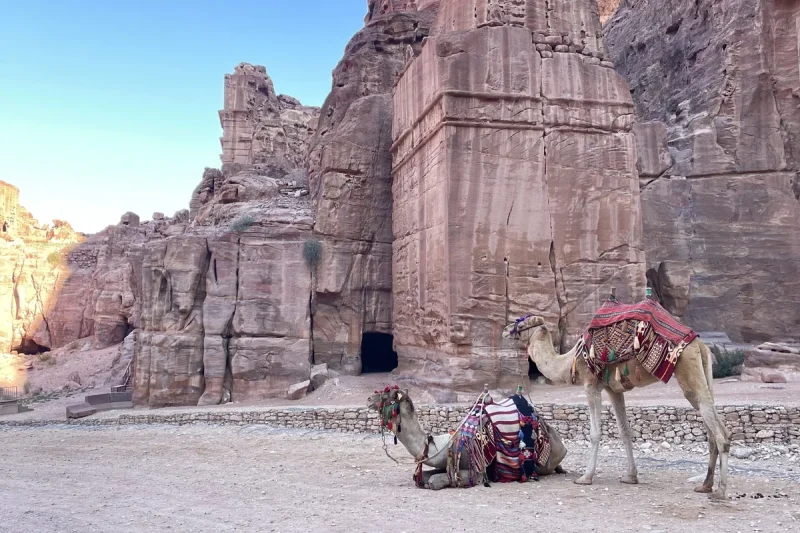
The Foreign Office has removed its non-essential travel advisory for most of Jordan this week, opening the door again for British travellers eyeing Petra, the Dead Sea and the country’s desert camps. But the move did not restore a normal picture overnight: the strip within 3km of the Syrian border remains under an advisory against all travel, and some airlines are still not back.
That change matters now because Jordan’s tourism sector has spent months waiting for exactly this moment. In January, Annabel Grossman stood in front of Petra’s Treasury almost alone, with the 1.2km Al Siq canyon empty around her, a stark image of how quickly visitor numbers had fallen after the Foreign Office warned against all but essential travel to most of the country on February 28, following US and Israeli strikes on Iran.
For travellers, the lifted advisory is the clearest sign yet that Jordan is once again being treated as a far easier and more tempting destination. A three-star hotel in Wadi Musa can still be booked for under £50 a night, while organised trips remain on sale at prices that would once have looked routine: Intrepid’s eight-day Explore Jordan trip starts at £919, and G Adventures’ eight-day Highlights of Jordan trip costs £790. On a good year, visitors would move from Petra to the Dead Sea, stop for mosaics in Madaba and camp under the stars at Wadi Rum.
The recovery, though, is not complete. British Airways flights to Amman remained suspended until October 25, and Wizz Air had not yet restarted flying to the Jordanian capital, even as Royal Jordanian continued to fly in and out of Amman. That gap matters because travel advice can change faster than airline schedules, leaving tourists with a green light from government but fewer seats on the planes that actually get them there.
In southern Jordan, the desire for visitors is not abstract. A local woman there said: “Here we pray for rain … and we pray for tourists.” It is a line that captures the country’s old calculation better than any brochure: tourism is a livelihood, and for places built around Petra, the Dead Sea and the road to Wadi Rum, a warning lifted in London has to turn into bookings, flights and full hotels before it becomes recovery. The next test is whether those numbers return quickly enough to match the easing of the advice.
