



Pete Hegseth said on Saturday that the United States was more than capable of resuming war with Iran if needed, delivering the warning from Singapore while leading a large American delegation at a major Asia defence summit. He said the U.S. stockpiles were “more than suited” for the job and that the military could restart the fight if Washington wanted to.
The remarks landed at a moment when the search for an Iran deal was still active and unsettled. The White House had signalled on Friday that Donald Trump was close to a decision on an initial agreement after weeks of mixed signals, even as Tehran denied there was any final deal on ending the Middle East conflict.
Hegseth’s language was unusually direct. He said, “Our ability to recommence if necessary is (that) we are more than capable, our stockpiles are more than suited for that, both there and around the globe because of how we balance exquisite and more plentiful munitions.” The comments came after U.S. strikes on the southern Iranian port of Bandar Abbas this week were met with retaliatory fire from Iran, keeping the confrontation live even as diplomats continued talking.
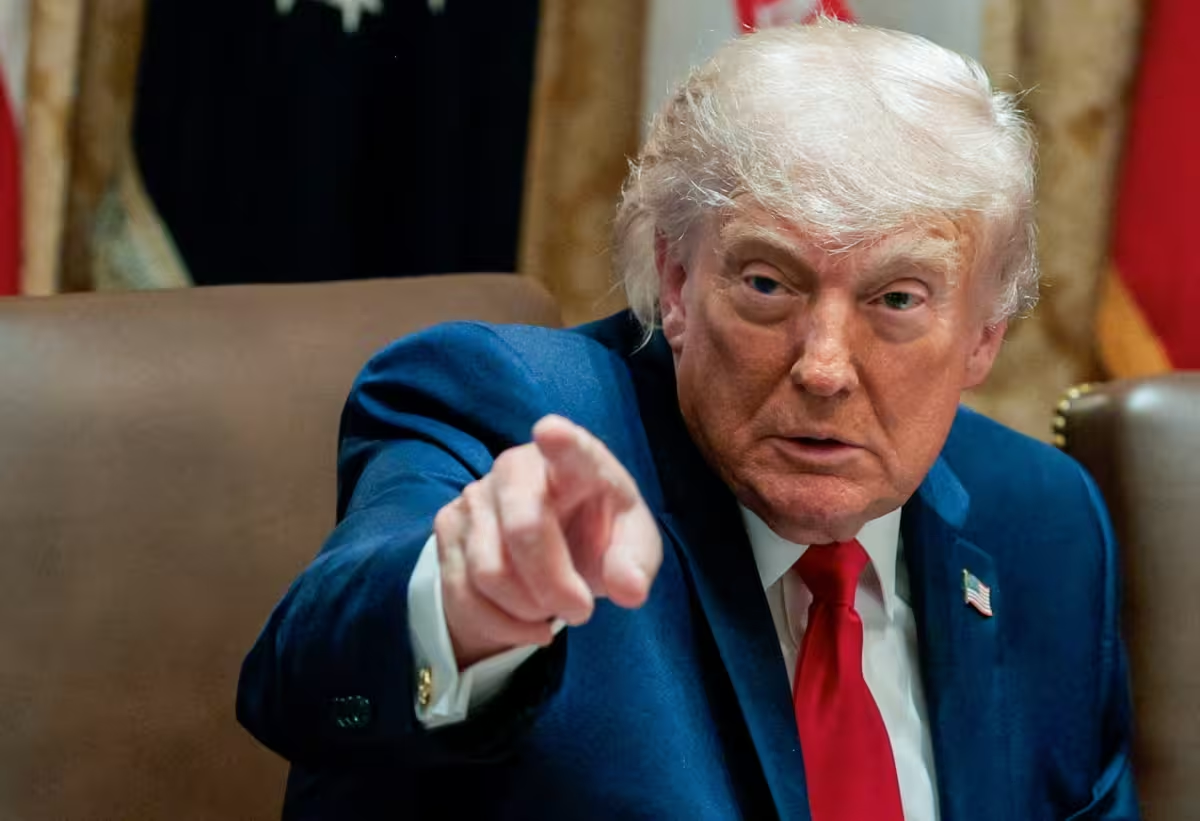
That is what makes the timing matter. Washington is still trying to shape a deal around Trump’s red lines, including his insistence that Tehran never be allowed to develop nuclear weapons, and Hegseth’s message suggested the military is prepared to back that posture with force if talks fail. The same week, diplomacy was also continuing in parallel to stop fighting in Lebanon, underlining how many strands of regional negotiation are still open at once.
The defense secretary also used the Shangri-La Dialogue to pivot to China, saying there was “rightful alarm” about Beijing’s military buildup. He said the United States did not seek “needless confrontation in the region” and wanted “respectful” and “good-faith” engagement with Beijing. He said the goal was “a genuinely stable equilibrium [in Asia] that works for Americans as well as our allies” and “a favourable but durable balance of power in which no state, including China, can impose its hegemony and hold the security or prosperity of our nation and our allies in question.”
The friction in the message is plain: Hegseth was signaling readiness for another round of war with Iran while the administration was still pursuing a deal and Trump had not yet locked in a final call. That leaves the next move with the president, whose decision on the proposed framework was still pending as the Singapore summit ran on. If he accepts a deal, Hegseth’s warning becomes leverage; if he does not, it reads as a preview of where the standoff could go next.
