


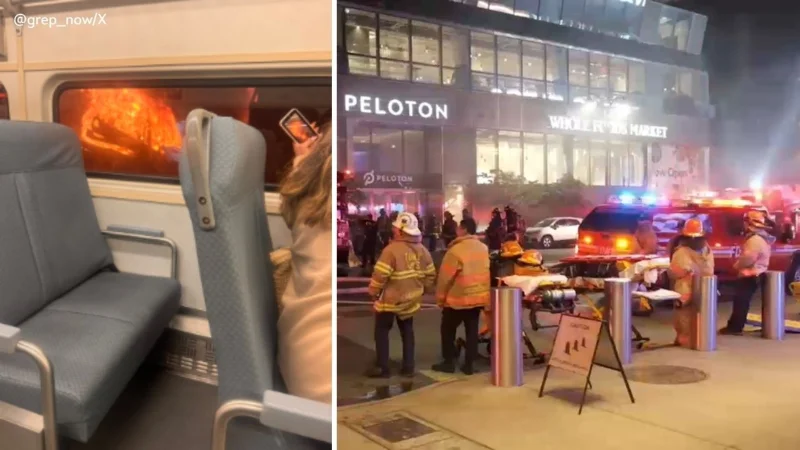
An Amtrak work train erupted in flames early Friday in one of the Hudson River Tunnels near Penn Station, injuring five transit workers and throwing rail service into midtown into chaos for thousands of commuters. The fire broke out around 1:30 a.m. on track 11 and forced New Jersey Transit, the Long Island Rail Road and Amtrak to suspend or divert service as firefighters battled the blaze underground.
The FDNY said it received reports of an Amtrak work train car on fire on track 11 and sent 46 units and 141 personnel to the scene. Two workers were taken to Bellevue Hospital with serious injuries, while three others refused treatment. All five were transit workers. Firefighters reached the tracks through an access door at 10th Avenue and West 32nd, and crews brought the fire under control at 4:05 a.m.
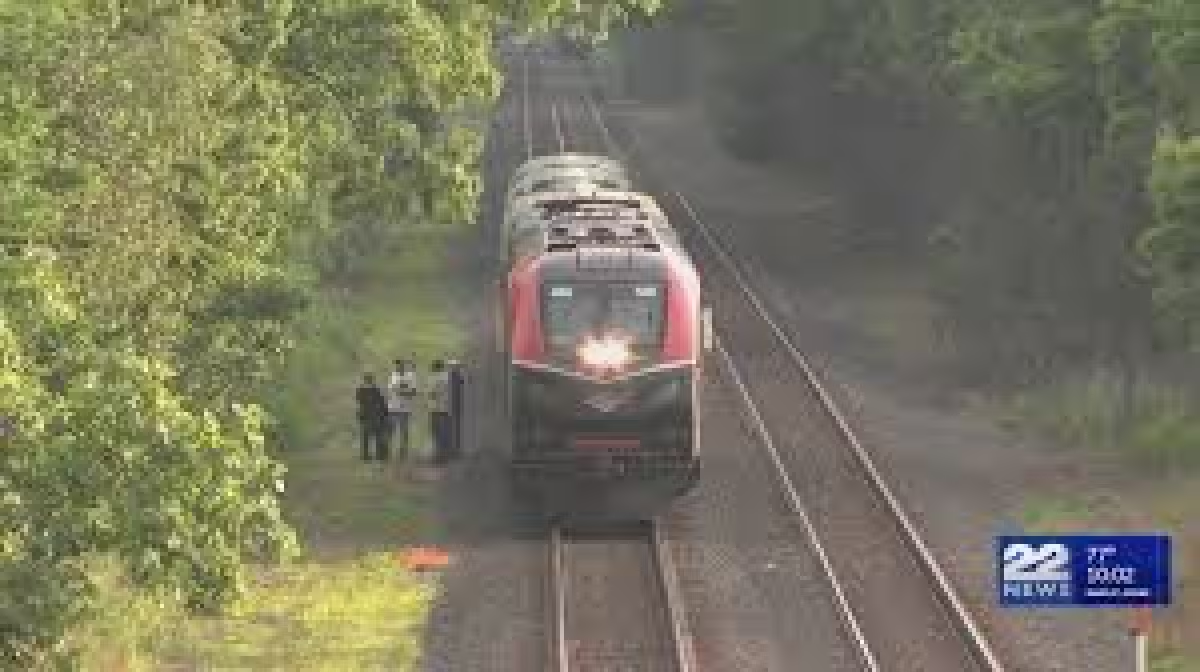
The disruption hit one of the busiest rail gateways in the country at the start of the day. New Jersey Transit suspended service into Penn Station and redirected Midtown Direct trains to Hoboken, with riders holding rail tickets and passes to be moved to private buses and PATH for service to the 33rd Street station in New York City. The Long Island Rail Road also suspended service into Penn Station, and passengers on all Long Island lines faced delays and cancellations, with trains expected to be diverted to Grand Central or Long Island City. Amtrak temporarily suspended all service south of New York, saying the shutdown was tied to unforeseen track and signal maintenance after the fire had been extinguished.
That damage was not limited to smoke and steam. Overhead wiring along track 11 was damaged, widening the reach of the shutdown and leaving both regional and intercity riders facing a morning of detours and cancellations. Amtrak said the suspensions south of New York were expected to last several hours, until at least noon, and that northern lines were also running with lengthy delays. At least eight Amtrak trains bound for or leaving New York were canceled Friday.
Michael Barvels, describing the firefight underground, said crews had to use an emergency exit because that was the closest option and that going through Penn Station itself would have meant a far longer hose stretch. He said conditions below ground were punishing, with heavy smoke, high heat and multiple hazards, including tripping and electrical risks, but added that the crews were trained for the response. An investigation into the cause was ongoing.
