


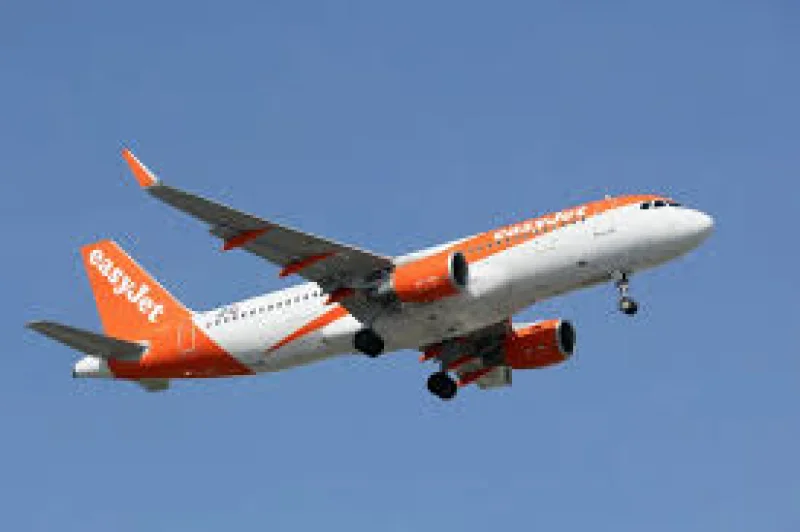
An EasyJet flight from Hurghada in Egypt to London Luton was diverted to Rome on Tuesday night after a passenger told crew a portable charger was in the hold of the aircraft. Flight EZY2618 landed safely at Rome Fiumicino about 20 minutes after taking a sharp left turn over the Adriatic Sea.
Data from FlightRadar24 shows the Airbus was cruising at 36,000ft almost three hours into the journey when it changed course. The flight was then rescheduled for Wednesday, leaving passengers to stay overnight until the next day.
The captain decided to divert in line with safety regulations, even though it is understood there was no issue with the power bank itself. The move came after a potentially fraught report in the cabin, and it underlined how quickly airlines can shift a routine trip into an unscheduled landing when lithium batteries are involved.
That caution is now baked into airline rules. Regulations say power banks are not allowed to be charging in the hold during a flight, and EasyJet says they are accepted on aircraft in cabin baggage only. The airline also says power banks must not be used to charge other devices, that each customer may carry a maximum of two power banks, that lithium units must not exceed 160 Watt-hour, and that they should be individually protected, such as in their original packing or a plastic bag.
Other carriers have also tightened the screws. Ryanair says power banks are not allowed in checked baggage and cannot go in overhead compartments, while British Airways says they must not exceed 100Wh and should be stored in the seat pocket or in a bag placed under the seat in front. British Airways also says plug sockets on planes cannot be used to charge power banks themselves.
The wider industry has been moving in the same direction since the International Civil Aviation Organisation introduced new restrictions in March. Airlines have grown more wary of lithium-ion batteries because they can catch fire, and that risk has pushed power bank rules from the small print to the front line of flight safety.
For the passengers on EZY2618, the result was an unscheduled night in Rome and a delayed arrival in London. For EasyJet, the episode shows that even when a reported problem turns out not to involve a faulty device, the mere presence of a power bank in the wrong place can still force a jet off course. More details on a similar diversion can be found in earlier coverage of EasyJet Flight Diversion Rome after power bank found in checked baggage and Easyjet Flight Diverted Rome After Power Bank Charge Alert On Hurghada-Luton Run.
