


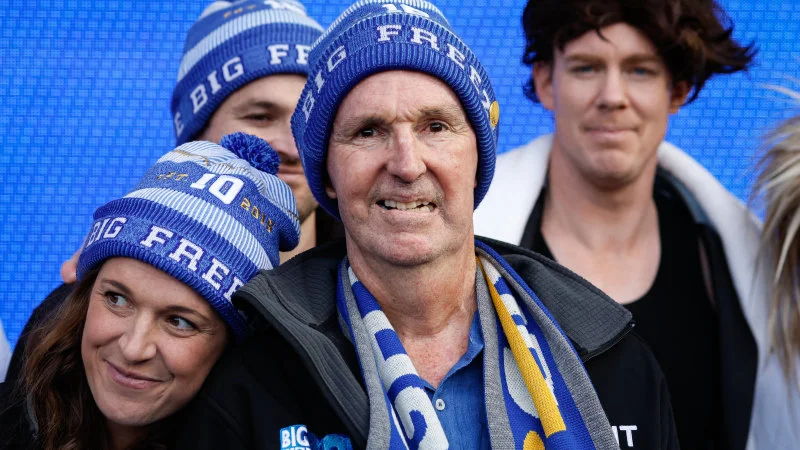
Neale Daniher, the former Melbourne coach and fierce campaigner against motor neurone disease, died on Monday at home surrounded by his family. He was 65.
The Daniher family said in a statement on Monday afternoon that they were heartbroken to share the death of their “much-loved husband, Dad and Poppy,” and remembered the way he took on motor neurone disease, which he called “the Beast,” with determination and humour. The announcement came two weeks before the King’s Birthday match between Melbourne and Collingwood, an occasion that has become closely tied to his FightMND charity and the Big Freeze fundraiser.
Daniher was one of 11 children raised at Ungarie in central New South Wales and became a champion VFL footballer before coaching Melbourne. Zoned initially to South Melbourne, later Sydney, he played his first VFL game for Essendon in 1979 after a complicated trade saga involving his older brother Terry. A knee injury shaped much of his playing career, but he still managed 82 games across 12 seasons.
His final game came in round 22 of the 1990 season, when he played alongside Terry, Anthony and Chris in the same side. It was the first and only time four brothers had appeared in the same team at the highest level, a rare family milestone that added to his standing in the game long before he became known nationally for his charity work.
After his playing career, Daniher stayed in football as an assistant coach to Kevin Sheedy at Essendon and later at Fremantle. He was appointed senior coach of Melbourne for the 1998 season and spent 10 seasons in charge. The Demons reached the 2000 grand final under him, but lost to Sheedy’s Essendon team.
His influence reached far beyond the boundary line after motor neurone disease forced him into a different fight. Daniher became the public face of FightMND and the Big Freeze fundraiser, using his profile to drive awareness and donations for a disease that had devastated his life. He was named Victorian of the Year in 2019 for that work, then Australian of the Year in 2025.
The family’s statement described him as “a fighter” from the beginning and said his determination was unmatched, adding that he kept pushing forward and looked for opportunity where others might see only challenge. It said he kept landing blows against his toughest opponent, with a cheeky grin and a sharp sense of humour that never left him.
His death leaves a gap in both football and the fight against motor neurone disease, but the causes he gave his name and energy to are firmly embedded in the sport he loved. The King’s Birthday match will now carry even more weight as the annual moment that measures how far his campaign reached — and how far it still has to go.
