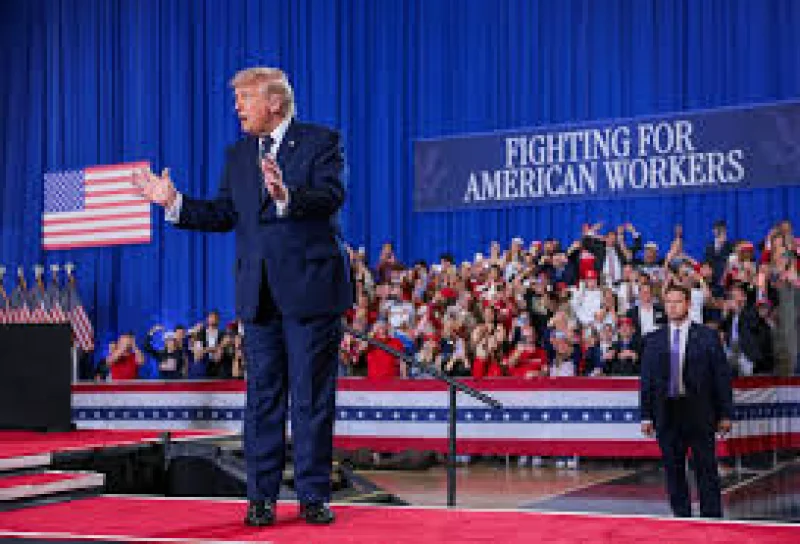
President Trump delivered remarks at a campaign event for Rep. Mike Lawler, a Republican from New York, putting the congressman on the same stage as the former president at a moment when every public appearance carries campaign value. The event was identified in a C-SPAN title as “President Trump Delivers Remarks at Rep. Mike Lawler (R-NY) Campaign Event.”
For Lawler, the appearance with Trump was the point of the gathering. For Trump, it was another chance to speak directly to a Republican crowd and underscore his role in the party’s campaign politics, even as the event itself offered little in the way of extra detail beyond the title and standard site boilerplate.

That lack of detail matters because it leaves the central fact intact but narrow: Trump showed up for Lawler, and the campaign wanted that visible association. In a political season shaped by attention and alignment, a former president appearing at a congressional campaign event is itself the message, especially when the source record does not add a fuller account of what was said or announced.
The thinness of the source text also creates a contrast with how these events usually land once the room clears and the clips spread. The headline is all signal and very little texture, which means the story is not about a policy pivot or a surprise endorsement twist. It is about the public alignment itself, presented plainly and without embellishment.
What happens next is straightforward: the appearance will be judged by how much it helps Lawler with voters and how much attention it gives Trump in a race where even a brief stage share can become part of the campaign narrative. If the reaction around the event grows, the same kind of attention that can follow other public-facing moments, from a New York Times opinion piece protest to the daily pull of a Connections puzzle, will shape how long it stays in circulation. The fact at the center remains simple: Trump went to Lawler’s campaign event, and both men got what such a moment is designed to deliver.