


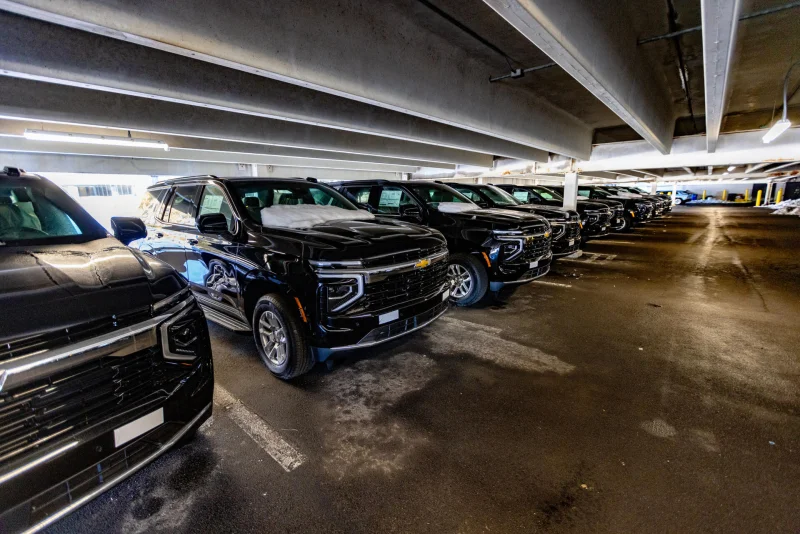
The Justice Department is threatening to sue Maine, Massachusetts, Washington and Oregon over their refusal to provide undercover license plates to Immigration and Customs Enforcement agents, escalating a dispute that has become part of a broader fight over immigration enforcement. On May 12, a top Justice Department official warned the four Democratic-led states that they were running afoul of the Constitution’s Supremacy Clause.
Brett Shumate, the assistant attorney general for the DOJ’s Civil Division, said Oregon’s motor vehicle agency had gone too far by denying standard and undercover registrations and plates to federal agencies while continuing to issue them to similarly situated state and local agencies. In his letter, Shumate wrote that Oregon’s DMV had “directly run afoul of the Supremacy Clause by discriminating against the federal government.” He used similar language in letters to the three other governors.
The dispute centers on whether the states can refuse to provide plates that conceal the identities of federal agents. The DOJ’s position is that the refusals are not just a political objection to ICE, but a legal obstacle to federal work. The states, by withholding those plates, are being told they may be interfering with the government’s ability to carry out immigration enforcement. That question matters now because the clash is unfolding while immigration remains one of the sharpest points of tension between Washington and Democratic-led states.
Charles Cully Stimson, who has been following the issue, said the states were playing a dangerous game by refusing to help protect ICE agents. Still, he said he did not think the DOJ had a particularly strong case. “Federal law preempts state law when state law conflicts with a supreme federal law. And when it does, the state law is preempted, meaning that the state law cannot be given legal effect in those instances of conflict,” Stimson said. But he added, “So as much as I think that the DOJ is putting forth a plausible argument, I don't think there's a lot of ‘there’ there in this argument,” and said the department would likely have to show the plate restrictions conflict with a specific federal law.
That is the pressure point in the fight. If the states are simply declining to assist ICE in civil immigration enforcement, they may have room to stand their ground. If the refusal is found to obstruct federal immigration enforcement itself, the Justice Department’s threat to sue becomes far harder to dismiss. For now, the case appears headed toward a test of how far a state can go in limiting cooperation with federal agents before the Constitution gives Washington the final word.
