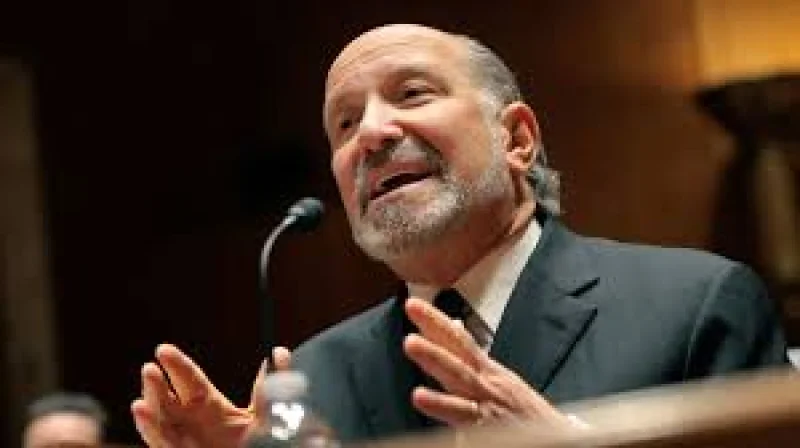
Howard Lutnick told House lawmakers in a closed-door interview earlier this month that he met Jeffrey Epstein only three times and had no personal or professional relationship with him. The House oversight and reform committee released the transcript of the session on Wednesday afternoon, putting his account of those encounters into the public record.
Lutnick said the first meeting came in 2005, when he and his wife were invited for coffee at Epstein’s home. He said the second was in 2011, when he briefly stopped by to discuss scaffolding. The third, he said, came in 2012, when Epstein invited him, his family and friends to lunch on his private island. He described all three in-person interactions as meaningless and inconsequential.
“To the best of my recollection, those were the only three occasions in which I interacted with Epstein in person,” Lutnick said, adding, “Each and every one was meaningless and inconsequential.” He also said, “I had no personal or professional relationship with this individual, despite the proximity of our addresses,” and said he did not witness any conduct by Epstein during those limited interactions, including illegal conduct.

The interview landed amid renewed scrutiny of Lutnick’s ties to Epstein after the justice department released millions of documents related to the financier. Those documents showed correspondence between Lutnick and Epstein after Epstein’s 2008 conviction of soliciting prostitution from a minor, even though Lutnick had previously said on a podcast last year that he and his wife severed ties with Epstein in 2005 after visiting his home.
Lutnick said he and his wife saw a massage table in Epstein’s house during the 2005 visit, and said Epstein told him he received massages “every day and the right kind of massage.” Epstein lived adjacent to Lutnick’s New York City home, a detail that came up in the committee’s questioning as lawmakers pressed him on how close the two men remained after the first visit. Much of that questioning centered on Lutnick’s podcast remarks from last year, which now sit uneasily beside the newly released transcript and the records showing later correspondence.
Epstein died in a Manhattan jail in 2019 while awaiting trial on federal sex-trafficking charges. For Lutnick, the transcript narrows his own account to three occasions, but it also leaves unresolved why communication continued after the 2008 conviction and after he said the relationship had ended. That gap is likely to keep the focus on the documents as lawmakers continue examining the broader network around Epstein and the contradictions in what some of those close to him have said publicly.