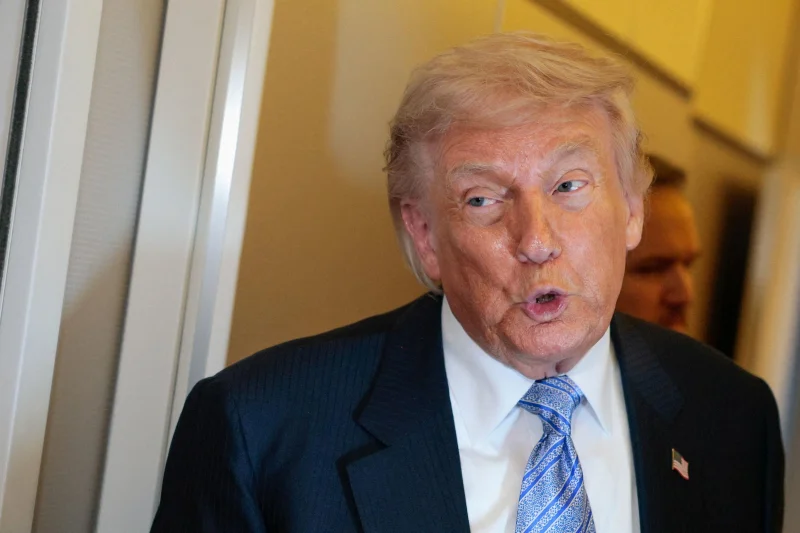
President Donald Trump has signed an executive order directing federal officials to push banks toward closer scrutiny of customers’ citizenship and immigration status, a move that ties financial regulation more directly to the administration’s broader immigration enforcement agenda.
The order, signed Tuesday, May 19, ET, does not require banks to collect citizenship documents from every customer. That more aggressive idea had been under consideration and drew strong objections from the financial industry. Instead, the directive tells the Treasury Department and banking regulators to issue guidance and pursue rule changes aimed at identifying financial activity the administration links to undocumented labor, tax evasion, trafficking and organized crime.
What The Trump Bank Citizenship Order Does
The executive order directs Treasury officials to issue advisories to banks about “red flags” that may indicate illegal financial activity involving undocumented workers or employers. Those indicators are expected to include payroll tax evasion, hidden account ownership, shell companies, off-the-books wage payments, labor trafficking and suspicious use of Individual Taxpayer Identification Numbers.
The order also calls for changes to customer due diligence rules under the Bank Secrecy Act. Those rules already require financial institutions to verify customer identity and monitor risk, but they generally do not require banks to determine whether someone is a U.S. citizen.
The practical effect is likely to be more compliance pressure on banks rather than an immediate nationwide citizenship check. Regulators have been told to propose changes within 90 days, meaning the most consequential details may come through agency guidance and rulemaking rather than the order itself.
Banks Avoided A Broader Verification Mandate
The final order stops short of requiring banks to collect citizenship or immigration status from all customers, a step that industry groups had warned would be costly, legally complicated and disruptive.
Banks already follow “know your customer” requirements designed to prevent money laundering, terrorist financing and fraud. Adding immigration status to that framework would create new operational burdens, especially for large institutions with millions of existing accounts and for smaller banks without extensive compliance departments.
The narrower version still carries risk for banks. Even without a universal mandate, financial institutions may feel pressure to ask more questions when customers use foreign documents, taxpayer identification numbers or employment patterns that regulators flag as higher risk. That could produce uneven treatment across institutions and regions, depending on how aggressively banks interpret future guidance.
Immigration Enforcement Moves Into The Financial System
The order is part of a wider effort to use financial tools in immigration enforcement. The administration has argued that undocumented workers and employers who pay off the books can use bank accounts, shell businesses and informal labor networks to conceal illegal activity.
Officials have also pointed to money laundering, fentanyl trafficking and cartel-linked financial crime as justification for tightening bank scrutiny. The order frames the issue as both an immigration matter and a financial integrity problem, saying regulators should help identify patterns that may show labor trafficking, wage violations or hidden ownership.

That framing gives the policy broader reach than a simple bank-account rule. It places immigration status inside the risk calculations banks already use when deciding how closely to monitor customers, transactions and business relationships.
Citizenship Questions Could Affect Immigrants And Mixed-Status Families
The biggest uncertainty is how the order will affect noncitizens who are legally present, undocumented immigrants, and families where members have different legal statuses. U.S. banks commonly serve noncitizens, including green card holders, visa holders, students, asylum seekers and workers who may not have standard U.S. identity documents.
The order does not ban banks from serving noncitizens. It also does not say undocumented immigrants must automatically be denied accounts. But the policy could make banks more cautious, especially when customers rely on Individual Taxpayer Identification Numbers rather than Social Security numbers.
Consumer advocates have warned that tighter scrutiny could push more people out of regulated banks and toward cash transactions, check-cashing businesses or informal financial networks. That would make daily life harder for affected households and could also reduce transparency in the financial system, the opposite of what anti-money-laundering rules are designed to achieve.
Legal And Compliance Questions Are Still Open
The next phase will determine how far the policy goes. Treasury and banking regulators must translate the order into advisories, proposed rules and examination standards that banks can actually follow.
Any major rule requiring immigration-related data collection could draw legal challenges over privacy, discrimination, administrative procedure and the scope of federal banking law. Banks may also seek clearer liability protections if they are expected to request sensitive documents or flag customers based on legal-status concerns.
There is also a civil-rights dimension. Financial institutions are prohibited from discriminating unlawfully in lending and account access. Regulators will have to balance the administration’s enforcement goals against rules meant to ensure fair access to banking services.
What Customers Should Expect Next
For now, most bank customers are unlikely to see immediate changes at the teller window or in mobile banking. The executive order starts a regulatory process rather than imposing a same-day citizenship verification rule.
The bigger impact may appear gradually as banks update internal risk systems, revise account-opening questions, train compliance teams and respond to new federal guidance. Customers using nontraditional identification, foreign consular documents, ITINs or complex business structures may face more questions than they did before.
The order leaves the central tension unresolved: the administration wants banks to help identify financial activity tied to illegal immigration and crime, while the banking industry wants rules that are clear, limited and workable. The next 90 days will show whether the policy remains a targeted compliance directive or becomes a broader test of who can easily access the U.S. banking system.