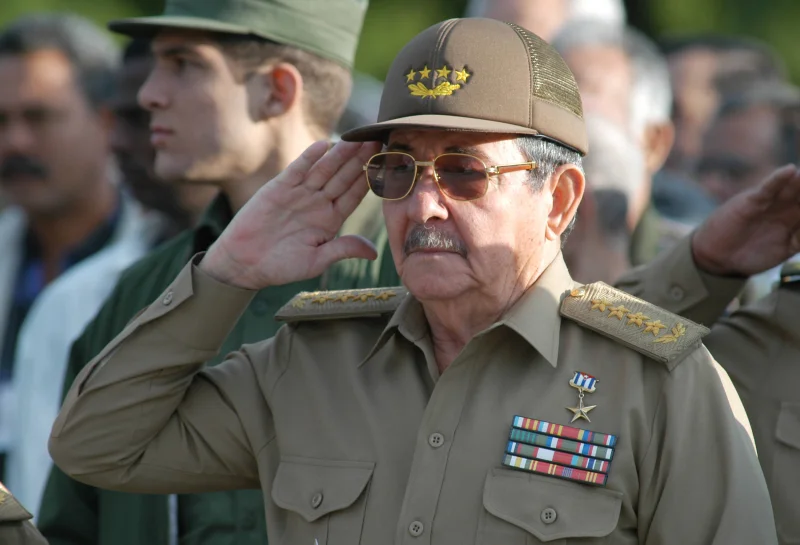
U.S. prosecutors have unsealed a superseding indictment charging former Cuban leader Raúl Castro and five Cuban military co-defendants over the 1996 shootdown of two civilian planes operated by Brothers to the Rescue. The case, announced Wednesday, May 20, brings new criminal pressure against Castro nearly three decades after the attack killed four men and became one of the most consequential flashpoints in U.S.-Cuba relations.
What Raúl Castro Is Charged With
The indictment charges Raúl Modesto Castro Ruz, now 94, in connection with the February 24, 1996, destruction of two unarmed civilian aircraft off Cuba’s coast. Castro was Cuba’s defense minister at the time and controlled the armed forces under his brother, Fidel Castro, who was then the country’s president.
The charges include conspiracy to kill U.S. nationals, murder and destruction of aircraft. Five Cuban military figures are also named: Lorenzo Alberto Pérez-Pérez, José Fidel Gual Barzaga, Luis Raúl González-Pardo Rodríguez, Emilio José Palacio Blanco and Raúl Simanca Cárdenas.
Prosecutors allege Castro authorized deadly force against the planes after earlier flights by the exile group angered Havana, including a January 1996 flight that dropped pro-democracy leaflets over Cuba. The indictment says the Cuban pilots trained to find, track and intercept aircraft linked to Brothers to the Rescue before the fatal mission.
The Brothers To The Rescue Shootdown
Brothers to the Rescue was a Miami-based Cuban exile group that began by searching the Florida Straits for rafters fleeing Cuba. Its pilots later became a direct political irritant to Havana as the group challenged the Cuban government and publicized the migration crisis.
On February 24, 1996, Cuban MiG fighters shot down two Cessna aircraft flown by the organization. The men killed were Carlos Costa, Armando Alejandre Jr., Mario de la Peña and Pablo Morales. A third plane escaped.
The United States has long maintained that the planes were in international airspace when they were destroyed. Cuba has argued for decades that the flights violated its sovereignty and posed a security threat. That dispute over airspace, intent and state responsibility has remained central to the case.
Why The Indictment Matters Now
The new charges mark a sharp escalation in Washington’s legal and diplomatic posture toward Havana. The indictment does not merely revisit a historical grievance; it places a former Cuban head of state under active U.S. criminal accusation for an incident that helped shape policy toward Cuba for a generation.
The timing also matters because Cuba is facing deep economic strain, power shortages and ongoing political pressure. The indictment gives Cuban exile communities and victims’ families a long-sought formal accusation against Castro himself, not only against lower-level military figures.

For the U.S. government, the case presents the shootdown as a crime against civilians rather than a military confrontation. For Cuba, it is likely to be treated as a politically motivated prosecution tied to decades of hostility between the two countries.
Where Raúl Castro Is Now
Raúl Castro is believed to be in Cuba. He stepped down as Cuba’s president in 2018 and left the top post of the Communist Party in 2021, formally ending the Castro family’s direct hold on the country’s highest offices.
He remains alive and politically symbolic. Born on June 3, 1931, Castro is 94 and is still viewed as an influential elder figure within Cuba’s governing system, even though Miguel Díaz-Canel holds the country’s top formal leadership role.
His age and location make the practical future of the case uncertain. The United States does not have a normal extradition pathway with Cuba. Unless Castro travels to a country willing to act on a U.S. warrant, or unless there is a major political shift in Havana, bringing him into a U.S. courtroom would be difficult.
Fidel Castro’s Role Hangs Over The Case
Although the indictment focuses on Raúl Castro and the named military co-defendants, Fidel Castro’s shadow is unavoidable. In 1996, Fidel was Cuba’s president and the dominant political figure on the island, while Raúl oversaw the military establishment.
The case therefore reaches into the governing structure of the Castro era, when party, state and military authority were tightly connected. Prosecutors are framing the shootdown as a decision made at the highest levels, not as an isolated action by pilots in the air.
Fidel Castro died in 2016 and cannot face charges. Raúl Castro’s daughter, Mariela Castro, remains a prominent Cuban public figure known internationally for LGBTQ advocacy, but she is not accused of wrongdoing in this case.
What Happens Next
The indictment creates a legal record and an active criminal case, but it does not guarantee a trial. One defendant, Luis Raúl González-Pardo Rodríguez, is in U.S. custody in a separate immigration-related matter and has pleaded guilty to making false statements. The other defendants, including Raúl Castro, are not in U.S. custody.
The next phase will likely involve arrest warrants, diplomatic pressure and further legal proceedings involving any defendant within reach of U.S. authorities. Cuba is expected to reject the case and resist any effort to transfer the accused.
For the families of the four men killed, the indictment represents a major step toward accountability after nearly 30 years. For U.S.-Cuba relations, it reopens one of the most painful episodes of the post-Cold War era and places the question of the Brothers to the Rescue shootdown back at the center of a tense diplomatic confrontation.