


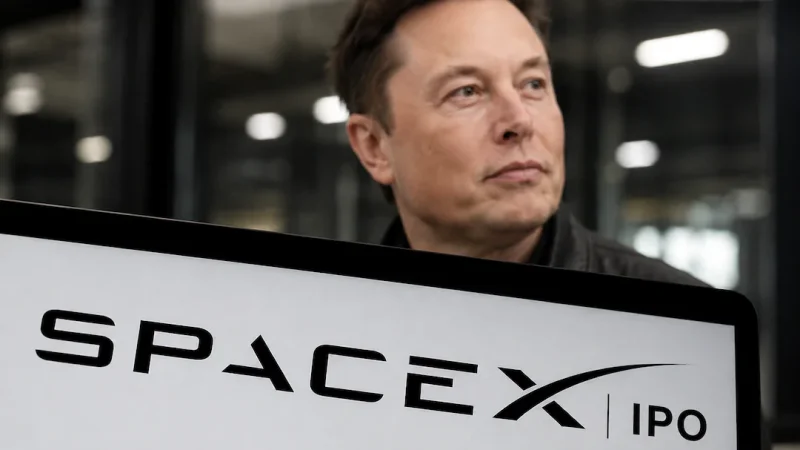
SpaceX has moved closer to a long-anticipated public listing after filing IPO paperwork with U.S. regulators, setting up what could become the largest stock-market debut in history and giving investors their first detailed look at Elon Musk’s rocket, satellite internet and artificial intelligence empire. The company is expected to seek a Nasdaq listing under the ticker SPCX, with a possible June timetable still dependent on market conditions and final offering terms.
SpaceX IPO Date Comes Into Focus
The most closely watched date is June 12, when SpaceX could begin trading if the current timeline holds. The offering process is expected to include a formal investor roadshow in early June and possible pricing the night before the stock starts trading.
That schedule is not final. IPO calendars can shift quickly if market volatility rises, regulators ask for additional information or underwriters decide demand needs more time to develop. Still, the filing marks a major step beyond years of speculation about when SpaceX would enter public markets.
The planned ticker, SPCX, has already drawn attention because it gives the company a clean, recognizable symbol tied closely to its name. For retail investors who have searched for “Space X stock” or “SpaceX stock price” for years, the listing would create the first ordinary public-market route to buy shares directly.
Prospectus Reveals Revenue, Losses And Ambition
The SpaceX prospectus shows a company with massive revenue, heavy spending and unusually broad ambitions. SpaceX generated about $18.7 billion in revenue in 2025, with Starlink providing more than $11 billion of that total. The satellite internet business is the strongest near-term financial engine inside the company and a central part of the IPO story.
The filing also shows major losses and capital needs. SpaceX lost nearly $5 billion in 2025, while capital expenditures climbed above $20 billion. Those numbers reflect the cost of building and launching rockets, expanding Starlink, developing Starship and absorbing the demands of Musk’s broader AI infrastructure push.
For investors, the central question is whether SpaceX should be valued as a launch company, a telecom company, an AI infrastructure company or a category of its own. The answer will shape how Wall Street judges the IPO price.
SpaceX Stock Price And Valuation Expectations
Before the IPO, SpaceX has traded only in private and secondary markets, where prices can vary widely and do not always reflect what public investors will pay. Recent private-market indicators have placed the company’s valuation well above $1 trillion, while the IPO target has been discussed around $1.75 trillion.
A valuation at that level would make SpaceX one of the most valuable companies in the world from its first day on the market. It would also put enormous pressure on future earnings, cash flow and growth.

The IPO could raise roughly $75 billion if current expectations hold, far surpassing previous global listing records. That would make the offering not only a SpaceX event, but a test of investor appetite for megacap technology listings after years of intense demand for AI and space-related growth stories.
Elon Musk Net Worth Could Move Sharply
The IPO could have a major effect on Elon Musk’s net worth because much of his wealth is tied to private or highly volatile assets. A public SpaceX valuation would give markets a transparent daily price for one of his most important holdings.
Musk is expected to retain significant voting control after the listing through a dual-class share structure. That would let public investors participate financially while leaving strategic control largely in Musk’s hands.
That governance setup will be a major issue for institutional investors. Supporters may argue that Musk’s control helped create SpaceX’s unmatched launch cadence and Starlink scale. Critics may question the risks of concentrating so much authority across companies involved in space, AI, electric vehicles and social media.
Why Starlink Is Central To The IPO
Although SpaceX is best known for rockets, Starlink is likely to be the business investors study most closely. Satellite broadband gives the company recurring revenue, global reach and a commercial model that is easier for Wall Street to compare with telecom and internet infrastructure companies.
Starlink also supports SpaceX’s launch business by giving the company a built-in customer for rocket missions. That vertical integration has helped SpaceX launch satellites at a scale competitors have struggled to match.
The risk is that Starlink requires constant investment in satellites, ground infrastructure, spectrum access and regulatory approvals around the world. Its long-term value depends on subscriber growth, pricing power, mobile connectivity, government contracts and competition from terrestrial and satellite rivals.
What The IPO Could Mean For The Stock Market
A SpaceX IPO would reshape the 2026 market calendar. A listing of this size could pull capital from other IPOs, force index providers to evaluate fast-track inclusion rules and create immediate demand from funds that track major benchmarks.
The debut could also influence valuations across aerospace, defense, telecom, satellite, AI infrastructure and high-growth technology stocks. If SpaceX trades strongly, it may reopen the door for more large private companies to list. If it disappoints, it could cool enthusiasm for richly valued AI and space offerings.
For now, the key unknowns are the final IPO price, share count, investor demand and any updates SpaceX makes before trading begins. The filing has answered the biggest question — SpaceX is moving toward Wall Street — but the market still has to decide what the company is worth once the countdown reaches zero.
