


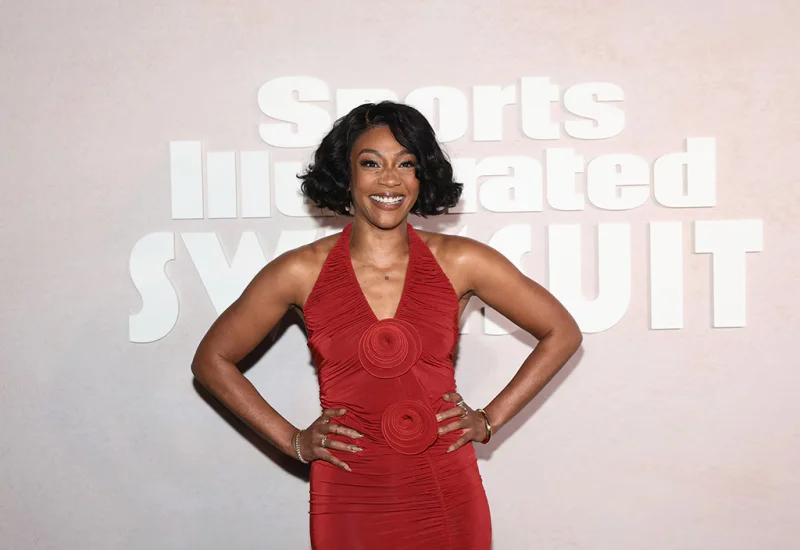
Tiffany Haddish’s new Sports Illustrated Swimsuit cover has turned into one of the most discussed celebrity moments of the magazine’s 2026 rollout, drawing attention to her age, fitness transformation, comedy career and message about self-confidence. The 46-year-old actor and comedian appears as one of this year’s cover stars, joining a lineup that also includes Hilary Duff, Alix Earle and Nicole Williams English.
Tiffany Haddish Lands A Major Swimsuit Milestone
Haddish’s cover was unveiled May 12 as part of the 2026 Swimsuit issue rollout, with the comedian photographed in Loreto, Baja California Sur, Mexico. The shoot places her in a group of high-profile entertainers, influencers and models chosen for a franchise that has increasingly expanded beyond traditional fashion-model casting.
For Haddish, the moment carries personal weight. She has described the shoot as a long-running dream tied partly to her late grandmother, who modeled in the 1950s. Her public reaction has blended comedy with emotion, including jokes about being a “21-year-old swimsuit model” while also speaking seriously about reconnecting with her body.
The cover arrives at a time when celebrity swimsuit features often spark immediate debate about age, appearance, fitness and authenticity. Haddish leaned directly into that conversation, presenting the shoot as a celebration rather than an attempt to meet a narrow standard of glamour.
Why The Sports Illustrated Cover Drew So Much Attention
The 2026 Swimsuit issue has generated wide entertainment coverage because of its varied cover lineup. Haddish stands out because she is best known for comedy and film, not modeling, and because she has built much of her public persona around blunt humor and personal resilience.
Her shoot followed a period in which she has spoken about knee injuries, physical recovery and the work it took to feel strong again. That background changed the meaning of the images. The cover is not only a fashion moment; it is also being framed as a public marker of recovery, discipline and self-acceptance.
Haddish has also said the experience helped her feel more “in tune” with her body. That message has resonated with fans who see the cover as part of a broader shift in how women over 40 are presented in mainstream beauty and entertainment spaces.
Jason Lee Connection Adds Social-Media Interest
The rollout also pulled in social-media attention around Jason Lee, the media personality who has long moved through celebrity and entertainment circles. His name surfaced in online conversation as fans discussed Haddish’s support system, public image and the way entertainment personalities amplify major pop-culture moments.
That layer reflects how celebrity news now travels. A magazine cover is no longer just a print or digital release; it becomes a networked event shaped by interviews, reposts, reaction clips and commentary from entertainment figures. Haddish’s cover gained momentum not only because of the images, but because her personality made the rollout easy to discuss, defend, joke about and celebrate.
Still, the core story remains Haddish herself. The strongest reaction has centered on her decision to embrace the shoot openly and frame it as proof that reinvention can happen later in life, after injuries, setbacks and career changes.
Denise Austin And The Broader Age Conversation
Denise Austin’s name has also been part of the surrounding Sports Illustrated Swimsuit conversation, especially because she and her daughter Katie Austin have become familiar figures in the brand’s recent event ecosystem. Their presence underscores a larger theme: the Swimsuit issue has increasingly leaned into cross-generational visibility.
That shift matters because Haddish’s cover is being received in a media environment where older women in entertainment are challenging the idea that beauty campaigns must be dominated by younger celebrities. Haddish, Duff and other 2026 participants have helped turn the issue into a conversation about comfort, boundaries and confidence rather than only swimwear.
For longtime fitness figures such as Austin, the theme is familiar: public wellness, body confidence and aging have become commercial and cultural storylines. Haddish enters that space from a different route, using humor and candor rather than fitness branding, but the underlying message overlaps.
A Launch Party Keeps The Rollout In The Spotlight
The 2026 Swimsuit issue launch party in New York added another visibility boost. Haddish appeared on the red carpet in a bold red look, continuing the confident public rollout that began with the cover reveal. Other magazine figures and entertainment personalities also attended, giving the event the feel of a broader pop-culture gathering rather than a standard magazine promotion.
Haddish’s comments at the launch kept attention on authenticity. She joked that she is “all natural” except for hair and nails, a line that fit her established comedic style while reinforcing the body-confidence message behind the shoot.
The launch also came with the usual mix of praise and criticism online. Some fans celebrated the cover as empowering; others debated whether the Swimsuit issue itself can ever fully escape older arguments about objectification. Haddish’s response has been to own the moment rather than soften it.
What The Tiffany Haddish Cover Means Now
The immediate impact of the cover is clear: Haddish has added a major fashion and entertainment milestone to a career already defined by stand-up, film, memoir and television work. It also gives the 2026 Swimsuit issue one of its most talked-about personalities.
The longer-term significance is about representation and timing. Haddish’s cover lands at a moment when audiences are more willing to question who gets called glamorous, who gets photographed as aspirational and how women’s bodies are discussed after 40.
For Sports Illustrated, the selection reinforces the brand’s move toward celebrity-driven, personality-led covers. For Haddish, it is a public declaration that confidence can be funny, imperfect, physical and hard-earned. That combination is why the cover has traveled beyond fashion coverage and become a broader entertainment story.
