


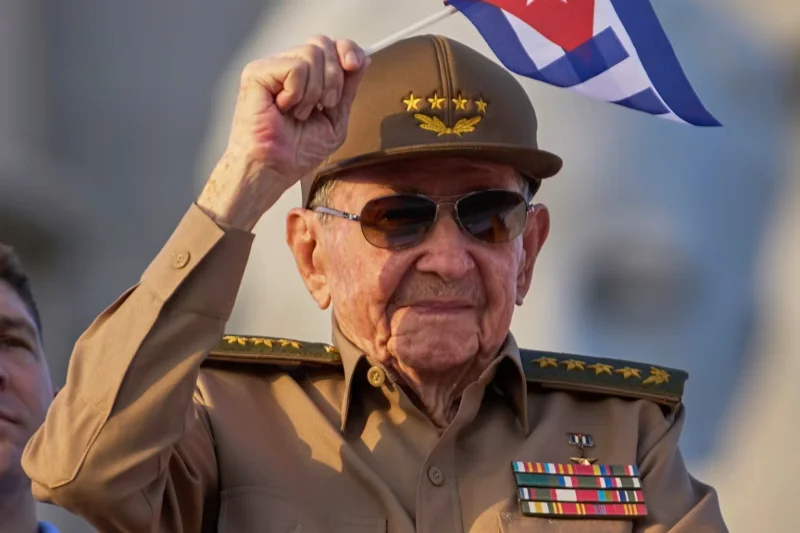
U.S. prosecutors have unsealed criminal charges against former Cuban leader Raúl Castro over the 1996 shootdown of two civilian aircraft operated by Brothers to the Rescue, reopening one of the most painful episodes in modern U.S.-Cuba relations. The indictment, announced Wednesday, May 20, 2026, in Miami, charges Castro and five Cuban co-defendants in a case tied to the deaths of four unarmed men over international waters.
What Raúl Castro Is Accused Of
The indictment names Raúl Modesto Castro Ruz, now 94, and five alleged Cuban military participants in connection with the February 24, 1996, destruction of two Brothers to the Rescue planes. Castro was Cuba’s defense minister at the time and oversaw the island’s armed forces under his brother, Fidel Castro.
The charges include conspiracy to kill U.S. nationals, destruction of aircraft and murder counts tied to the deaths of Carlos Costa, Armando Alejandre Jr., Mario de la Peña and Pablo Morales. The men were aboard two small civilian aircraft linked to the Miami-based exile organization.
Prosecutors allege Castro authorized the use of deadly force against the planes. The indictment also identifies Cuban pilots and military personnel accused of carrying out or supporting the operation. One of the group’s planes escaped destruction, while two others were hit by Cuban fighter jets.
Why The Brothers To The Rescue Case Still Matters
Brothers to the Rescue began as a humanitarian exile group that searched the Florida Straits for Cubans fleeing the island by boat. Its pilots often relayed locations of migrants to the U.S. Coast Guard during a period of intense migration pressure in the 1990s.
Over time, the group also became a direct irritant to Havana. Some flights approached or entered Cuban airspace, and the organization dropped leaflets over Havana before the shootdown. Cuba treated the flights as provocations and security threats, while U.S. officials and victims’ families have long argued the downed planes were unarmed civilian aircraft over international waters.
The 1996 incident helped harden U.S. policy toward Cuba and became a defining grievance for many Cuban Americans in South Florida. It also produced earlier prosecutions involving Cuban intelligence operatives, but Castro himself had not previously faced a U.S. criminal indictment.
Where Raúl Castro Is Now
Raúl Castro remains in Cuba after formally stepping down from the presidency in 2018 and leaving the top post of the Communist Party in 2021. He is still alive and widely viewed as an influential elder figure in the Cuban system, even without a formal day-to-day governing role.
Born on June 3, 1931, Castro is 94. He succeeded Fidel Castro as Cuba’s president and oversaw a limited opening to the United States during the Obama administration before relations deteriorated again under later U.S. governments.

His age and location make the practical future of the case uncertain. The United States and Cuba do not have a normal extradition relationship, and Havana has rejected the charges as politically driven. Unless Castro travels to a country willing to act on a U.S. warrant or there is a major diplomatic shift, bringing him before a U.S. court would be difficult.
Cuba Condemns The Charges
Cuba’s government has denounced the indictment and defended its long-standing account of the 1996 shootdown. Havana has argued for decades that the aircraft violated Cuban sovereignty and ignored warnings.
The new charges arrive during a period of heightened pressure on Cuba, with Washington taking a harder line toward the island’s leadership and its military-linked economic networks. That context gives the indictment significance beyond the courtroom: it is both a criminal case and a diplomatic escalation.
For the families of the four men killed, the legal move represents a long-delayed attempt at accountability. For Cuban officials, it is likely to be framed as another example of U.S. interference and political prosecution.
Fidel Castro’s Shadow Over The Case
The indictment centers on Raúl Castro’s role as defense minister, but the case inevitably revives questions about the wider Castro era. Fidel Castro was Cuba’s head of state in 1996, while Raúl controlled the armed forces, one of the most powerful institutions on the island.
The brothers governed through a tightly centralized system that blurred distinctions between party, military and state authority. That structure is central to why the shootdown remains politically charged: the decision to engage civilian aircraft was not viewed by critics as an isolated battlefield act, but as a state-level action.
Raúl Castro’s daughter, Mariela Castro, is a prominent public figure in Cuba, known internationally for advocacy on LGBTQ rights and her role within Cuban institutions. She has not been charged in the case, and the indictment is focused on the 1996 military operation.
What Happens Next In The Castro Indictment
The immediate next step is legal and diplomatic, not a trial date. U.S. authorities can pursue arrest warrants, maintain the charges and seek custody if any defendant becomes reachable. Cuba is expected to resist any attempt to transfer Castro or the other accused men.
The case also puts renewed attention on declassified records, survivor accounts and the history of Brothers to the Rescue. Any future court proceeding would likely revisit radar data, military communications, flight paths and competing claims about whether the aircraft were in international or Cuban airspace.
For now, the indictment changes the legal status of a decades-old dispute without guaranteeing a courtroom resolution. It places Raúl Castro under U.S. criminal accusation for one of the most consequential flashpoints in U.S.-Cuba history, while leaving the central practical question unresolved: whether the former Cuban leader will ever face those charges in person.
