


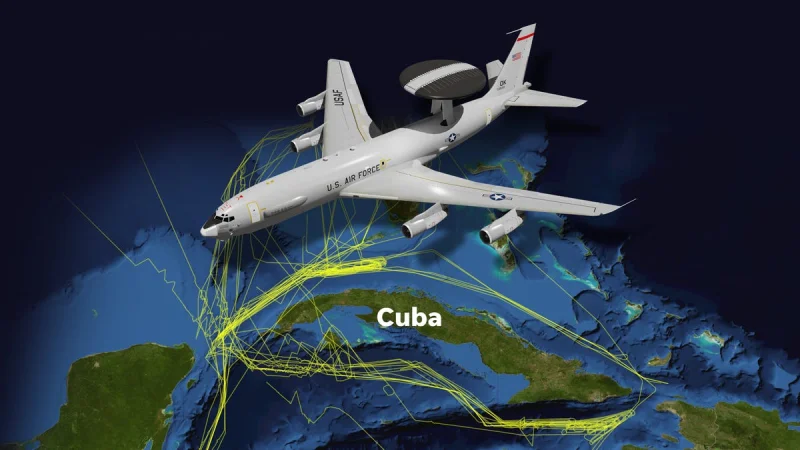
At least five U.S. Navy P-8A Poseidon surveillance aircraft and three MQ-4C Triton drones have been operating in the Caribbean near Cuba since May 11, with some flights coming as close as 50 miles from the island, according to analysis of flight-tracking data. One P-8 Poseidon got within 50 miles of southern Cuba on May 11, then continued the next day and was seen flying north of Havana before returning to its base in Jacksonville, Florida.
On May 15, two MQ-4C Triton surveillance drones were tracked off the coast of southern Cuba along a route similar to one previously flown by a Poseidon. Mark Cancian, who reviewed the pattern, said the repeated paths indicated an intention to spot ship arrivals from the south, primarily, and from the north secondarily. He said none of the flights were over land, adding that this was not some preparation for invasion.
The aircraft movements have become more noticeable because they unfolded as U.S.-Cuba tensions sharpened in recent months. Washington has imposed what amounts to an effective oil blockade on Cuba, worsening a fuel crisis that has triggered major power blackouts and protests across the country. The surveillance flights come on top of a fraught political moment in Havana, where shortages and anger over daily life have become part of the backdrop to the standoff.

Military tracking data cannot show the whole picture, because aircraft do not always broadcast their positions. But the repeated use of P-8s and Tritons suggests the Pentagon is not simply passing overhead. Cancian said he doubted the flights were routine because the United States has limited numbers of both aircraft types. Dr. Steve Wright said leaving the transponders on was likely deliberate and that Washington intended to send a clear message that it has eyes in the sky to maintain the squeeze.
The flight pattern also lands in the middle of an increasingly sharp political exchange. Axios reported that Havana had acquired drones capable of attacking the U.S. mainland. Cuba's foreign minister responded that the country neither threatens nor desires war and accused Washington of building a fraudulent case for military intervention. At the same time, Marco Rubio spoke in Spanish on the anniversary of Cuba's independence from the United States, blaming Cuba's unimaginable hardships on communist leadership rather than on the U.S. fuel blockade.
For now, the data point to a sustained surveillance campaign rather than a one-off patrol. The question is not whether the flights happened — the tracking shows they did — but how long Washington intends to keep flying them so close, and how Havana will answer if the pattern continues.
