


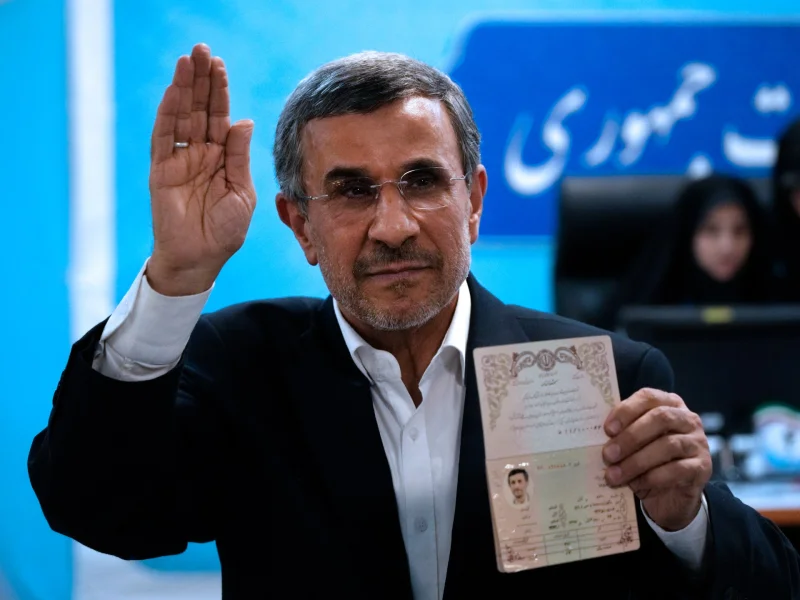
Israel wanted to put Mahmoud Ahmadinejad in power and planned for him to run Iran if Ali Khamenei was killed, according to a New York Times report that has revived one of the more improbable ideas to surface in the Iran crisis. The reported plan would have turned a former president who spent years denouncing Israel into a figure meant to take charge after the supreme leader’s death.
Ahmadinejad, who led Iran from 2005 to 2013, built his presidency on incendiary attacks on Israel. After falling out with Khamenei, he recast himself as a critic of the regime and a champion of the poor, a shift that made him useful to some of his enemies and deeply suspect to others. The reported plan was seen by many as implausible from the start, or as disinformation pushed by Ahmadinejad’s supporters or by Israeli intelligence services.
The new report also folds into a wartime mystery that has followed Ahmadinejad for months. On 28 February, during the initial Israeli attacks on Tehran, Iranian media reported that he had been killed in a strike on his home. It later emerged that a security outpost outside his home in Narmak, north-east Tehran, had been hit instead, and satellite images later confirmed the strike. Official news agencies said Ahmadinejad suffered minor injuries and that his bodyguards were killed. Iranian media also said he had not been under house arrest, despite the claims attached to account.

The contrast with the man Israel is dealing with now is hard to miss. Ahmadinejad would be an unlikely ally for Benjamin Netanyahu because of his Holocaust denial and virulently anti-Israeli policies, even before the question of whether such a plan could ever have worked. The episode has instead underscored how far some Israeli and American calculations appear to have gone beyond reality, with the report suggesting they overestimated both opposition to the regime and their own ability to bring it down with airstrikes.
That strain was visible again in Washington this week. On Monday, Donald Trump said he had delayed a fresh attack after an intervention by Gulf leaders. He then held a lengthy phone call with Netanyahu on Tuesday, before telling reporters on Wednesday that “Netanyahu will do whatever I want him to do. He’s a great guy, To me he is a great guy.” Trump also said, “I am in no hurry. Everyone says ‘oh the midterms’, I am in no hurry. Ideally I would like to see a few people killed as opposed to a lot. We can do it either way.”
For Ahmadinejad, the latest reporting is less about a return to power than about the uses others have made of his name. For Washington and Jerusalem, it is another reminder that airstrikes can damage buildings, kill guards and shake assumptions, but they do not automatically produce the political collapse planners hope for.
