The 2026 SEC Baseball Tournament began Tuesday in Hoover, Alabama, with all 16 conference teams chasing a title, an automatic NCAA Tournament bid and valuable postseason positioning. The first major jolt came immediately, as No. 16 seed Missouri beat No. 9 Ole Miss 10-8 to advance in a single-elimination bracket where one bad inning can end a team’s week.
Missouri Delivers Early Bracket Surprise
Missouri entered the tournament as the lowest seed after a difficult regular season, but the Tigers changed the tone of the opening day by knocking out Ole Miss in a 10-8 game that featured momentum swings, late offense and high-pressure bullpen work.
The result sent Missouri into Wednesday’s second round against No. 8 Mississippi State and eliminated an Ole Miss team that had entered Hoover with a stronger NCAA Tournament profile. For the Rebels, the loss does not erase their regular-season résumé, but it removes a chance to improve seeding before Selection Monday.
Missouri’s win also reinforced the risk built into the SEC’s current format. With no pool play and no double-elimination safety net, even higher-seeded teams starting early face immediate pressure. The Tigers now get another opportunity to affect both their own season and the bracket path for Mississippi State.
Georgia, Texas, Texas A&M And Alabama Hold Top Seeds
Georgia begins the tournament as the No. 1 seed after winning the regular-season SEC title with a 23-7 conference record. The Bulldogs earned one of the four double byes and do not play until the quarterfinals, giving them extra rest while the lower half of the field spends pitching.
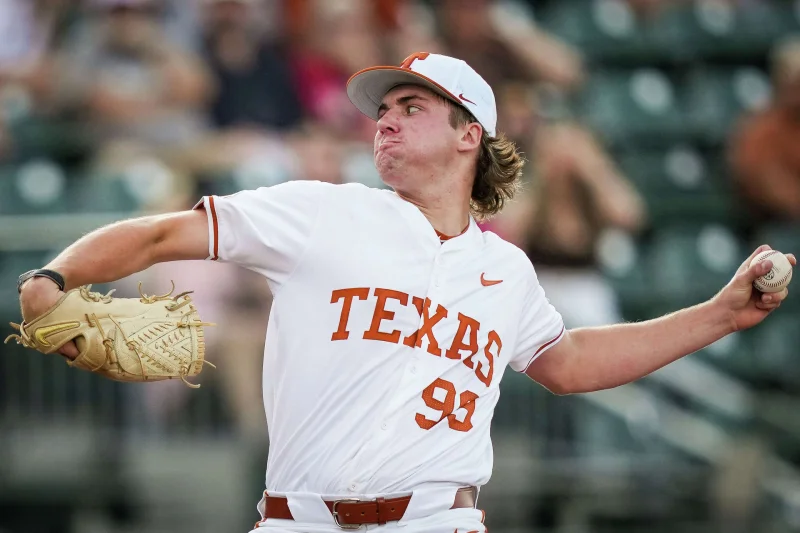
Texas is the No. 2 seed, followed by No. 3 Texas A&M and No. 4 Alabama. Those teams also move directly into the quarterfinals, a major advantage in a tournament where pitching depth often decides outcomes by the weekend.
The top of the SEC baseball standings reflected one of the deepest leagues in the country. Georgia separated itself over the full conference schedule, but Texas, Texas A&M, Alabama and Florida all finished close enough to make the bracket feel unusually open. Florida’s 18-12 league mark matched Alabama’s, but the Gators landed as the No. 5 seed and begin play in the second round.
Full SEC Baseball Tournament Bracket Picture
The tournament field includes every SEC team, with the top four seeds receiving double byes and seeds five through eight receiving one bye. The first round began Tuesday, May 19, and the championship game is scheduled for Sunday, May 24.
The seed list is led by Georgia, Texas, Texas A&M and Alabama. Florida, Auburn, Arkansas and Mississippi State occupy the next tier and enter in the second round. Ole Miss, Tennessee, Oklahoma, Vanderbilt, Kentucky, LSU, South Carolina and Missouri made up the opening-round group.
Tuesday’s first-round schedule began with Ole Miss against Missouri, followed by Vanderbilt against Kentucky. Tennessee was scheduled to face South Carolina later in the day, with Oklahoma and LSU closing the night. Winners move into Wednesday matchups against teams seeded fifth through eighth.

The quarterfinals begin Thursday, when Georgia and Alabama enter the field. Texas and Texas A&M join Friday’s quarterfinal slate. Semifinals follow Saturday, with the championship set for Sunday afternoon in Hoover.
Why The Standings Matter For NCAA Positioning
The SEC tournament carries an automatic NCAA bid, but its larger importance is seeding. Several SEC teams already appear well positioned for the national field, while others are trying to improve regional hosting cases or avoid slipping onto tougher lines.
Georgia, Texas, Texas A&M, Alabama, Florida and Auburn all entered Hoover with strong profiles. Arkansas and Mississippi State also have important opportunities because one or two wins in this field can strengthen a postseason résumé quickly. The league’s depth means almost every victory comes against an opponent with national relevance.
For teams such as LSU, Kentucky, South Carolina and Missouri, the path is much steeper. A low seed means needing multiple wins in consecutive days, often while using pitchers aggressively. Missouri’s opening win showed that a lower seed can survive the first test, but sustaining that run is the harder part.
Single-Elimination Format Raises Pressure
The 2026 event continues the all-16-team, single-elimination approach. The format gives every SEC team a path to Hoover, but it also leaves little room for experimentation. Coaches must balance winning the immediate game against protecting arms for a possible weekend run and the NCAA Tournament.
That tension is especially sharp for national seeds and regional hosts. A top team wants to win the conference championship, but it cannot afford to compromise its pitching plan one week before the NCAA Tournament begins. Lower-seeded teams, by contrast, may have stronger incentives to manage each game like a must-win because their postseason futures are less secure.
The result is a bracket that can change quickly. A favorite with a quiet offense or a shaky bullpen can be gone in one afternoon, while an underdog with one hot starter and timely hitting can create a much longer week than the standings suggested.
What Comes Next In Hoover
Wednesday’s second round will start to define the tournament’s shape. Mississippi State gets the first shot at stopping Missouri’s upset run, while Florida, Arkansas and Auburn wait to learn how the rest of the opening matchups resolve.
The biggest names arrive later, but the bracket is already moving. Georgia’s title defense as the league’s regular-season champion, Texas’ push for a deep SEC debut run, Texas A&M’s loaded roster and Alabama’s top-four seed all remain central storylines.
For now, the tournament has opened the way SEC baseball often does: with a crowded field, postseason stakes and an early reminder that Hoover rarely follows the standings quietly.