


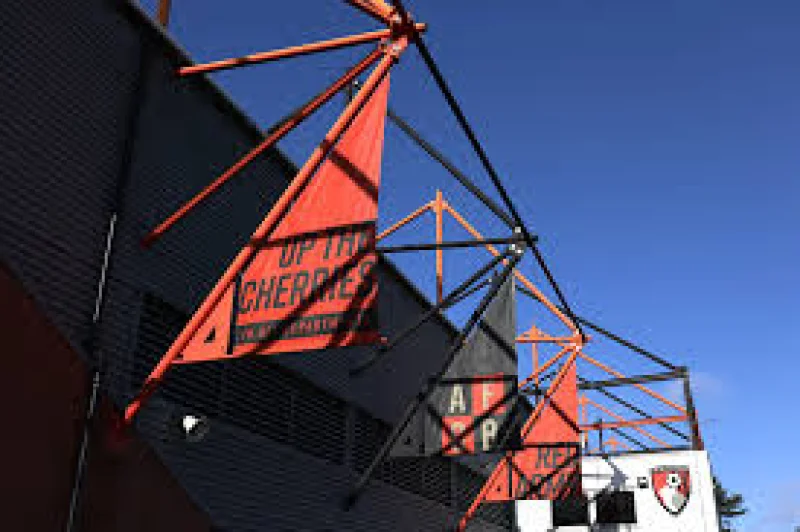
AFC Bournemouth’s Vitality Stadium expansion is set to clear a key hurdle this week, with councillors due to decide whether to approve a plan that would transform the ground from the Premier League’s smallest into one holding about 20,200 fans.
The Bournemouth, Christchurch and Poole Council eastern planning committee is due to discuss the scheme on Friday May 22, and an officer’s report says it is recommended for approval. The report adds that the benefits of the project outweigh the adverse impacts on neighbouring amenity, putting the club within reach of the next stage of a long-awaited redevelopment.
The proposal would almost double the stadium’s current 11,286-seat capacity. It includes the demolition of the existing South Stand and its replacement with a new grandstand of around 7,000 capacity, while all four corners of the ground would be filled to create another 1,440 general admission places. The North Stand and East Stand would also be expanded vertically and horizontally, changing the profile of a stadium that has long lagged behind the rest of the division in size.
The plan is a scaled version of what Bournemouth first wanted. Before the start of the 2026-27 campaign, the club had planned to add 1,500 seats. Last month, that figure was reduced to 800, with only the northwest and southeast corners to be completed. Those two corners are now set to be installed shortly after the next season begins in August, meaning the early phase of work would arrive only after the team has already started the campaign.
That detail matters because the expansion is not being sold as a distant ambition. It is a live planning application, backed by an officer’s recommendation, and it carries practical changes beyond the seating increase. The project includes a permanent outside broadcast compound, pedestrian and cycle route diversions, and new perimeter fencing and turnstile arrangements, all of which point to a stadium that would operate differently on matchdays as well as hold more people.
The contrast between the old and new plans also shows how much the club has trimmed its ambition to keep the project moving. A 1,500-seat increase was cut to 800, and the promise of broader corner work was narrowed to two corners. Even so, the overall scheme still lifts the ground from 11,286 seats to approximately 20,200, a jump that would reshape the club’s matchday income potential and give Bournemouth a far larger home than the one it has used for years.
The committee’s decision on Friday May 22 will not be the final word on construction, but it is the most important one yet. If councillors follow the officer’s advice, Bournemouth can move from planning to delivery, with the first visible changes likely to follow once August arrives and the new season is underway.
