


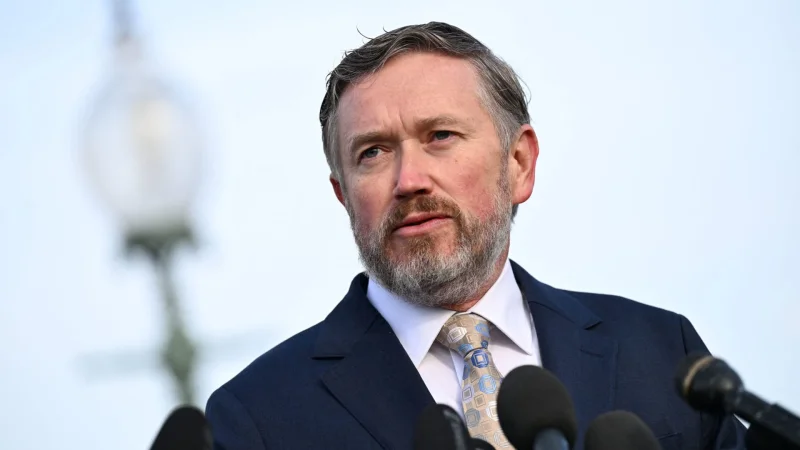
Rep. Thomas Massie faced the most serious Republican primary challenge of his congressional career Tuesday in Kentucky, where former Navy SEAL Ed Gallrein tried to turn Donald Trump’s endorsement into an upset in the state’s 4th Congressional District. As of Tuesday afternoon ET, the race had not been called, and official returns had not yet shown a winner.
Did Thomas Massie Win?
There was no confirmed winner in the Massie primary as voting continued Tuesday. Kentucky polls close at 6 p.m. ET in most of the state, with areas in the Central Time zone closing at 7 p.m. ET. The 4th District stretches across northern Kentucky and includes counties along the Ohio River, making the timing of returns important for readers looking for a definitive answer.
The winner of the Republican primary will be heavily favored in November because the district is strongly Republican. That makes Tuesday’s contest functionally decisive for control of the seat, even though the general election remains scheduled for November.
Massie has represented the district since 2012 and has built a national profile as a libertarian-leaning Republican willing to break with party leaders. Gallrein, a farmer and retired Navy SEAL, framed his campaign around loyalty to Trump and argued that Kentucky Republicans needed a congressman more aligned with the president’s agenda.
Why The Kentucky Race Became A National Test
The Kentucky primary drew national attention because Trump personally targeted Massie, turning a district-level House race into a test of Republican discipline. Trump endorsed Gallrein and repeatedly attacked Massie over votes and public positions that split from the White House and GOP leadership.
Massie’s clashes with Trump covered several high-profile issues, including federal spending, foreign aid, U.S. involvement abroad and the release of files tied to Jeffrey Epstein. Massie argued that his record reflected constitutional conservatism, fiscal restraint and an “America First” approach rather than disloyalty.
Gallrein’s pitch was simpler: Trump needed reliable Republican votes in Congress, and Massie had become too willing to obstruct the party’s agenda. That message gained force as Trump-aligned groups and outside organizations poured money into the race.
Massie Primary Polls Showed A Competitive Contest
Public polling before Election Day suggested that Massie entered the final stretch with an advantage but not an overwhelming one. One April survey of likely Republican voters showed Massie ahead of Gallrein, while another showed a much tighter race. Both polls left room for uncertainty because turnout, late advertising and Trump’s intervention could shift the electorate.
The available polling also suggested a divide inside the Republican base. Massie appeared stronger with some younger and more ideologically libertarian voters, while Gallrein’s campaign leaned on older, more Trump-centered Republicans who viewed party loyalty as a priority.

Those numbers helped explain why the race attracted so much spending. Massie was not an unknown incumbent coasting through a safe district; he was a nationally recognized Republican dissenter facing a challenger with the most valuable endorsement in GOP politics.
Record Spending Raised The Stakes
The contest became one of the most expensive House primaries in modern U.S. politics, with more than $32 million in spending tied to the race. Much of the money came from outside groups that wanted to defeat Massie, including organizations angered by his opposition to aid for Israel and his broader resistance to foreign assistance packages.
Massie also raised significant money, using Trump’s attacks to energize supporters who saw him as one of the few Republicans willing to challenge Washington’s spending habits and foreign policy consensus. His campaign cast the outside spending as proof that entrenched interests wanted him gone.
Gallrein benefited from the anti-Massie coalition but still had to introduce himself to voters across a district where Massie had long-standing name recognition. That dynamic made the race less predictable than a typical Trump endorsement contest.
Ed Gallrein’s Campaign Focused On Trump Loyalty
Gallrein’s candidacy gave Trump and his allies a clear vehicle for removing Massie. He emphasized military service, rural roots and support for the president’s governing agenda. High-profile Republican figures also stepped into the race on his behalf, underscoring how strongly national conservatives wanted to make an example of Massie.
For Gallrein, the central argument was that the district deserved a Republican who would help advance Trump’s priorities rather than slow them down. That message was designed for a primary electorate where Trump remains deeply influential.
Massie countered that independence was not betrayal. He pointed to areas where he supported Trump while defending votes that broke from the administration on spending and war powers. His campaign’s closing argument rested on the idea that Kentucky Republicans should choose a representative, not a rubber stamp.
What Comes Next For The GOP
The result will carry meaning beyond northern Kentucky. A Massie win would show that a well-known incumbent with a distinct ideological brand can survive direct opposition from Trump, especially with a record of local support and a national small-government following. A Gallrein win would reinforce Trump’s ability to punish Republican lawmakers who resist him, even in cases where the incumbent has deep conservative credentials.
The race also arrives as Republicans prepare for a midterm cycle shaped by internal fights over foreign policy, spending, executive power and loyalty to Trump. Kentucky’s 4th District is safely red, but the arguments tested there are likely to appear in other Republican primaries.
For now, the central question remains unresolved: Thomas Massie has not yet been confirmed as the winner. The answer depends on official returns after polls close Tuesday evening ET, when Kentucky Republicans will decide whether to keep one of Congress’s most independent conservatives or replace him with Trump-backed Ed Gallrein.
