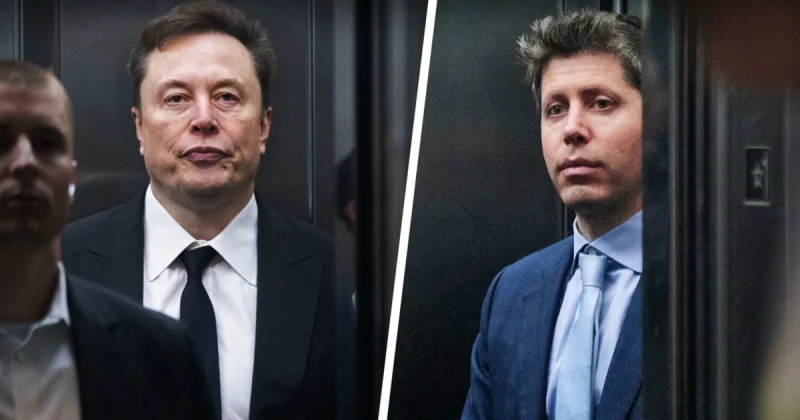
A federal jury on Monday threw out Elon Musk’s lawsuit against OpenAI CEO Sam Altman, finding that Musk waited too long to bring the case and rejecting all of his claims in a unanimous verdict. The panel reached its decision in less than two hours after starting deliberations Monday morning.
The jury found Altman, Greg Brockman and OpenAI not liable on every count, and also rejected Musk’s claim that Microsoft aided and abetted alleged breaches of duty to OpenAI. The trial lasted three weeks and ended with a swift verdict that closed the courtroom fight over whether OpenAI strayed from its charitable roots.
Musk had sued in 2024, arguing that Altman and others unlawfully enriched themselves from the organization he co-founded with them. But the defense said the case was simply too late. Bill Savitt told jurors in his opening statement that Musk had waited too long to sue, saying, “It’s too late now to gin up something to harm a competitor,” in a reference to Musk’s own AI startup xAI.
That timing became the center of the case. The legal deadlines were three years for the charitable-trust claim and two years for the unjust-enrichment claim. Musk told the jury he held off because he believed reassurances from Altman over the years. He said he became fed up in 2023 after Microsoft invested $10 billion in OpenAI’s for-profit arm in exchange for intellectual property rights and a share of future profits.
On the stand, Musk said, “Thinking that someone might steal your car is not the same as someone stealing it,” and added, “I would have filed a lawsuit sooner if I thought they had stolen the charity sooner.” Steven Molo said in court that Musk’s legal team was preserving his right to appeal, leaving the door open for a higher court to review the jury’s conclusion.
The dispute reached back years before the courtroom fight. OpenAI co-founders including Musk, Altman and Brockman discussed a for-profit conversion as early as 2017, and the company created a for-profit arm in 2019. The case centered on whether that shift violated duties tied to OpenAI’s nonprofit origins and whether the later structure produced improper gains. Microsoft, described during the trial as an early and large investor in OpenAI’s for-profit operation, was drawn into the fight because of its role in the company’s commercial expansion.
Six tech billionaires testified in the case, underscoring how much money and influence surrounded the dispute. The verdict does not decide the future of OpenAI’s business model, but it does remove Musk’s challenge from the immediate legal battlefield. For now, the jury has said the claims came too late.