


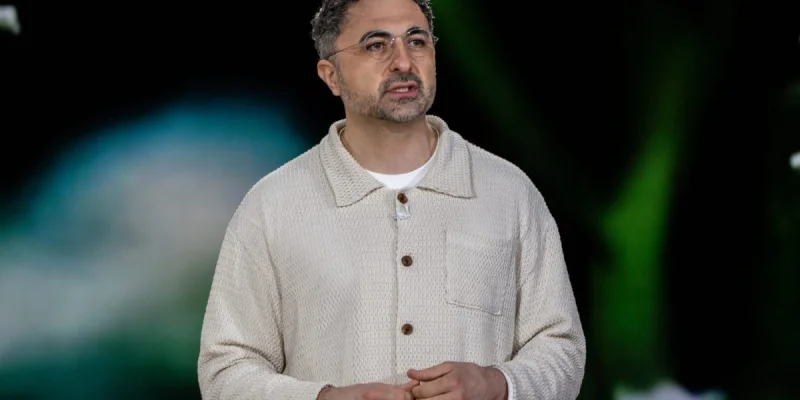
Mustafa Suleyman says the clock is already running on much of the white-collar work done at a computer. Earlier this year, the Microsoft AI chief told the Financial Times that many law school and MBA graduates, along with many less-credentialed peers, would be out of luck in 18 months.
He said most tasks that involve sitting down at a computer would be fully automated by AI within the next year or 18 months, and he named accounting, legal work, marketing and project management as especially vulnerable. Suleyman also predicted human-level performance on most, if not all professional tasks, arguing that the exponential growth in computational power could push models into areas once reserved for people.
The comments matter today because they come as AI leaders are making ever-bolder claims about how quickly the technology will reshape office work, even though the evidence so far is far less dramatic. In January, Elon Musk said in Davos that artificial general intelligence could arrive as early as this year, and in May Anthropic chief executive Dario Amodei warned AI could wipe out half of all entry-level white-collar jobs. Suleyman's remarks add another voice to that growing chorus.

But the technology has not yet produced the kind of upheaval those predictions imply. A 2025 Thomson report found lawyers, accountants and auditors experimenting with AI for narrow tasks such as document review and routine analysis, and said the results showed only marginal productivity improvements. A recent study from Model Evaluation and Threat Research found AI made software developers' tasks take 20% longer, underscoring how uneven the gains have been in practice.
That gap between the rhetoric and the results is visible in the broader business data too. Research from Apollo Global Management chief economist Torsten Slok found Big Tech profit margins rose by more than 20% in the fourth quarter of 2025 while the broader 500 Index barely moved, suggesting the biggest AI winners have not yet translated their spending into broad-based productivity across the rest of the economy.
Suleyman's forecast rests on a simple bet: as compute advances, models will code better than most human coders and keep moving deeper into work that once seemed immune to automation. For now, though, the most striking thing about AI in professional services is not how many jobs it has replaced, but how little it has changed the daily grind of the people it is supposed to transform.
