


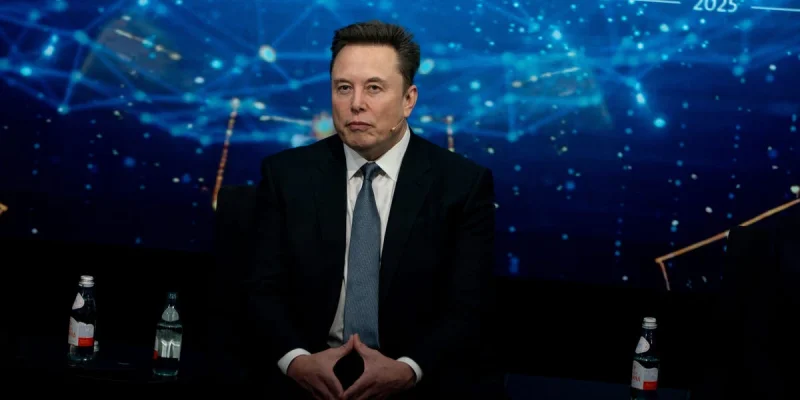
Elon Musk took aim at Delta Air Lines on Wednesday after the carrier picked Amazon Leo in March to provide in-flight WiFi, arguing that passengers should not have to deal with a portal before getting online. “SpaceX requires that there be no annoying 'portal' to use Starlink,” Musk wrote on X. “Starlink WiFi must just work effortlessly every time, as though you were at home.”
He added that Delta “wanted to make it painful, difficult and expensive for their customers” and said, “Hard to see how that is a winning strategy.” Late on Thursday, Musk posted again: “They will lose customers over this.”
Delta pushed back, saying the assertion was not accurate and that it chose Amazon’s Leo connectivity service over Starlink for several reasons, including the possibility of a broader partnership beyond just in-flight WiFi. The airline said Amazon met its technical requirements and shared its vision for the next era of connected travel. Delta also said its strategy is to equip different aircraft with the technology that best fits each fleet.

Passengers, Delta said, would still have been able to access the Delta Sync portal through a SkyMiles login. That point matters because Musk’s criticism centered on the idea that Delta wanted to steer travelers through its own branded system rather than a direct Starlink connection. United Airlines’ Starlink access is tied to its MileagePlus platform, and similar setups exist at Alaska Airlines and Qatar Airways.
The dispute lands at a moment when airline connectivity is becoming part of the brand itself, not just a utility. Dozens of carriers around the world have struck deals with Starlink to offer free, high-speed WiFi, and the service relies on a constellation of over 10,000 satellites to connect passengers in remote areas, including over the ocean. Amazon’s Leo service had launched about 300 satellites at the time of the article, far short of Starlink’s reach, but Delta’s decision was not framed as a simple comparison of satellite counts.
That is because the airline is thinking further ahead. Delta’s planned next-generation connectivity project with Amazon’s Kuiper network is not expected to begin until 2028, while United is actively installing SpaceX technology and expects that rollout to be completed by the end of 2027. In 2024, Xia Cai, discussing Qatar Airways’ Starlink strategy at an APEX event, captured the broader question airlines are now facing: “There has to be a connection. Is it a transient connection? Or is it actually something that you're going to build to create an experience, which Delta has done really well on their Sync platform?” She added, “How do you engage [with passengers]?”
For Delta, the answer appears to be that connectivity is no longer just about speed in the sky. It is about control, branding and what kind of relationship an airline wants to build once the plane is at altitude. Musk sees a simpler path. Delta is betting that a more layered one will win out.
