


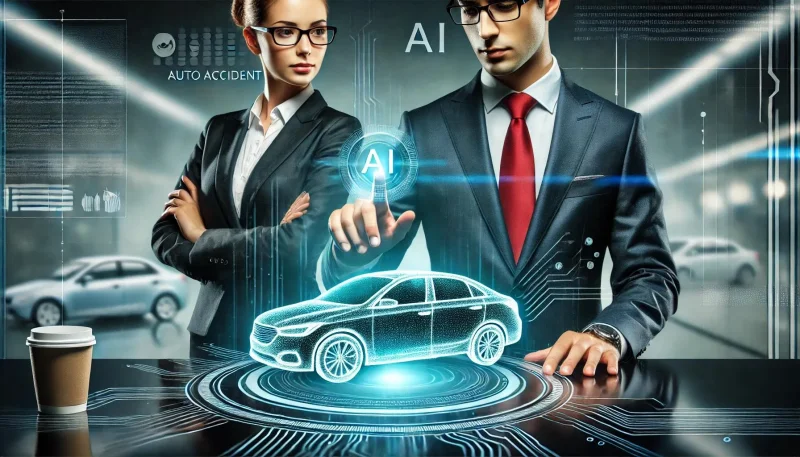
A car crash at a city intersection can now be logged by software before the ambulance arrives. Within ninety seconds, the vehicle can record impact data, the phone can sense the collision, the traffic camera can flag the scene, and an insurance system can start building a claim.
The vehicle’s onboard system can capture speed at collision, steering angle in the second before impact and airbag deployment, then upload the information to a cloud server owned by the manufacturer. A driver’s phone can detect the crash through its accelerometer and may ask whether to call emergency services. A traffic camera can record the event and send the footage into a municipal review system. Within minutes, the insurer’s intake platform can receive the first notification and a machine learning model can begin assembling a preliminary case file before a human adjuster sees the claim. By 2026, that is not a preview of the future. It is the day-to-day reality of personal injury cases.
The most consequential AI in insurance rarely makes the press release. The consumer-facing tools get the attention: chatbots that answer policy questions and apps that estimate damage from a photo. The real shift is happening deeper inside the claims pipeline, where systems decide how a claim gets routed, what it may be worth, how much to reserve against it and whether it looks suspicious enough to escalate. That is why the fight over a personal injury lawyer’s case often begins long before a demand letter is drafted.

Claims work used to depend on reading medical records, police reports, repair estimates and recorded statements, then using experience to judge what a case might settle for. An experienced adjuster could move through paper files and develop an intuition about value. Now that intuition arrives on top of a model output rather than instead of one. The model has already read the file, extracted diagnoses, treatments and timeline, and produced a number. The insurer knows what its model is doing, more or less: it has the training data, the features and the historical performance metrics.
The claimant usually does not. On the other side of the table sits a settlement letter with a number and a vague sense that it came from somewhere. That information gap is what gives the new system its force. The company may be able to explain, at least in broad terms, how its model reached a recommendation. The injured driver typically sees only the result. For a personal injury lawyer, that means the early stages of a case are now shaped by software the client never sees and cannot question directly.
That hidden machinery may be the real story in insurance AI. Not the chatbot. Not the damage photo app. It is the system that has already investigated the accident before the human process fully starts, turning a crash scene into a data file and a data file into a valuation. By the time a person is speaking to an adjuster, the first draft of the case has already been written.
