


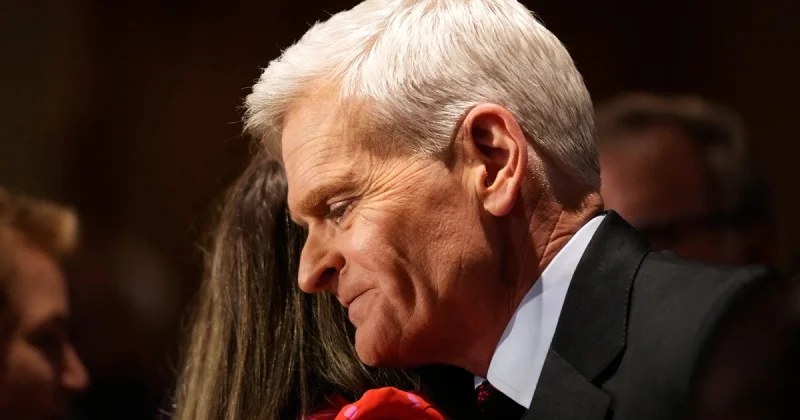
Bill Cassidy finished third in Louisiana’s Republican primary on Saturday and failed to advance to the June runoff, a sharp reversal for a senator who had won re-election six years ago by 40 points. He took just under 25% of the intraparty vote, ending a run that Donald Trump had spent years trying to turn into a reckoning over Cassidy’s 2021 impeachment vote.
That vote put Cassidy among a small group of Republicans who broke with Trump after the Jan. 6 attack on the Capitol. The bipartisan impeachment tally included 10 House Republicans and seven Senate Republicans, and almost all of those lawmakers are now gone from Capitol Hill. Cassidy, by contrast, had spent the last year and a half trying to thread a partisan needle, including confirming Robert F. Kennedy Jr. as the nation’s health secretary in a move that underscored how hard he had worked to stay inside the party’s lines while the party’s most powerful figure kept score.

Trump’s effort to destroy Cassidy over the 2021 vote was the political backdrop to the primary from the start. The loss showed that, in Louisiana politics, the president’s old grievance still had force even against a sitting senator who had long been one of the state’s better-known Republican names. Cassidy’s defeat was not a close call, and it was not a tribute to insulation from Trump’s influence. It was a reminder that even a senator who once won by 40 points can be pulled down when the party’s base decides the old bargain no longer works.
Cassidy did not leave quietly. In his concession speech, he said that when people participate in democracy, sometimes it does not turn out the way they want it to, but that you do not pout, you do not whine and you do not claim the election was stolen. He went further, saying the country is not about one individual but about the welfare of all Americans and the Constitution. And he drew a line between power and service, saying that someone who tries to control others by using the levers of power is serving themselves and not serving the public, and that such a person is not qualified to be a leader.
The result closes a political arc that has defined Cassidy since 2021: one vote against Trump, then years of trying to survive the fallout, and finally a primary electorate that delivered its answer. Cassidy’s career is not over, but the vote ended the idea that he could keep one foot in Trump’s party and the other in the old Republican establishment indefinitely.
