


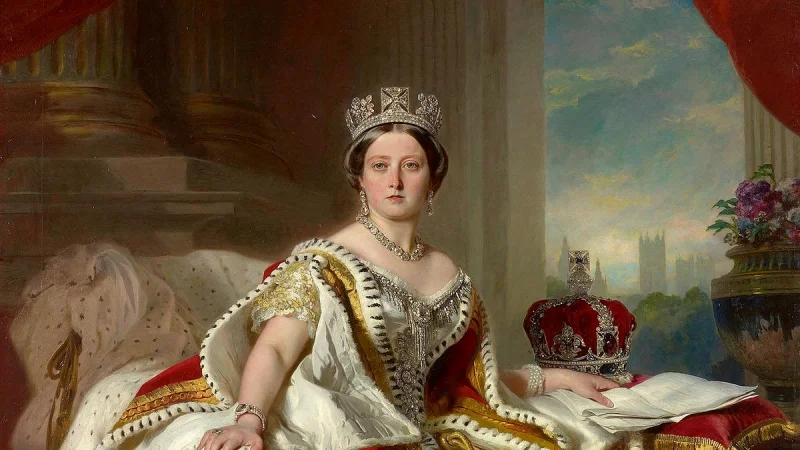
Canada’s May long weekend began as a birthday tribute to Queen Victoria, and it has outlived the empire that created it. Victoria Day Canada, as the holiday is now known, was first declared by the Legislature of the Province of Canada in 1845 for 24 May, Victoria’s birthday, and it has been observed in some form ever since.
That continuity matters because the holiday predates Confederation and still carries the shape of the country that formed around it. The Sovereign’s birthday has been celebrated in Canada since the reign of Queen Victoria, 1837 to 1901, and after her death in 1901 Parliament recognised the day through legislation and gave it its name. Further legislation in 1952 standardised the holiday to the Monday preceding 25 May, fixing the long weekend that many Canadians now know as May Two-Four or simply the May long.
The reason Victoria remains attached to the holiday is not just chronology. Queen Victoria was known affectionately as the Mother of Confederation, and her name is stitched through the country in a way that no other historical figure can match. Victoria, British Columbia, and Regina, Saskatchewan, both carry her name. So does Victoria Island in the Canadian Arctic, Queen Street in Toronto and Victoria College at the University of Toronto. The Royal Canadian Regiment still wears her royal cypher, VRI, for Victoria Regina Imperatrix, a reminder that the holiday is tied to a monarchy that once shaped the country’s political map.
It also helps explain why this day sits at the intersection of celebration and history. Victoria assented to Confederation and designated Ottawa as the capital, while the Crown under her name also signed most of the Numbered Treaties, agreements that recognised the Indigenous nations of what is now northern Ontario and the Prairies. Her 63-year reign is now remembered as the Victorian era, but in Canada the holiday attached to her birthday carries a different weight: it marks the passage from colonial rule to self-government, and from a collection of colonies to a country with its own institutions.
That backstory begins with unrest. When Victoria acceded to the throne in 1837, revolts broke out in Upper and Lower Canada. She granted amnesties to the rebels and tasked John Lambton, 1st Earl of Durham, with investigating the rebellion. His Durham Report recommended the unification of Upper and Lower Canada and the introduction of responsible government, and the unification promptly followed in 1841. Responsible government would later be adopted through Confederation in 1867, which is why the holiday survived that transition without interruption.
Today, though, most Canadians meet it as something lighter: the unofficial opening of summer, the cottage-opening weekend, fireworks and beer. That easy mood can hide how old and unusual the day really is. Victoria Day is often treated as a marker for weather and travel, but it is also one of the few national customs that reaches back before Confederation and still bears the imprint of the monarchy that first gave it form.
The name may sound ceremonial, but the holiday is still doing two jobs at once. It opens the season for millions of people, and it preserves a distinctly Canadian link to the crown, colonial reform and the treaties that followed. That is why Victoria Day Canada remains more than a long weekend: it is a date that still explains how the country came to be.
