


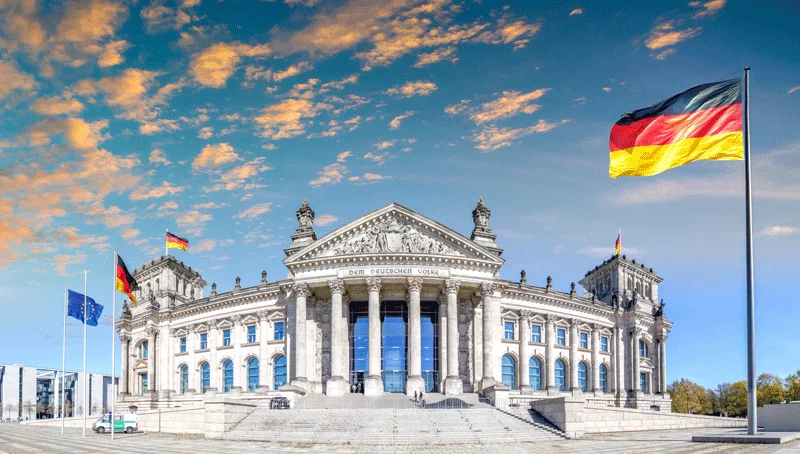
Germany looks set to miss its legally binding climate targets beyond 2030, with a government-appointed expert panel warning that the country’s 2040 and 2045 goals are increasingly out of reach. The Expert Council on Climate Issues said this week that emissions fell by just 0.1% in 2025, leaving the EU’s biggest emitter with only modest progress where it needs deep cuts.
The small decline came even as lower industrial and energy-sector emissions were offset by higher pollution from buildings and transport. Germany, which ranks among the world’s top 15 annual emitters, is still expected to meet its current emissions budgets under the Climate Protection Act through 2030, but the council said longer-term goals, including an 88% reduction target for 2040 and carbon neutrality by 2045, would be missed more and more over time.
Barbara Schlomann, a member of the independent panel appointed in September 2020 to assess Germany’s climate policy and progress, said the assumptions behind the calculations need to be updated. She said actual emissions are likely to be higher than reported in the energy and building sectors. The council said current regulatory changes, including the Building Modernisation Act, were not included in the projection data it reviewed, and it also warned that the land use sector, known as LULUCF, is still expected to remain a source of emissions through 2050.
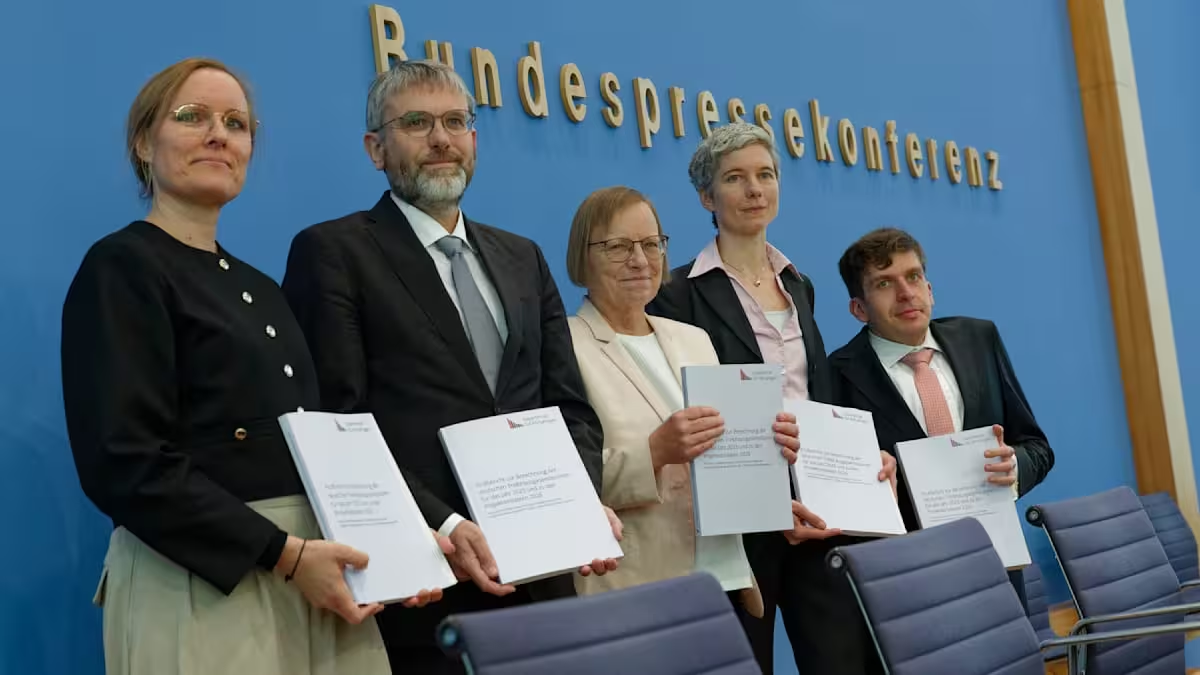
The warning lands as Berlin tries to show it can still turn plans into cuts. Germany released a 90-point plan in March to reduce carbon and lower its dependence on fuel imports, backed by a €7.6bn climate and transformation fund. Money from that fund is due to be allocated between 2027 and 2030, with an additional €400m to come from Germany’s special infrastructure fund. The government says the package will collectively cut 27.1 million tonnes of CO2 by 2030, against national annual emissions of about 673 million tonnes in 2023.
The expert council was not impressed. It said the programme is highly unlikely to deliver Germany’s legally binding emissions-reduction targets on its own, and it flagged particular risks after 2030. Marc Oliver Bettzüge said climate policy must be embedded in a coherent overall strategy if Germany is to meet its goals, adding that social distribution and economic consequences have to be considered from the start, along with interactions with emissions trading systems.
That leaves Berlin with a familiar problem: the numbers in its plans are smaller than the scale of the task. Separate research has already suggested Germany could overshoot its hydrogen network because demand is weaker than expected, potentially wasting up to €45bn in public funding. For a country that is both the EU’s highest-emitting nation and a global industrial heavyweight, the council’s verdict is clear — the easy reductions are fading, and the harder years are still ahead.
