


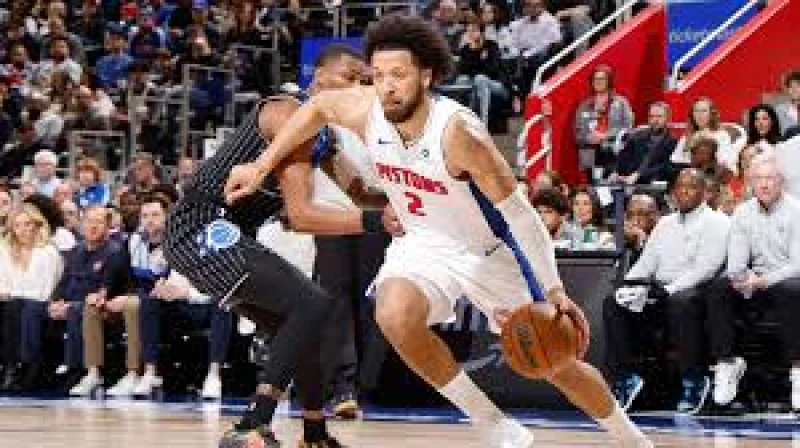
The Detroit Pistons won 60 regular-season games, climbed out of a 3-1 hole against the Orlando Magic and then ran into a wall in the second round, losing to the Cleveland Cavaliers in seven games. The rise was real. So were the limits.
Detroit's postseason exit highlighted the same offensive deficiencies that had lurked beneath the winning record all year. The Pistons lacked secondary creation, and when Cade Cunningham was pressured or denied, the attack too often stalled. That mattered most when the games got tight, because the roster built enough defense and energy to survive the first round but not enough varied shot-making to keep pace for a deeper run.
The numbers make the problem plain. Detroit ranked 16th in half-court efficiency and turned the ball over on 15.0 percent of its possessions. The team only scored at respectable rates overall because it piled up offensive rebounds and free-throw attempts. That is a workable formula over 82 games. It is a brittle one in May.
That is where Jalen Duren enters the summer. The 22-year-old big man is a restricted free agent, and his postseason performance now sits directly beside his contract leverage. If he made All-NBA, he could have signed a five-year deal worth $287 million with Detroit. If he did not, the Pistons could have gone to $239 million over five years. Another team could offer four years and $177 million. Duren can probably forget about the two highest figures on that list.
The comparison that hangs over the negotiations is Alperen Sengün’s five-year, $185 million deal with the Rockets. Duren is not in the same negotiating lane as a max-level star, but he is not a bargain role player either. If an outside team, including the Lakers, Nets or Bulls, puts four years and $177 million on the table, Detroit should probably match it. The question is not whether the Pistons like Duren. It is whether they can afford to let a 22-year-old center walk after a playoff run that exposed how thin their creation really is.
Detroit also declined to swing big at the trade deadline, choosing not to push its chips in after the regular season surge. That decision now looks more consequential. The Pistons are coming off a season that ended with 60 regular-season wins, but not a Conference Finals appearance, and the offseason requires a clear-eyed assessment of what the roster actually is. Winning 60 games proved the team can compete. Losing to Cleveland showed it still needs multiple fixes, including shooters and another layer of playmaking.
Ausar Thompson sits at the center of that future. If he is going to be a key piece, he needs to develop as either an on-ball creator or a floor-spacing shooter. Detroit does not need him to become everything at once. It needs him to become one thing defenses have to respect.
Cunningham remains the engine, and Detroit’s own recent work with him underscores how much the franchise is built around his next step, from postseason shot creation to projects like the Nike ST Charge Detroit Tough set for May 20. But the bigger lesson from this spring is that even a star guard can only carry so much. The Pistons have built something real. Now they have to decide whether they are willing to be honest about what is missing before the next opportunity slips away.
