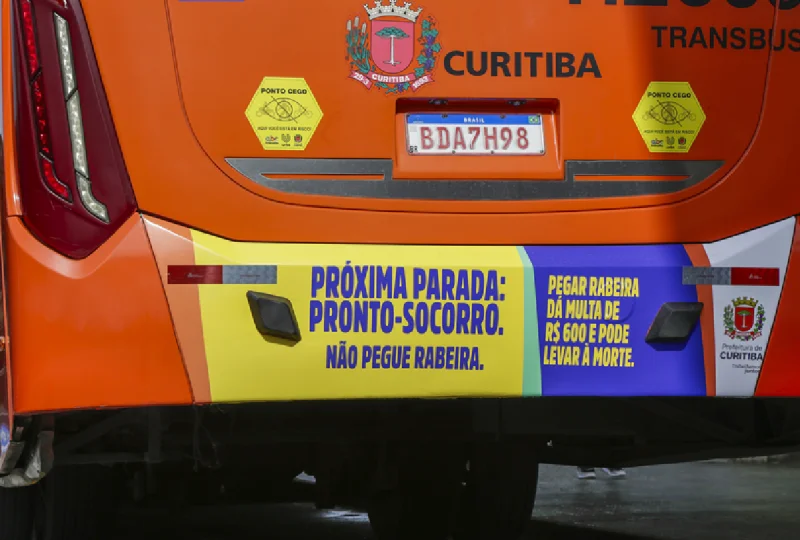
Curitiba published Decree No. 721 and formalized a R$ 600 multa for people caught riding on the back of buses or moving irregularly in bus-only lanes with bicycles, scooters or similar devices. The measure also orders immediate seizure of the equipment used in the infraction.
On a second offense, the fine rises 50% to R$ 900. Guard Municipal teams will make the approach and the flagrant enforcement, collect the bicycles and scooters involved and issue a Notice of Infraction and Seizure. In more serious cases, when the act puts the life or health of third parties at direct risk, the cyclist may be taken to the police station.
The decree gives the city a sharper tool against a practice that has already cost a life. Last year, a 14-year-old teenager died after falling while riding rabeira on a bus on the Pinheirinho/Carlos Gomes line and being hit by another bus coming in the opposite direction. That death is the backdrop for the new rules, which aim to stop the practice and reduce the risk of serious accidents in the capital.
Curitiba’s entire public transport fleet already has the silent “botão da rabeira,” which alerts the Center for Operational Control when someone hangs onto the back of a bus. In April, drivers activated it 547 times, a sign that the problem has remained visible enough for the city to monitor it in real time. The new decree turns that alert into a path for enforcement.
The rules also spell out what happens after seizure. The equipment stays under the responsibility of Urbs, and to recover a bicycle or scooter the owner must pay the full amount of the fine. The offender has ten business days to present a prior defense and another 15 business days to appeal in a second instance. If the equipment is not collected within the legal deadline set by Urbs, it may be sold at public auction.
Money collected from the penalties will go to the Fundo de Urbanização de Curitiba and be used to fund traffic operations. When children or adolescents are involved, the Guarda Municipal is authorized to call the Conselho Tutelar or the Delegacia do Adolescente to accompany the case, adding another layer to a rule that is now meant to be enforced on the street, not just written on paper.
Curitiba’s move lands as other cities keep grappling with public-safety enforcement, from transit corridors to plate-based crackdowns such as Fotomultas Puebla: suman 3 mil 086 infracciones a autos con placas foráneas. Here, though, the city’s focus is narrower and more immediate: make rabeira expensive, seize the device, and keep the buses moving without another fatal fall.