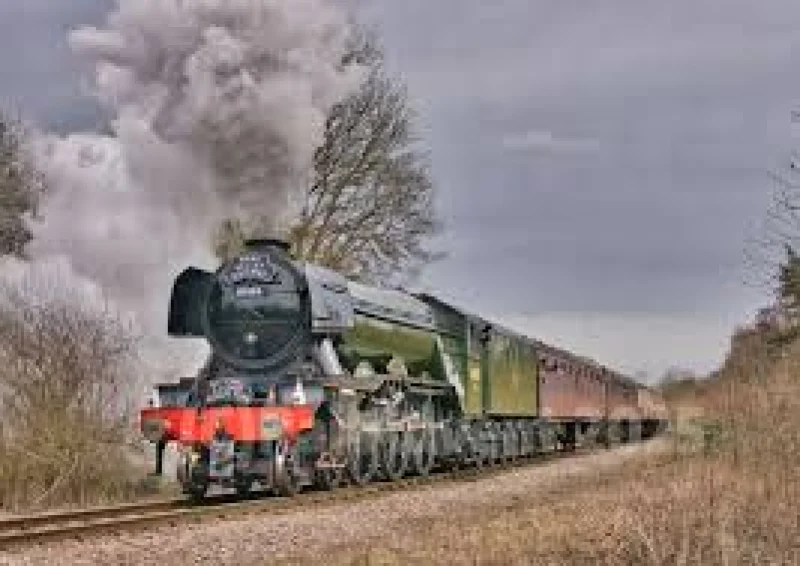
Flying Scotsman arrived in Nottinghamshire on Friday, returning to the railway line where it hauled passenger services more than 70 years ago. The locomotive will pull trains on the Great Central Railway Nottingham in a series of events towards the end of May.
The visit puts one of Britain’s best-known steam locomotives back on track in a part of the East Midlands where it once worked regularly. Flying Scotsman travelled down to Nottinghamshire on Friday in readiness for the special services, and the heritage line said the appearance should help draw new visitors to the railway.
Andy Fillingham, speaking for the railway, said the team was “thrilled to be welcoming Flying Scotsman back to the East Midlands.” He added that volunteers were “very proud of the work of our volunteers in reopening the railway to visitors and this should bring awareness of our superb attraction to new people.”
The return carries an echo of the locomotive’s own history. Flying Scotsman was based in Leicester for several years and worked on what is now the Great Central Railway Nottingham in the early 1950s, before going back to the East Coast Main Line. The heritage railway was once part of the Great Central Main Line, and British Rail later used the locomotive there after the railways were nationalised.
Flying Scotsman first went into service in 1923 and was given its name in 1924, the same year it was featured in the British Empire Exhibition. A decade later, in 1934, it became the first locomotive to officially reach 100mph, or 160.9km/h, and it went on to be used mainly by the London and North Eastern Railway to haul trains on the East Coast Main Line.
The engine’s survival is part of what made it famous. It was retired by British Rail in 1963 and had been destined for scrap before Nottinghamshire businessman Alan Pegler stepped in and bought it for £3,000. Pegler later brought it back to the UK in 1973, and the locomotive was taken to Derby for restoration after being restored in Derby and linked once more to the Midlands rail network.
Today, Flying Scotsman resides at the National Railway Museum in York, but its ties to the East Midlands remain unusually strong through Leicester, Nottinghamshire and Derby. The special run at the Great Central Railway Nottingham comes after the line was temporarily closed, first because of the Covid pandemic and then for repair work. Its return on Friday marks both a homecoming and a sign that the railway is ready to turn that history into a draw for visitors again.
The question now is not whether the locomotive has a place in the region’s story. It does. The more immediate test is how many people will come to see it when the trains start running towards the end of May.