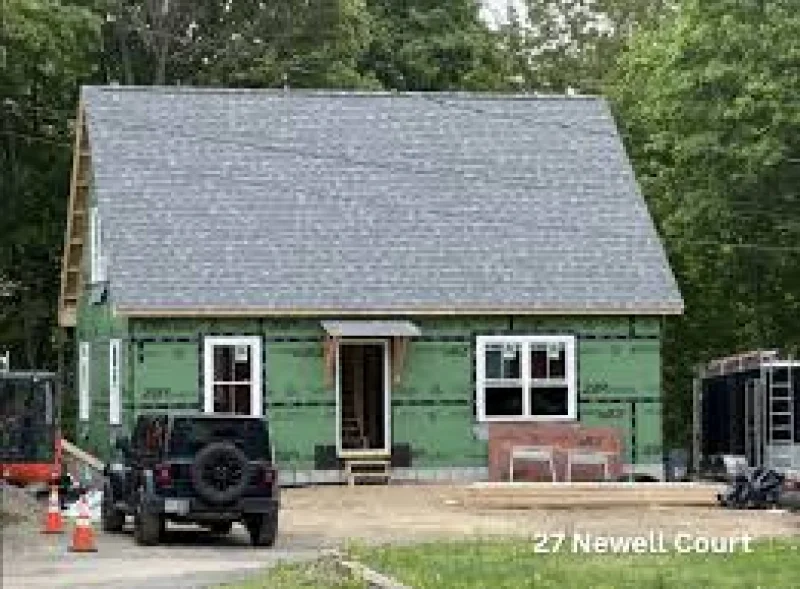
Amherst has issued at least 21 permits for new accessory dwelling units in the last five months, and another five to seven applications were still pending when the story was written. The pace has turned a modest housing rule into an active test of how far Adu Housing can go under the town’s new bylaw.
The issue sharpened around recently approved units on Chestnut, Taylor and Gray streets and at Newell Court, where neighbors raised apparent bylaw violations with Building Commissioner Rob Morra. Plans filed with the town show at least nine recently permitted protected-use ADUs that appear substantially larger than the 900-square-foot limit allowed under state law, with ground floors measuring just under 900 square feet and second floors carrying about 300 square feet of finished habitable space, including two bedrooms, two walk-in closets and one bathroom.
That detail matters because Amherst adopted a two-tiered accessory dwelling unit bylaw in November 2025 to match a new state law, and the town now permits two kinds of units. Protected ADUs may be built by right up to 900 square feet, while local ADUs can reach 1,200 square feet if either the ADU or the principal dwelling is owner-occupied. Protected ADUs also move through the process with few limits on design, dimensions or number of inhabitants, and permits are issued by the building commissioner without notifying abutters or holding a hearing before town committees or boards.
Morra said his view is that the second floors in the contested projects are attic space and should not count toward gross floor area. He said state regulations do not define attic, but Amherst’s Zoning Bylaw Section 6.18 does, and he said that definition excludes attic space from gross floor area calculations. He also said the original approved designs were adjusted so the second floor now measures 291 square feet.
The bylaw includes language that cuts both ways. It says a half-story in a top floor shall be a lawful habitable space with required means of access and egress, and that at least half of the habitable floor area must have a minimum seven-foot ceiling height, but no less than one-third of the habitable floor area of the full story below. That leaves room for argument over whether the upper levels in these new units are attic space or habitable square footage that should count against the 900-square-foot cap.
The result is a building boom that is moving faster than the town’s ability to settle its own interpretation. Amherst’s permitting surge shows how quickly state-backed housing rules can produce real construction on the ground, but the filings also show how easily a line in a bylaw can become the difference between a protected unit and one that may need to fit under a different rule. For homeowners, neighbors and applicants waiting on the next five to seven applications, that distinction now determines how big an ADU can be and whether it gets built at all.