


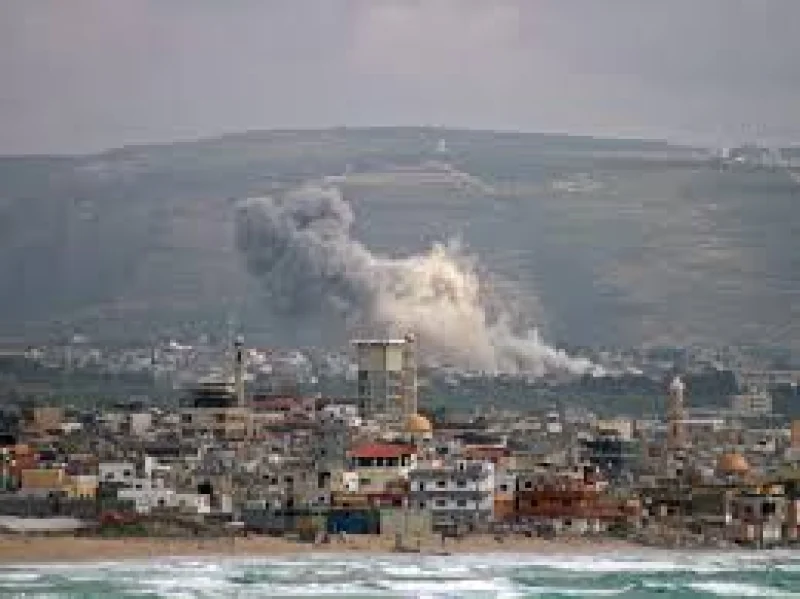
A drone strike hit the United Arab Emirates’ sole nuclear power plant on Sunday, setting off a fire on the perimeter of the Barakah site in Abu Dhabi’s Western desert. There were no reports of injuries or radiological release.
The UAE’s nuclear regulator said the fire did not affect plant safety, and the country said all units were operating as normal. The Vienna-based International Atomic Energy Agency said the strike caused a fire in an electrical generator, while one reactor was being powered by emergency diesel generators. Sunday’s strike marked the first time the four-reactor Barakah plant has been targeted in the war.

The plant, a $20 billion project that went online in 2020, is the first and only nuclear power plant in the Arab world and can provide a quarter of all the energy needs in the UAE. That makes it one of the country’s most sensitive civilian assets, and the strike landed as the Iran ceasefire remained tenuous.
The UAE did not blame anyone for the attack, and no one immediately claimed responsibility. The lack of a public claim leaves the strike in the middle of a wider escalation that has already touched several fronts. The UAE has accused Iran of launching multiple drone and missile attacks in recent days, and it has hosted air defenses and personnel from Israel. Fighting has also heated up between Israel and the Iran-backed Hezbollah militant group in Lebanon despite a nominal ceasefire there.
Rafael Mariano Grossi, the IAEA director-general, said he was in grave concern over the strike and repeated that military activity that threatens nuclear safety is unacceptable. That warning carried extra weight because the plant’s safety systems remained intact even as the attack reached the edge of a nuclear facility. For now, the immediate danger appears to have been contained, but the bigger risk is that a site designed to be a symbol of civilian energy security is now part of a widening regional conflict.
