


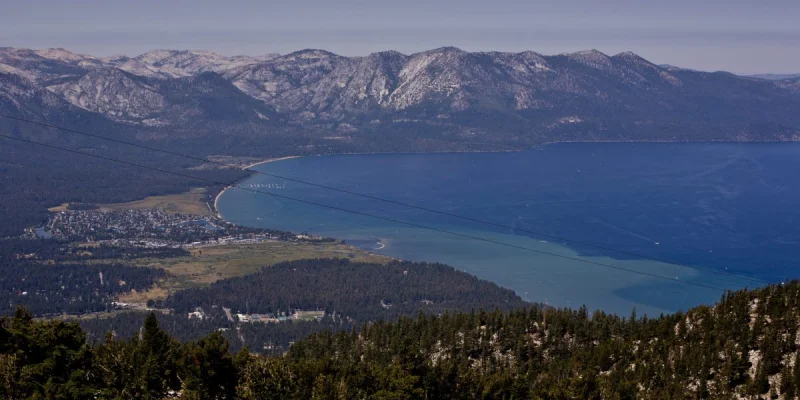
Lake Tahoe’s power supply is heading into uncertainty after next ski season, and the change is coming from the same utility that has kept the lights on there for decades. NV Energy has told Liberty Utilities that it will stop providing power after May 2027, forcing a region of 49,000 residents to confront how it will keep electricity flowing.
For people in the Tahoe basin, the warning lands like a hard break with the past. Liberty Utilities serves 49,000 California customers in the region, but 75% of its power comes from NV Energy and its grid sits inside NV Energy’s balancing authority. The company’s system connects to NV Energy at 38 points, and its territory relies entirely on Nevada transmission lines. Danielle Hughes captured the mood bluntly: “It’s like we don’t exist.”
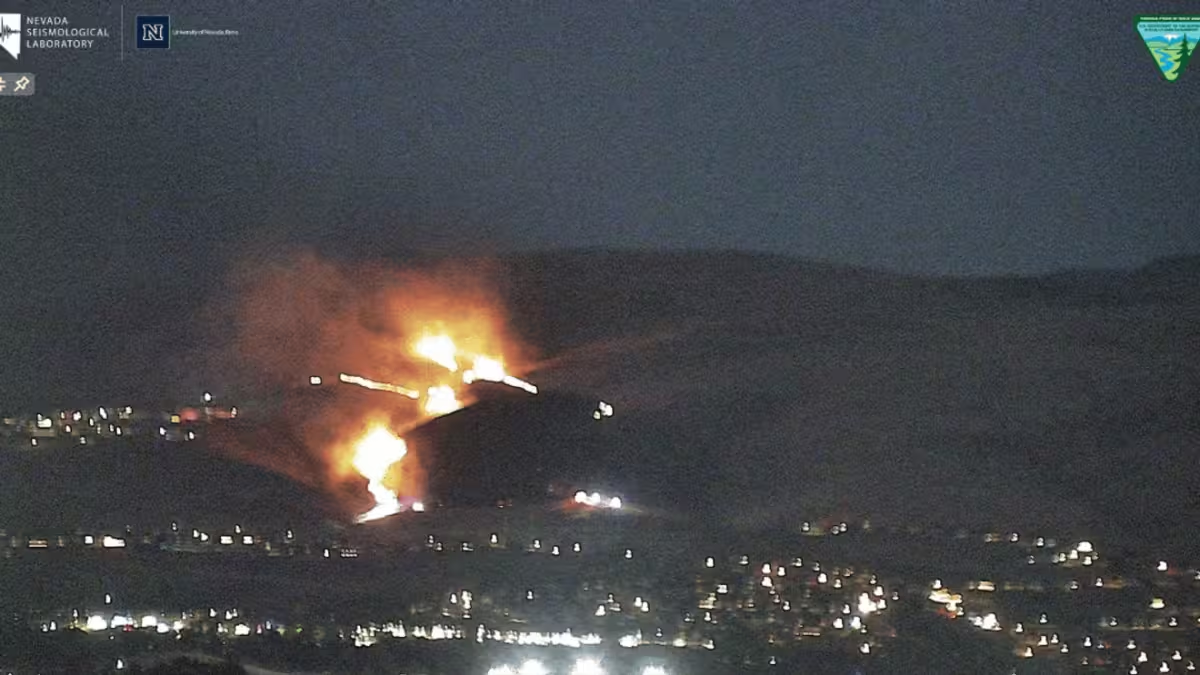
The reason for the shift is not hard to find. NV Energy said it needs the capacity for data centers, a business that has turned northern Nevada into one of the fastest-growing data-center corridors in the country. Google, Apple and Microsoft have either built or are planning facilities around the Tahoe-Reno Industrial Center east of Reno, and the Desert Research Institute has said 12 data center projects in northern Nevada could drive 5,900 megawatts of new demand by 2033. That growth is part of the power demand tied to the AI boom, and it is now colliding with the needs of a tourist region that draws roughly 25 million to 28 million visitors a year.
Liberty gets about 25% of its power from solar facilities it owns in Nevada, but building a direct connection to California’s grid would require a new transmission line west over the Sierra. Liberty President Eric Schwarzrock said that line would cost hundreds of millions of dollars, a figure that underscores how expensive a clean break from Nevada would be. The California Public Utilities Commission approves Liberty’s rates and procurement requests, while the Federal Energy Regulatory Commission regulates interstate transmission and wholesale electricity sales, leaving no single regulator in charge of the whole chain from generation to customer bills.
The tension in Tahoe is that the warning does not arrive as a surprise to the utility world. At a regional business event last fall, NV Energy’s director of business development called the moment “unprecedented” and said the company was eager to serve the new industrial load while saying it would not “impact our existing customer base.” For Tahoe, that promise now looks harder to square with the reality on the ground. California ratepayers rely on a utility whose grid is tied to Nevada’s transmission system, and the next test is not whether the region needs power, but who is going to provide it after May 2027.
