


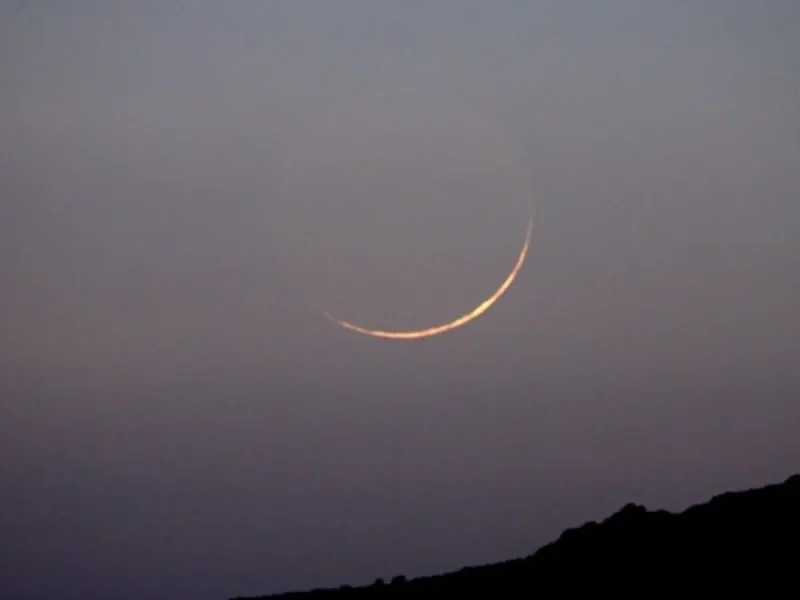
Saudi Arabia’s Supreme Court called on Muslims across the Kingdom to look for the crescent moon marking the start of Dhul Hijjah on the evening of Sunday, May 17, 2026, the step that will determine the timing of Eid Ul Adha 2026 and the annual Hajj season.
The court asked anyone who sees the crescent with the naked eye or through binoculars to go to the nearest court and register their testimony. It also urged people who need help reaching a court to contact the nearest center for assistance, underscoring the importance of the sighting in the Kingdom’s religious calendar.
The announcement followed Supreme Court ruling No. 206/H dated 29/10/1447H. That ruling declared Saturday, April 18, 2026, as the completion of Shawwal and set Sunday, April 19, 2026, as the first day of Dhul Qadah. By the court’s calendar determination, Sunday, May 17 falls on the 29th of Dhul Qadah, while it is the 30th according to Umm Al-Qura calendar calculations.
The court encouraged people who are able to take part in regional moon-sighting committees, adding more eyes to a process that has direct consequences for worshippers across Saudi Arabia and beyond. The beginning of Dhul Hijjah sets the dates for the annual Hajj pilgrimage and Eid Al-Adha celebrations across the Islamic world, making the sighting one of the most closely watched dates in the Hijri calendar.
The court’s notice leaves the final call to the sighting itself. If the crescent is confirmed, the calendar moves into the month that fixes two of the most significant dates in Islam; if it is not, the wait continues for another evening, with pilgrims and worshippers watching the sky and the court’s next announcement.
