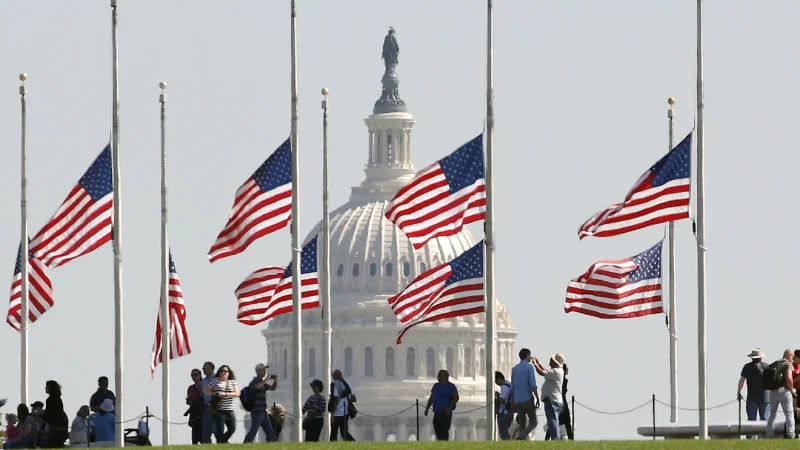
Flags seen flying below the top of their poles this weekend have prompted a familiar question: why are flags at half mast today? In much of the United States, the lowering was tied to Peace Officers Memorial Day on Friday, May 15, 2026, a national observance honoring law enforcement officers who died in the line of duty. Some flags may still appear lowered on Saturday, May 16, because of local orders, delayed observances or separate state-level mourning directives.
Why Flags Were Lowered Nationwide
The main nationwide reason was Peace Officers Memorial Day, observed each year on May 15. The day is part of National Police Week, which in 2026 runs from May 10 through May 16.
The presidential proclamation for the observance called on Americans to honor fallen officers through ceremonies and remembrance activities. It also called on governors, territories and other public officials to direct that the U.S. flag be flown at half-staff on Peace Officers Memorial Day.
That means the formal nationwide half-staff period was Friday, May 15, from sunrise to sunset. The timing is important because many people noticed flags lowered late Friday or still saw them down early Saturday, leading to confusion about whether a new national event had occurred.
Half Mast Or Half Staff: What The Term Means
Many people search for “half mast,” but the more precise U.S. term for flags on land is “half-staff.” “Half-mast” is traditionally used for flags flown from ships or naval settings. In everyday use, however, both terms are widely understood to mean the same thing: a flag lowered as a sign of mourning, respect or national remembrance.
Under U.S. flag practice, the flag is usually raised briskly to the top of the staff first, then lowered to the half-staff position. Before being taken down, it is raised again to the peak and then lowered completely. The movement is intended to preserve the ceremonial meaning of the gesture.
Half-staff orders can come from the president for the entire country or from governors for their states. Local governments, public institutions and private organizations may also follow those orders or issue their own notices for specific facilities.
Why Some Flags May Still Be Down Today
Saturday, May 16, is Armed Forces Day in the United States, but that observance does not normally require flags to be lowered. If flags are still at half-staff today, the reason is likely local rather than a new nationwide order.
There are several common explanations. A state may have a separate order in effect after a tragedy, the death of a public official or the return of a fallen service member. A city or county may be honoring a local first responder. Some buildings may also be slow to return flags to full-staff after a previous day’s observance, especially if the change depends on staff schedules.

That is why two nearby locations can show different flag positions on the same day. A federal building, a state capitol, a school, a police station and a private business may not always follow the same schedule unless a national order applies to all of them.
National Police Week Adds Context
Peace Officers Memorial Day is one of several annual U.S. observances that carry flag-lowering guidance. It was established as part of a broader federal effort to recognize the risks faced by law enforcement officers and to honor those killed while serving their communities.
National Police Week typically includes memorial services, vigils and ceremonies for officers whose names have been added to law enforcement memorial rolls. Families of fallen officers, police departments and public officials often gather in Washington and in local communities for remembrance events.
The observance can also draw political debate, especially during periods of national tension over policing, crime and public safety. Still, the official purpose of the half-staff display is narrower: remembrance of officers who died in the line of duty.
State Orders Can Change The Answer
For readers outside the United States, or in states with active mourning directives, the answer may be different. Flag-lowering rules vary by country, state and institution. Canada, the United Kingdom and Australia each have their own protocols, and provincial, territorial or state authorities may issue separate instructions.
In the U.S., some state notices around this date have included additional local reasons beyond Peace Officers Memorial Day. Those can include honoring shooting victims, military personnel, former officials or emergency responders. A flag lowered at a courthouse or state building may therefore reflect both the national observance and a separate local decision.
The most reliable way to confirm the reason is to check the flag-status notice from the governor’s office, state emergency management agency, city government or the specific institution where the flag is flying.
What To Watch Next
No permanent national half-staff period was established for Saturday, May 16, solely because of Peace Officers Memorial Day. The national observance applied to May 15, while National Police Week continues through May 16.
If flags remain lowered in a particular area today, the cause is most likely a state or local order, a facility-specific memorial or a delayed return to full-staff after Friday’s observance. The distinction matters because half-staff displays are official acts of public mourning, and the meaning can change from one place to another.