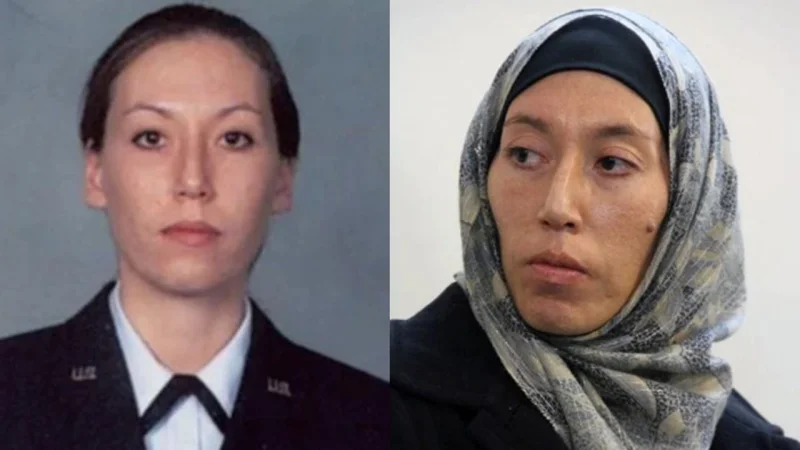
The FBI has renewed its pursuit of Monica Elfriede Witt, a former U.S. Air Force intelligence specialist accused of defecting to Iran and providing classified national defense information to Iranian officials, offering a $200,000 reward for information leading to her apprehension and prosecution.
FBI Raises Pressure In Long-Running Spy Case
The reward announcement on Friday, May 15, ET, brings fresh attention to a case that has remained open since Witt was charged in 2019. Federal authorities say the former Air Force counterintelligence specialist remains at large and is believed to be in Iran, where she allegedly continued helping Iranian intelligence after leaving the United States.
Witt, 47, is wanted on espionage-related charges tied to her alleged disclosure of classified information to the Iranian government. The case is one of the more striking recent examples of a former U.S. military intelligence insider being accused of turning against the country after years of access to sensitive programs and personnel.
The FBI’s renewed appeal comes at a tense moment in U.S.-Iran relations, giving the case added national security significance. Officials are again asking anyone with information about Witt’s location, contacts or movement to come forward.
Who Is Monica Elfriede Witt?
Monica Elfriede Witt was born in El Paso, Texas, and served in the U.S. Air Force from 1997 to 2008. During that time, she worked as an intelligence specialist and later as a counterintelligence special agent with the Air Force Office of Special Investigations.
Her work gave her access to classified information involving U.S. intelligence operations, including sensitive details about personnel, programs and counterintelligence activity. After leaving active military service, she continued working in the national security field as a defense contractor until 2010.
Witt’s Air Force background is central to the case. Federal investigators allege that she did not simply possess general military knowledge, but had access to highly restricted information that could endanger intelligence personnel and compromise U.S. operations if passed to a foreign government.
Defection To Iran Became Turning Point
Federal prosecutors say Witt traveled to Iran for conferences that promoted anti-Western themes before defecting in 2013. Her alleged turn toward Tehran followed years of work inside the U.S. intelligence community and came after the government had warned her about contact with Iranian-linked individuals.
After arriving in Iran, Witt allegedly provided officials there with classified information connected to U.S. national defense. Prosecutors have said she disclosed the existence and purpose of a highly classified intelligence program and helped identify a U.S. intelligence officer.

The indictment also described her alleged work with Iranian actors to target former colleagues. Investigators say she assisted in building profiles of U.S. intelligence personnel, information that could support recruitment attempts, surveillance or cyber operations.
Cyber Campaign Targeted Former Colleagues
The 2019 indictment did not name Witt alone. Four Iranian nationals were also charged in connection with a cyber campaign that targeted members of the U.S. intelligence community.
The alleged campaign used fake online accounts and social engineering tactics to contact or compromise people connected to Witt’s former work. Federal authorities say the information Witt supplied helped Iranian-linked operators focus their efforts on real individuals inside U.S. intelligence networks.
That part of the case demonstrates why former intelligence personnel remain security concerns long after leaving government service. A person with knowledge of names, roles, habits and internal structures can create risk even without current access to classified systems.
Why The Case Still Matters
The renewed reward underscores that the government views Witt as an active fugitive, not a closed chapter from a past espionage case. Her alleged knowledge of U.S. intelligence operations, combined with the possibility that she remains under Iranian protection, makes her case especially sensitive.
The charges also highlight a broader challenge for U.S. counterintelligence agencies: protecting secrets after cleared personnel leave government service. Insider-threat programs often focus on current employees, but Witt’s case shows how former service members and contractors can remain valuable targets for foreign intelligence services.
Her alleged aliases include Fatemah Zahra and Narges Witt. Federal authorities have warned that she should be considered an international flight risk and that information about her whereabouts may come from people outside the United States, including those with knowledge of Iranian intelligence circles or expatriate communities.
What Happens Next
The $200,000 reward is designed to generate new leads in a case that has stretched across more than a decade. Any arrest would likely depend on Witt leaving Iran, being detained in a third country or a shift in cooperation involving foreign authorities.
For now, the case remains a public reminder of the long reach of espionage investigations. Witt’s military service, intelligence background and alleged defection make the matter unusually serious, while the FBI’s renewed appeal signals that the effort to bring her back to face charges has not faded.