


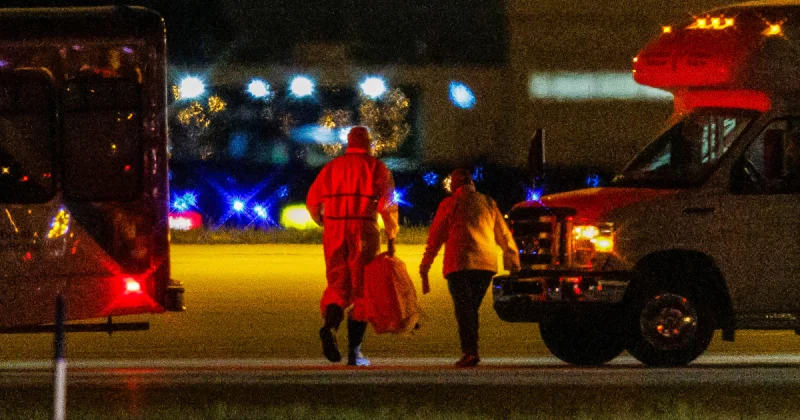
The Centers for Disease Control and Prevention said Friday morning it was monitoring at least 41 people across 16 states who may have been exposed to hantavirus, even as there were no known U.S. cases at that time. Half of those people were isolating at home, while the other half were being watched at hospitals in Omaha and at two other medical centers in Atlanta and Kansas City.
That count included Dr. Stephen Kornfeld of Oregon, the sole American patient who had tested positive aboard the MV Hondius before he disembarked and returned to the United States. He later had a second test on the ship that came back negative, and officials said the onboard positive was likely a false positive. Kornfeld remained asymptomatic since returning Monday, and officials said he did not have antibodies to hantavirus.

Kornfeld moved into a quarantine unit after being treated in a biocontainment unit at the medical facility in Omaha. Fifteen others in the United States who had been on the voyage were also in a quarantine unit, and two additional passengers were being treated at Emory University Hospital in Atlanta. The CDC also said Canadian health officials were monitoring 36 people, including four cruise ship passengers, in isolation.
The case count around the voyage has shifted before. Kornfeld’s negative test brought the total number of reported cases down to 10, from a global outbreak that had killed three people and sickened 11. Doctors warned that patients could still test positive later even after a negative result, which is why CDC officials were urging passengers quarantined in hospitals to remain there through the virus’s full 42-day incubation period.
That caution is the crux of the outbreak now. There are no known U.S. cases on the books, but dozens of people remain in quarantine or under close watch because hantavirus can lag behind the first test. For Kornfeld and the others tied to the voyage, the next phase is not a new headline so much as a waiting period measured in weeks, not days.
