


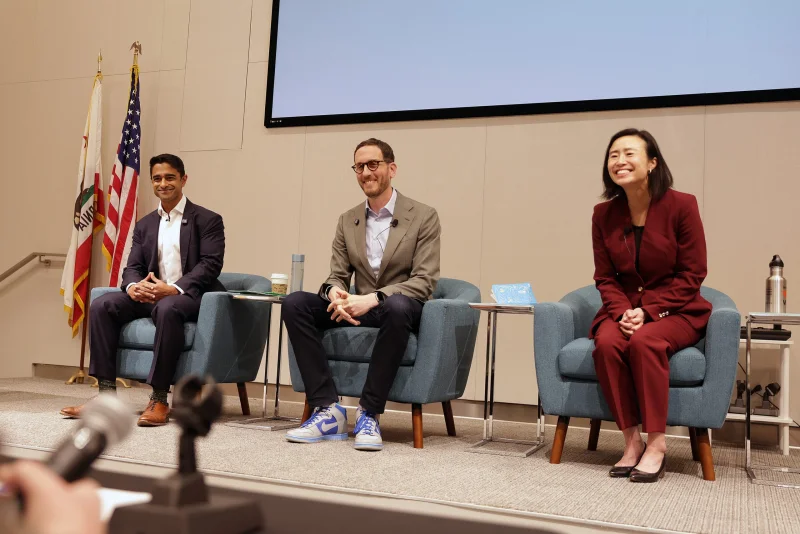
On a gray Saturday in the Castro District, state Sen. Scott Wiener laid out his case for Congress as California’s 11th Congressional District begins a succession fight that could decide who inherits Nancy Pelosi’s seat after nearly 40 years. The district is almost entirely San Francisco, and the race has quickly become a contest where local ties, money and organization may matter as much as ideology.
Wiener is one of three major candidates in an 11-candidate field, and two of them will almost certainly move on to the November runoff. That makes the first round less a winner-take-all race than a battle to define the political lane that can survive in a city where voters know the players well and punish weak footing fast.
For Wiener, the pitch is experience. He pointed to a San Francisco political lineage that includes Pelosi, Phil Burton, Jackie Speier, Dianne Feinstein, Barbara Boxer, Gavin Newsom, Kamala Harris, Willie Brown and Jerry Brown, arguing that the city has long rewarded leaders who can survive hard fights and still deliver. “The politics here are intense and brutal at times, and so San Francisco is an amazing training ground to do hardball politics, and San Franciscans demand that their elected leaders fight hard and deliver,” he said.
The campaign has also become a contest over what kind of Democrat should represent one of the party’s most famous constituencies. Wiener carried one of the main bills in the state legislature this year to prevent anticompetitive conduct from Big Tech, after passing legislation in 2024 to crack down on pharmacy benefit manager middlemen. He has also backed a bipartisan housing bill that some abundance activists have opposed, and he has said he is uneasy with investor purchases of housing. “The more we move toward mass mega-ownership, you really do get into situations where you have Wall Street pressures that end up screwing renters,” he said. “The humanity is immediately stripped out.”
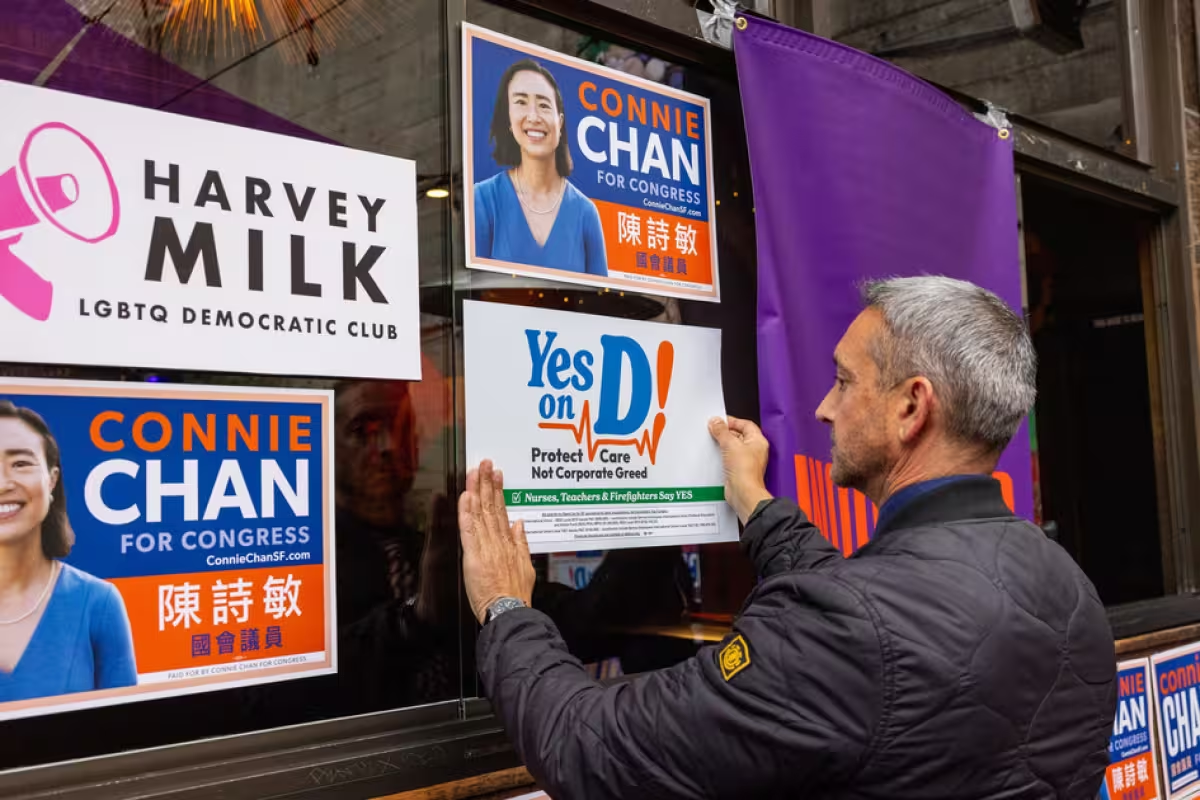
That message puts him in direct contrast with Saikat Chakrabarti, the progressive co-founder of Justice Democrats, who is drawing on personal fortune gained as an early-career Stripe employee. Wiener, meanwhile, has a cryptocurrency mogul running a super PAC on his behalf, a reminder that this race is being fought with the kind of big money that usually shadows the most coveted seats. Connie Chan, a San Francisco county supervisor, is also in the field and has stacked up endorsements from the California Teachers Association, National Nurses United, the state Working Families Party, the San Francisco Labor Council, the California Federation of Labor Unions and the Harvey Milk LGBT Democratic Club.
The strength of those endorsements matters because the district is almost entirely San Francisco, where neighborhood networks and institutional loyalties can shape a crowded ballot. But the bigger test in the next few months is whether voters want a city veteran who argues that he can govern with force, a progressive outsider with deep ideological appeal, or another contender who can break through a race already split among 11 names. The answer will not wait long: the field is narrow enough that the November runoff is already the race’s real destination.
