


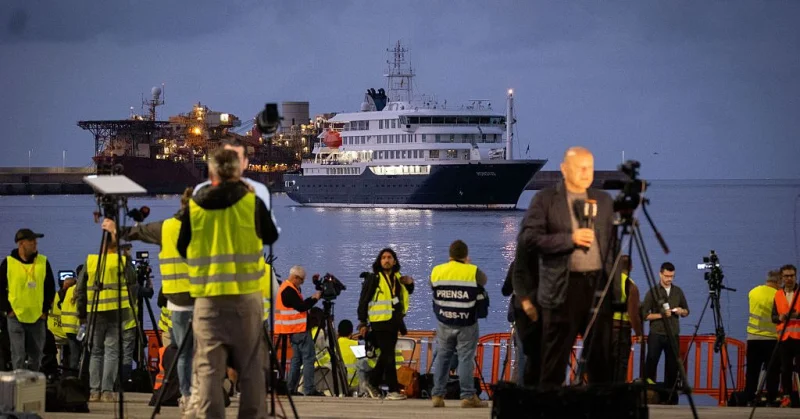
The Centers for Disease Control and Prevention is monitoring 41 people in the United States for Andes hantavirus after a rare outbreak tied to a cruise ship sickened passengers and killed three people. The public health agency said Thursday that 18 passengers are in quarantine facilities in Nebraska and Georgia, while others who had been exposed during travel are being watched at home.
The monitoring includes passengers who returned to the United States before the outbreak was identified, as well as people exposed on flights where a symptomatic case was present. Most of those under watch are considered high-risk exposures, the CDC said, and it wants them to stay home and avoid contact with others during the 42-day monitoring period.
David Fitter, a CDC official, said the agency’s approach is based on risk and evidence, and that it is working closely with passengers and public health partners to make sure symptoms are caught quickly if they develop. He also said the goal is to build plans around each person’s situation to protect passengers and American communities.

The outbreak is tied to the MV Hondius, where the World Health Organization had confirmed 11 Andes virus cases among passengers as of Thursday, including three deaths. All Americans who were on board the ship at any point during the journey are now back in the United States.
Andes hantavirus is a strain found in South America that can spread from person to person, unlike most hantavirus infections that reach humans through contact with rodent droppings or urine. It can cause difficulty breathing and carries a fatality rate of around 35 percent. Even so, the CDC said the risk to the public remains low, and it is not using federal quarantine and isolation authority to manage all 41 potentially exposed people.
That leaves the agency trying to balance caution with mobility: keep high-risk passengers from traveling, keep watch on those who may still be incubating the virus, and avoid turning a rare shipboard outbreak into a wider alarm. For now, the number that matters most is not the size of the outbreak at sea, but the small group on land that public health workers are trying to keep out of the chain of transmission.
