


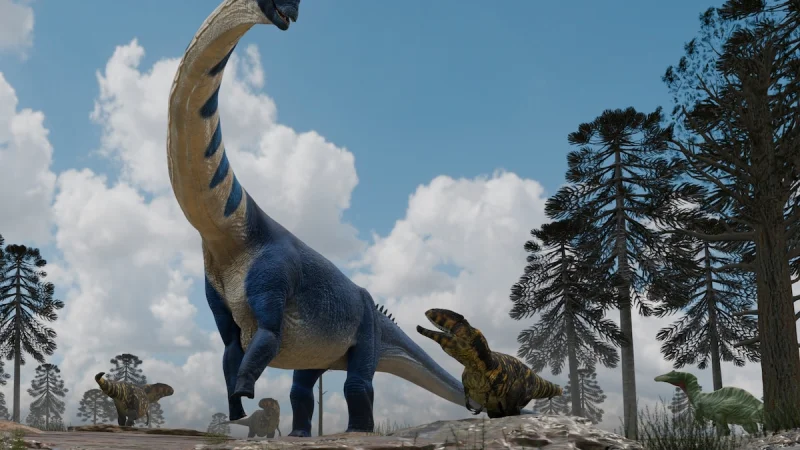
A new dinosaur species from northeastern Thailand may be the largest ever found in Southeast Asia. Researchers announced Thursday that fossils uncovered in Chaiyaphum Province belong to Nagatitan chaiyaphumensis, a giant sauropod they estimate weighed nearly 30 tons and stretched more than 88 feet long.
The bones were first found in 2016 by Thanom Luangnan, who noticed strange-looking rocks on the banks of a public pond and reported the find to Thailand’s Department of Mineral Resources. The fossils included vertebrae, ribs, hip bones and limb bones preserved in rock dated to 113 million years ago, giving paleontologists enough material to identify a new species and judge its size.
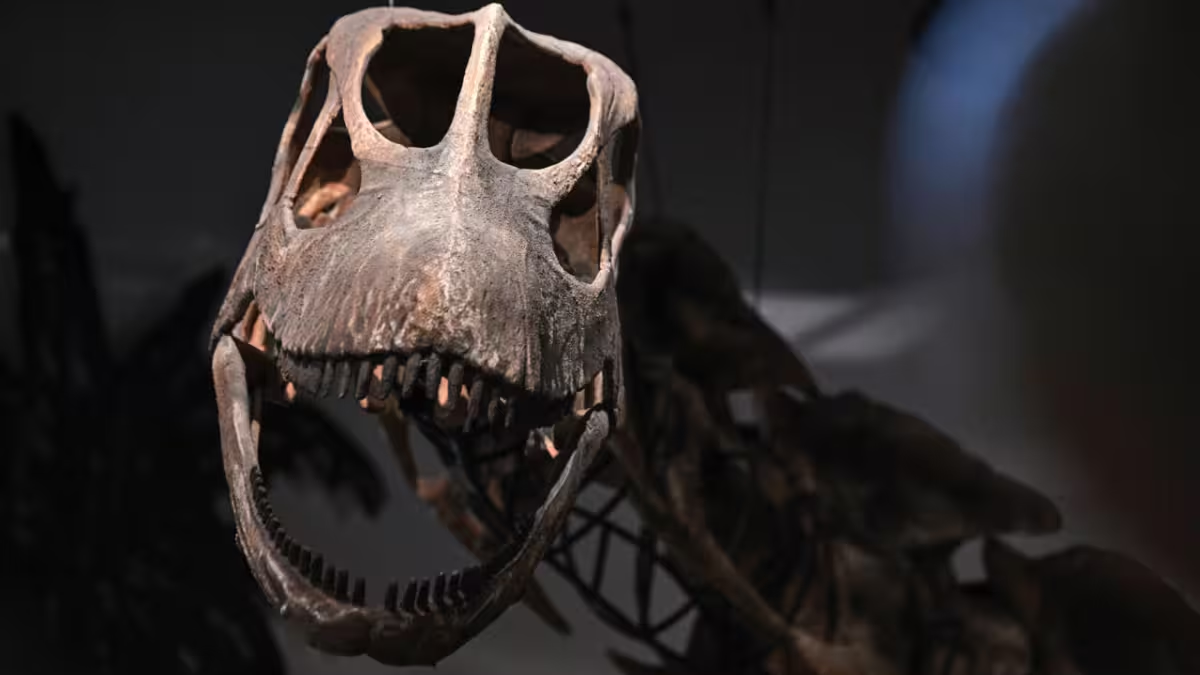
That size is what makes the find stand out. Sita Manitkoon said initial measurements suggested the animal could be the largest dinosaur ever found in Southeast Asia, while Pedro Mocho said it is the most complete sauropod specimen discovered from the Khok Kruat Formation. Nagatitan belonged to the somphospondyli group, and researchers said its right forelimb was longer than those of Patagotitan and Dreadnoughtus, even if the Thai dinosaur likely did not match those two South American giants overall.
The discovery helps fill a gap in Thailand’s fossil record. Before this, the country’s biggest dinosaurs were known mostly from fragments, leaving paleontologists with only scattered clues about how large sauropods grew in the region. Nagatitan lived in the Early Cretaceous, about 110 million to 120 million years ago, when Thailand sat closer to the equator and the landscape appears to have been covered by relatively open, slightly dry shrublands.
That setting may help explain why the dinosaur grew so large. Sauropod dinosaurs evolved giant body sizes more than 30 times over more than 100 million years on at least six landmasses, and Nagatitan now adds a new data point from Southeast Asia. The find does not close the book on giant Thai dinosaurs; it sharpens the next question, which is how many more of them are still waiting in the rock of the Khok Kruat Formation.
