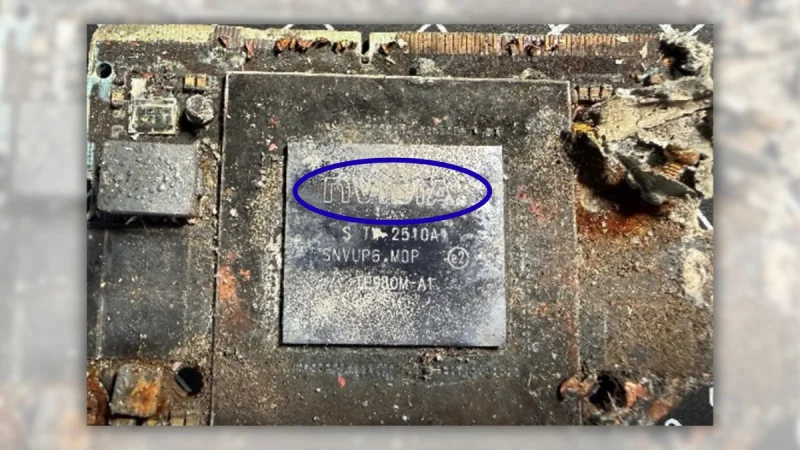
A claim that Ukrainian officials found Nvidia hardware inside a Russian attack drone is still moving online, but Snopes would not verify it. The fact-checker said it found no credible evidence that the image or related reporting was fake, yet stopped short of confirming the claim because it lacked primary evidence from Russia.
The renewed attention comes after an X user wrote that Ukraine had found Nvidia hardware inside Russian attack drones and a cruise missile, a line that then spread on Facebook and Reddit. The image tied to the claim reportedly showed an Nvidia Jetson Orin computer module, putting a consumer chip at the center of a wartime story that has pulled in Anne Applebaum in online discussion about Nvidia and Russia.
The timing matters because the claim sits on top of reporting that already gave it weight. In August, the Defence Intelligence of Ukraine said the module came from a Russian cruise missile, and reported that Russia used Jetson Orin modules to pilot drones with an experimental artificial intelligence system that could choose its target without human approval. The Times said one such autonomous drone killed three civilians in Zaporizhzhia, including 19-year-old Tetiana Bubynets, 41-year-old Oleksiy Svirin and 48-year-old Roman Karpiy.

That is why the story keeps circulating: it combines a familiar war with a specific piece of hardware and a death toll that readers can picture. Snopes said it could not fully verify the claim because there was no primary evidence from Russia, and it contacted the Russian Ministry of Defense for confirmation of the image and the Times report. It also reached out to the Ukrainian Air Force about any new developments involving Russian autonomous drones since the August report.
What Snopes did not find is as important as what it did. It saw nothing credible to suggest the image posted by the Defence Intelligence of Ukraine or the Times' reporting on the Zaporizhzhia strike was false, but it still left the claim unrated because the chain of custody for the hardware was not established. According to the Times, Ukrainian officials recovered an Nvidia chip from the drone that reportedly killed the three civilians and found terrain images on it, along with descriptions of targets the drone had been trained to identify and attack.
Nvidia, for its part, has tried to draw a hard line between its products and battlefield use. On Nov. 25, a spokesperson said Jetson Orin modules are consumer-grade products sold to students, developers and startups for a wide range of beneficial uses, that they are not available in Russia and are not designed for military purposes, and that pre-owned units can move through reseller channels. The company said it cannot track products after sale, though it will act if it determines a customer is violating U.S. export controls.
That leaves the central question untouched: whether the module shown in the image was actually recovered from a Russian drone or missile, or whether the evidence online only makes it look that way. Until a verifiable chain from the battlefield to the hardware appears, the claim will keep drawing attention without crossing the line from plausible to proven.