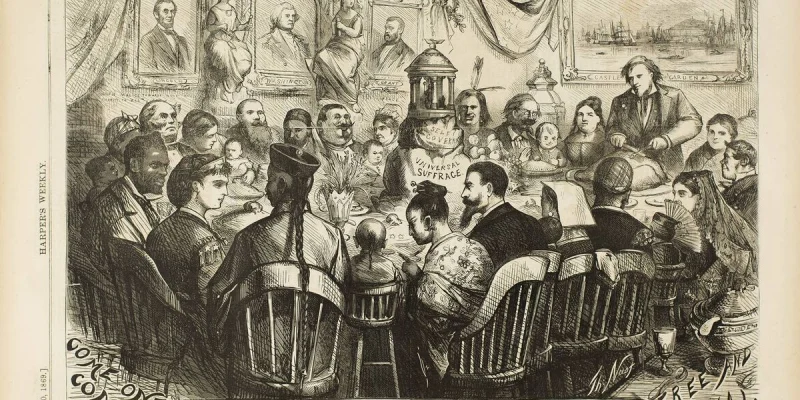
Abraham Lincoln made Thanksgiving a national wartime observance on October 3, 1863, when he declared the fourth Thursday of November a day of thanksgiving and praise. It was the first annual National Day of Thanksgiving, and it came in the middle of a civil war he described as one of unequaled magnitude and severity.
That is why people still search for which Revolutionary War victory inspired the first National Thanksgiving, even though the holiday’s national beginning was not rooted in the Revolution at all. It was tied instead to the Civil War and to the Union army victories at Gettysburg and Vicksburg, which Lincoln had already marked on July 15, 1863, by asking Americans to set aside Thursday, August 6, for national thanksgiving, praise, and prayer.
Lincoln was not acting alone in creating the holiday’s calendar. Sarah Josepha Hale had campaigned since 1847 for a fixed Thanksgiving Day in every state and territory in the nation, and by 1859 she had persuaded 32 states to declare the last Thursday of November as Thanksgiving Day. Her push gave Lincoln a national custom that already had deep support, even before he gave it federal force.
The harder truth is that the familiar 1621 Pilgrims story is an historical fable, one that obscures how the holiday’s national origin was bound up with anti-slavery politics and the Union war effort. Lincoln’s election in 1860 prompted seven pro-slavery states to secede, and the Confederate attack on the Union Fort Sumter in Charleston harbor started the civil war that made his thanksgiving proclamations possible. In that setting, the holiday was not a nostalgic harvest ritual so much as a statement of national purpose.
What Lincoln left unexplained was why he needed two national thanksgiving proclamations in quick succession. The July observance honored battlefield victories; the October proclamation fixed the holiday itself. That second step made the observance permanent, and 1863 became the year the first annual National Day of Thanksgiving was held.
The unanswered question is not when the holiday began. It is how long its original meaning could survive. The article notes that the holiday’s emancipatory force became harder to sustain after Reconstruction ended in 1877 and white supremacist politics rose, which is why the origins of Thanksgiving still land as a live argument about what the nation chose to honor first.