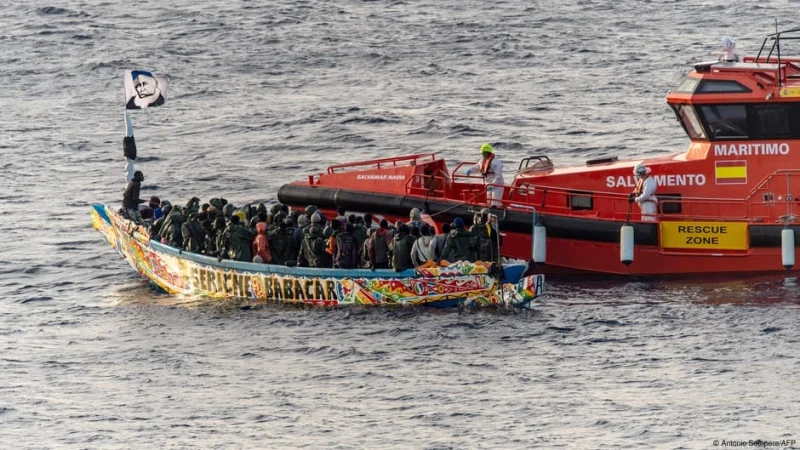
More than 2,100 migrants reached the Canary Islands in a little over 24 hours on Tuesday, setting a new one-day record for the route. Most of the arrivals landed on El Hierro, where the pace of landings has turned what is usually a perilous passage into a crisis measured in hours, not days.
Fernando Clavijo said the islands were facing unprecedented migration pressure and asked Ursula von der Leyen for an urgent meeting, arguing that “the Canaries can't take it anymore.” His appeal comes as Spain heads into a snap election on Sunday, with migration and housing already among the issues voters are most likely to weigh. The timing matters because the surge is not happening in the quietest season for politics, but just as migration has moved to the center of the national debate.

The Tuesday tally pushed the islands into uncharted territory even before the full effect of this week is counted. Around 100 minors arrived, and a baby was born during the trip from Africa to the islands. Earlier this month, nearly 1,600 migrants from West Africa were taken to the Canary Islands in what was then a previous record. This year, more than 26,000 people have made it to the islands, with about half of that total arriving in November alone.
That last figure is the part that should give officials pause. The waters are usually calmer in the fall and rougher in winter because of storms and swells, yet the route is producing record numbers anyway. On a passage where the gap from northwest Africa is only around 100 kilometers and the crossing is already described as one of the deadliest in the world for migrants, the normal seasonal slowdown never arrived. Instead, the islands are carrying a load that keeps climbing.
Clavijo’s request now puts the focus on whether Leyen and the European Commission answer with anything concrete, or whether the islands will be left to absorb the pressure alone. For Fernando Clavijo, the record is no longer just a statistic; it is the clearest sign yet that the Canary Islands are running out of room to wait.