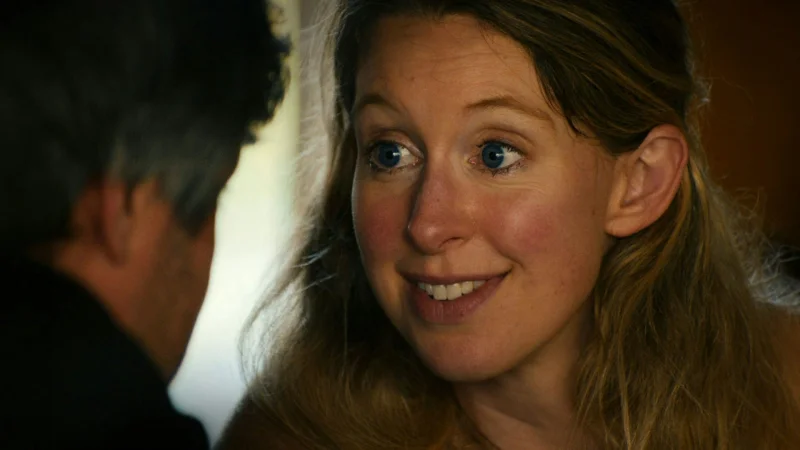
Amanda Seyfried turns up in You Can See Everything only after Elizabeth Holmes is shown being sent to prison, and the moment lands like a deliberate reset. The documentary then has Seyfried walk into Holmes’s home and make porridge on her stove in a reenactment, folding performance into a film that also claims to be observing the last days of Holmes’s life before custody.
That is why viewers are searching for Amanda Seyfried You Can See Everything now. The film has already passed $100m globally since its release in the US last month, and it opened in the UK last Friday with the biggest opening weekend ever for a non-music documentary there. It is drawing the same audience that once watched Seyfried play Holmes in The Dropout, where that portrayal won her an Emmy.

The documentary itself follows Holmes and Billy Evans at their home in San Diego in the weeks before she surrendered to federal prison, giving it a rare view of a figure whose name has stayed loaded for more than a decade. Holmes founded Theranos, the company that said it could run hundreds of comprehensive blood tests from a single pinprick of blood, a claim that put patients in danger and left investors out more than $700m. More than 11 years after John Carreyrou’s exposé, her story still sells because it remains a shorthand for fraud, spectacle and the ease with which confidence can be mistaken for proof.
But the film does not only rely on what it can capture. It leans on reenactment, performance and selective disclosure, which means the line between access and staging never quite settles. Holmes has been quoted in a New York Times interview saying, “They’re not playing me. They’re playing a character I created,” while also claiming she said “a character they created.” That contradiction sits at the center of the movie’s method: it wants to expose how Holmes is seen, yet it keeps returning to the fact that she has spent years helping to shape the version of herself that the public gets to watch.
That makes Seyfried’s entrance more than a cameo. It is the film admitting that Holmes’s story can be replayed, recast and sold again, even as the real woman moves toward prison and the audience is left sorting what is observed from what is performed. The unresolved question is not whether the documentary found a new angle on Holmes. It is how much of what viewers take as truth was built inside a scene.